
It’s been snowing almost constantly since December 26th.

In my small Connecticut hamlet, we’re buried under fifty-five inches, and have had at least one storm every week. We’ve paid bill after bill for shoveling, and over the weekend had to have a team of roof shovelers come out to get rid of the heavy snow that was threatening to destroy my office ceiling. Today we woke up and found the trees covered with ice. The cars were covered, the roads were covered, and once we took the dogs out, they were covered. Susan has been either really sick with bronchitis and home, or unable to get to work, and home. And today, it was yet another work-from-home day for my beloved, my dearest, the love of my life who married me two years ago this past Monday.

“Do you want some tea?” she asked, after she called her office.

“What do you think? Don’t I always want tea in the morning?” I was puttering around behind her, wondering what had compelled her to slice bread for toast, but not hang the bread knife back up on the magnetic strip that lines one wall of the kitchen.

“Green or purreh?”

“Purreh. Why would I have anything else? I’ve been having purreh for breakfast every day now for two weeks.”

“I just asked—”

“I know. I just don’t know why—”

She began rummaging through our cabinet, looking for loose tea. A small red Asian tea cup clattered to the floor.

“For god’s sake—!”

“Why are you so testy?”

“Why are you so scattered?”

“I can’t find my glasses,” she mumbled.

I rolled my eyes. “I put two pairs of them on the entry way table, where they’re sitting next to absolutely everything else we own in the world.”

“Well, they’re not there,” she said.

“You must have moved them—”

“I did not,” she replied.

“I’m sure you did,” I answered.

“Did not—” she said.

“Did too,” I answered.

And that pretty much about sums up where we’re at in this house, after nearly a week inside. At first, it was fun in that warm, snuggly, slightly libidinous way that everyone sort of assumes when you say you’re stuck inside with no where to go and nothing to do. You defrost everything from the bowels of your freezer, and make soups and daubes and all sorts of cozy, heavy, rib-sticking, diet-busting stuff. When the power goes out (which it does, if you live in my neighborhood), you light a fire, gather the animals, and read until around 5 pm, when it gets too dark to do anything. Then you pile on the blankets, go to bed looking like John Candy and Steve Martin in that scene from Trains, Planes, and Automobiles, and fall asleep praying that the pipes don’t burst.

The next day, when and if the power comes back on, you hope that the plow comes by before it gets dark, and you try to stay pleasant. Because really, let’s be honest here—a week inside with anyone, even if you love them to bits—can make you want to tear your face off. And I’m saying this about myself, too. I’m sure I can be as annoying as a middle-of-the-night car alarm when you’ve got a migraine. The smallest things start to get really aggravating, like the habit that I have of humming while brushing my teeth or leaving half-used sugar packets on the counter, or the way Susan always tends to precariously pile books up on our kitchen island small one first, so they’re guaranteed to topple over onto some unsuspecting cat, or toe. It drives me nuts. It’s like LOST, only in suburbia.
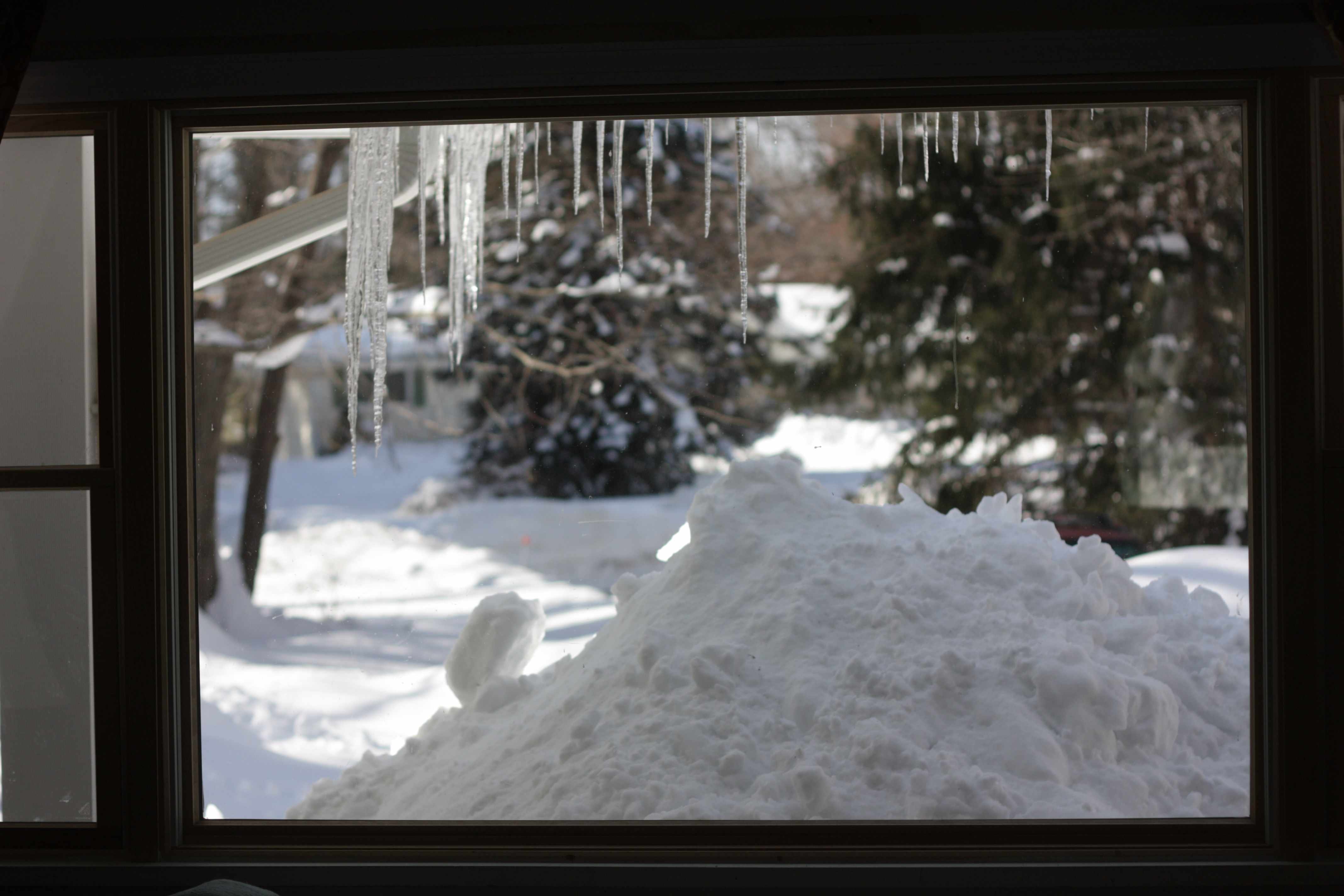
The view out my living room window.

So what’s the answer to this? What have we been doing lo these many snow-bound days and nights? How have we managed to keep ourselves sane and not feeling like Jack Nicholson in The Shining?

We’ve cooked. Constantly. And not the easy, simple cooking about which I tend to go on ad nauseum; we’ve been cooking mightily complicated stuff that calls for mincing and dicing and chopping, steaming and blanching and poaching, and long, exhausting lists of obscure ingredients that we happen to have, like the galangal I had to put into the Tom Yum Goong that Susan wanted me to make for her on Monday, when her bronchitis was at its worst. We’ve made cottage cheese and dill bread, and tofu salad from The Greens Cookbook. We’ve been on a vegetarian tear lately, so we also made big-flavored Hyderabadi-spiced, pan-roasted cauliflower; smokey, charred eggplant; braised kale and chard with flageolet and a ton of garlic; we’ve made the green olive and Meyer lemon salad from Viana LaPlace’s wonderful The Unplugged Kitchen; we’ve made coddled, curried eggs that we’ve cooked in a bain marie; and when the roof shovelers were here, we made a dozen grilled cheese sandwiches for them. Simultaneously. Susan only told me that I was incorrectly assembling them once, for which I thanked her.
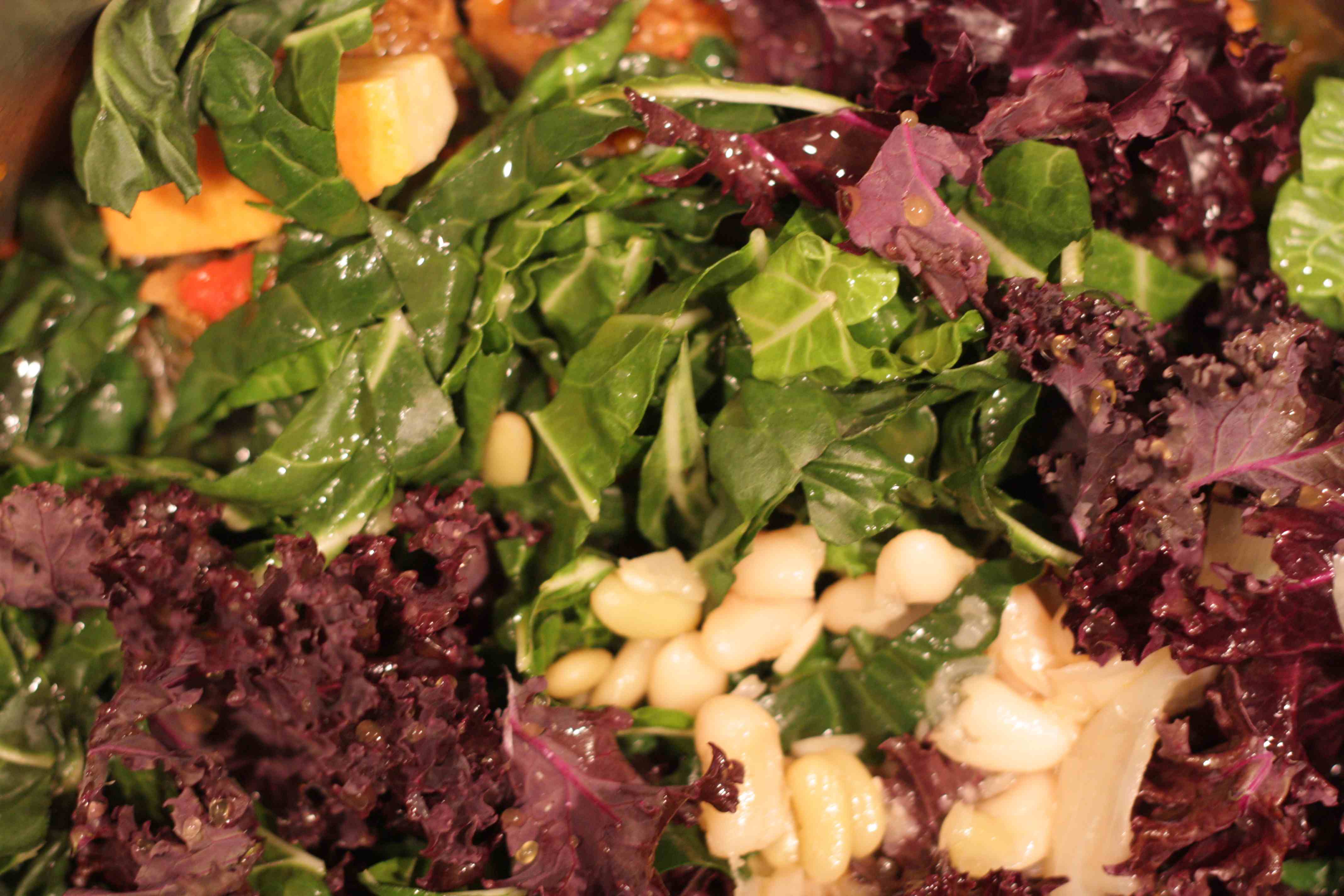
Braised winter greens with flageolet and garlic
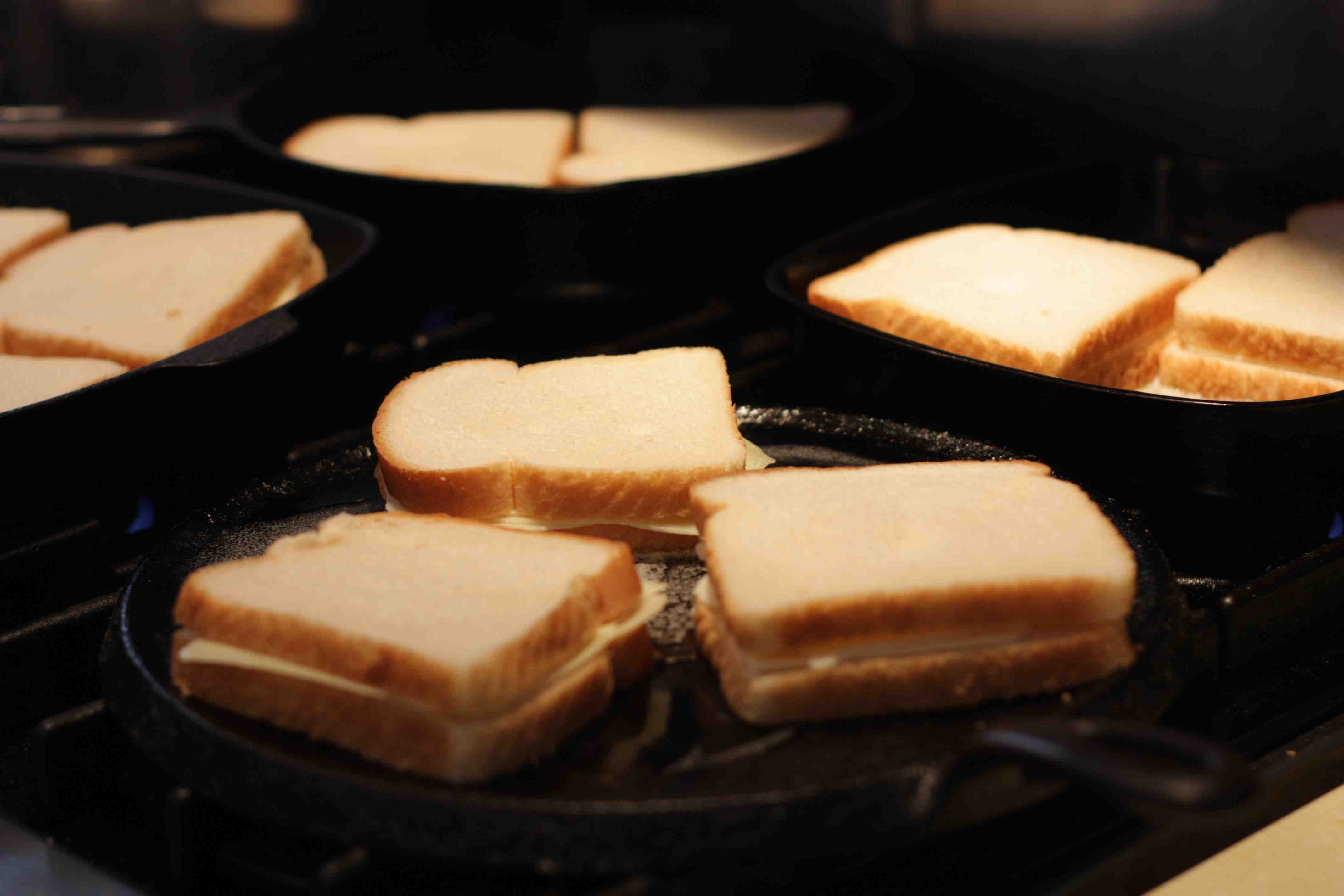
A dozen sandwiches for a dozen roof shovelers.
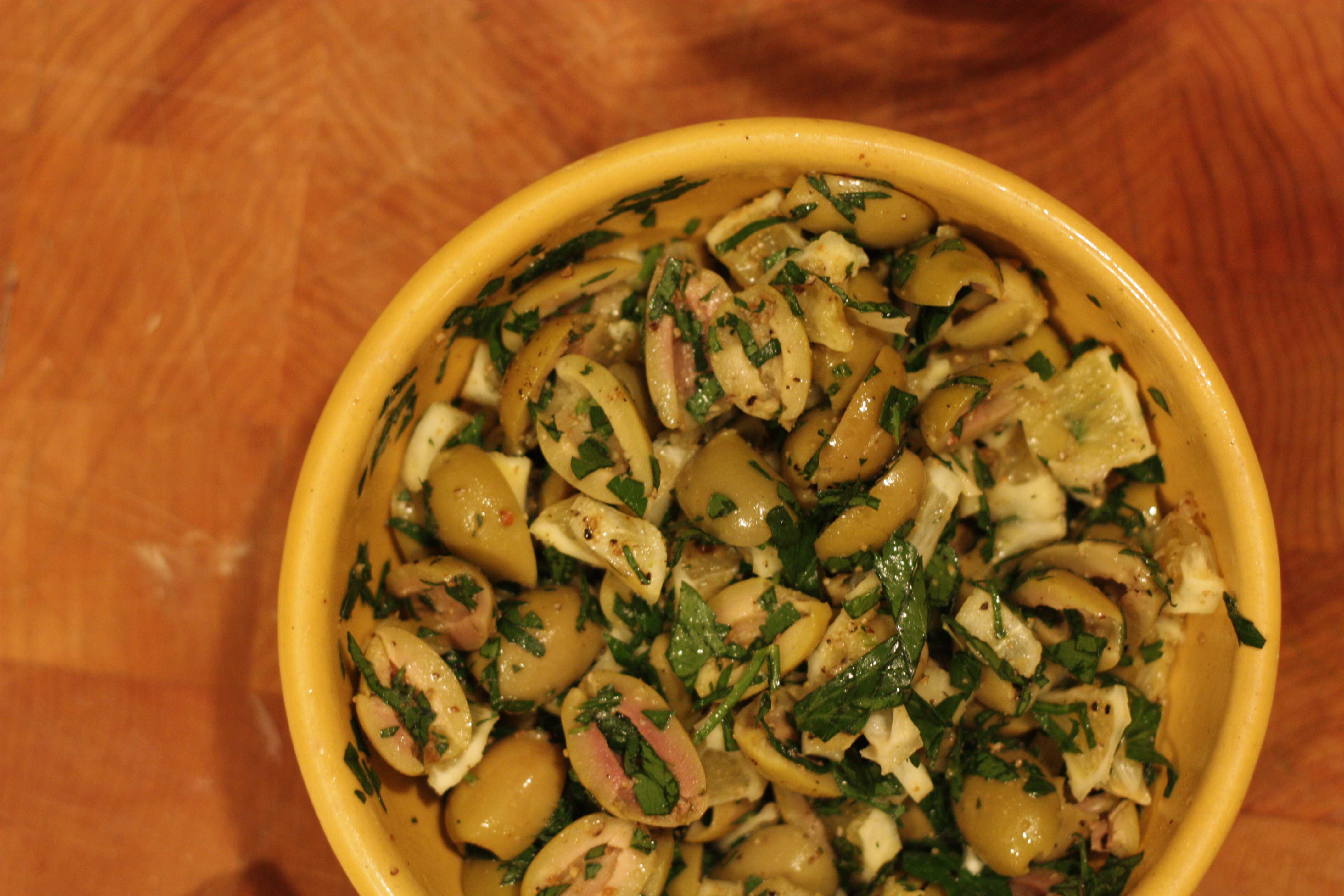
Green olive and Meyer lemon salad

What’s next? We have locally-made merguez in the freezer and wild salmon in the refrigerator. We have a dozen different kinds of whole wheat pasta in the pantry, and today might be a good day to squirrel myself away and figure out what to do with the two bags of Urad dal I have taking up room in my spice cabinet. I can sit in my office, at my computer, and call it work.

After breakfast today—after we had tea and toast and called our respective mothers to check in and make sure they weren’t going out for any joyrides—I went through a teetering pile of mail on the kitchen island. Underneath it was one pair of Susan’s glasses—her favorite bright blue ones that make her look like a younger, slightly hipper Lina Wurtmuller. I handed them over, moving another pile of books from the island into my office. They were suspiciously damp.

“Um, honey,” I said sweetly, “Why are the books wet?”

“Because they slid into the dog’s water bowl during the night. Remember that crash we heard?”

“And how do we think that happened,” I asked, imperiously.

I wanted her to really think long and hard about it.

Smoked Spiced Eggplant

(Adapted from Suvir Saran’s Indian Home Cooking)

I should say off the bat that I’ve never been a particular fan of eggplant: it absorbs oil like a sponge unless you salt it, and then you have to rinse it, and that makes it slimy. If you undercook it, it takes on a texture not unlike packing peanuts. But lately, I’ve been eating a lot of vegetables—possibly more than ever before—and preparing all manner of things that I’ve suddenly developed a craving for, like this smokey eggplant puree that can be eaten cold or hot or at room temperature, making it ideal for snowdrift-bound midday nibblers who may or may not lose power. You can make it super-spicy or mild, and if you roast the eggplant over a charcoal grill, you’ll wind up with an incomparably smokey essence that gives the dish a whole other dimension.

Serves 4

1 large eggplant (about 1 pound)

2 tablespoons canola or grapeseed oil

2 tablespoons fresh minced ginger

1 large red onion, finely chopped

salt, to taste

2 garlic cloves, ground to a paste in a mortar and pestle

1 tablespoon unsweetened shredded coconut

1 tablespoon ground coriander

1/2 teaspoon ground cumin

1/2 teaspoon garam masala

1/4 teaspoon cayenne pepper

3 canned tomatoes, chopped (or 2 ripe medium tomatoes, chopped)

1/2 jalapeno, chopped

2 tablespoons fresh chopped cilantro

1 tablespoon fresh lemon juice

Preheat oven to 500 degrees F. Jab the eggplant a few times on each side with a fork, place on a heavy duty cookie sheet, and roast in the oven until completely blackened, and the flesh is soft, about 30-4o minutes. Let cool, pull off the skin and the stem, and place the eggplant flesh in a bowl and mash it with a potato masher.

Heat the oil in a large wok over medium-high heat. Add the ginger and cook, stirring, for 30 seconds. Add the onion and salt and cook, stirring until the onion begins to brown around the edges, about 10 minutes.

Add the garlic and cook, stirring, about 30 seconds. Add the coconut, the coriander, cumin, garam masala, and cayenne, and cook, stirring, for 2 minutes. Add about a tablespoon of water, stirring, until the onion begins to stick to the pan, about 1 more minute.

Add the tomatoes and the eggplant, stir well and often, and continue to cook, about 5 minutes. Stir in the jalapeno, 1 tablespoon of the cilantro, and the lemon juice. Taste for salt, spoon into a serving bowl, and garnish with the balance of the cilantro.

I’ve always been such a wannabe. It’s totally disgusting and I’m often filled with self-loathing because of it.

Twenty years ago, my ex and I went down the vegetarian path. It was a time of crystals and past-life regression therapy and hands-off chiropractic where one’s aura was manipulated and one’s insurance company charged. At home, we made the decision to not eat anything that had a face, which wasn’t easy since I was working for Dean & Deluca at the time, and my lunch of choice often involved a three-meat sandwich consisting of speck, bresaola, and Prosciutto, depending on what bits and ends were left over from a morning of high-class deli slicing.

“You could go next door to Whole Foods and have a salad,” my ex said, but I was constitutionally incapable of buying my lunch and my colon cleanse in the same place.

One night, we went off to a local vegetarian cooking school, which every week opened its doors to the public for dinner and an evening of music. The food was brown and bland and covered with a spackle-like sauce the color of a Crayola Burnt Sienna crayon. The music was provided by one man, his electronic keyboard, and a drum machine that went BOOM chunka BOOM chunka BOOM in the background, regardless of what song he was playing or its rhythm, and which continued long after the tune was over and the music man was standing over at the bar, sipping a glass of non-alcoholic cider.

But still, we tried. I bought felt Birkenstocks. Wherever I had to replace meat in a dish, I used cheese. My cholesterol skyrocketed to over 200. As a Christmas gift that year, we were offered the keys to our friend Tim’s cabin in Woodstock, New York while he and his partner Peter went off for a week to study with Louise Hay. We were given the strict orders not to cook any meat in the stove, for fear that its karma would seep into the walls and rafters. After six days of eating rice and beans, we went into town and bought a roast, a can of oven cleaner, and a smudge stick.

We made a nice dinner. I ate. She cried.

A while later, we broke up after I unearthed a used Gray’s Papaya napkin from the bowels of her acid-washed jeans’ pocket while doing the laundry; she accused me of being too judgmental. I took a cab to Peter Luger‘s, where I ate the porterhouse I’d been dreaming about for two years.

So, living a plant-based lifestyle and I got off to a rocky start. But here I am, 20 years on. I’m a food journalist. My cholesterol’s through the roof. I’m about 15 pounds heavier than I should be. I have a mostly rare, recently-diagnosed heart thing that’s controllable only by an extreme blood pressure reduction. And every January, Susan and I announce to each other that we’re going to eat a plant-based diet. We spend weekends pouring over piles of vegetarian cookbooks, and by the end of February, there’s so much meat in the fridge that the sausages clog up the vegetable drawers.

But I get it. I really do. And that’s what makes it so hard, even for me, the daughter of a furrier and the great granddaughter of a butcher. I understand it, ethically speaking; it makes sense to me from a global-warming, farmer-supporting, vegan shoe-wearing, earth-dying point of view. And certainly, from a me-dying point of view. But I’m in my forties, and like most Americans my age, I grew up eating my weight in hamburgers and hotdogs, fried fish and grilled cheese with bacon; when the ’80s rolled around, I ate things like foie gras drizzled with Silver Palate raspberry mayonnaise. In the ’90s, there was a ton of Italian food, and dinners at Danny Meyer’s restaurants. And now, I’m on a near-constant search for dishes that will allow me to do the right thing because I really want to do it for more reasons than I can possibly list: I really want to be a vegetarian.

I’ve read Mark Bittman’s book countless times, and honestly, I can’t get my brain around his doing the vegan-till-six thing so willingly, unless a doctor said to him “you’re gonna die if you don’t stop with the pizzocherri.” It’s just so not Mark Bittman. It’d almost be like Bourdain doing it, and that would never, ever happen unless someone said to him “You know that hottie wife you’ve got? You know that two year old daughter you’ve got? You won’t be around to see either of them in ten years unless you start eating differently.” Then, maybe.

So what’s with the delusion? If I’m acting and functioning like a vegetarian most of the time, can I call myself one? No. It’s like being a little pregnant; either you are, or you aren’t. It has to do with the fact that it’s human nature to love labels, and to desperately want to categorize ourselves amidst the disorder and confused throng of everyday life. The fact is that any of us who want to be something we’re not simply cannot just wake up one morning and in clear conscience give ourselves a label unless it’s true.

Listen up: you’re not a vegan if you’re an almost-vegan. You’re not a locavore if 80% (or 50%, or 20%) of the stuff in your kitchen is imported from Parma by way of Costco. And, like me, you’re not a vegetarian if you still eat your bubbe’s kreplach, which I do and likely always will, even if it’s just on occasion, and even if it’s made with grass-fed beef. Note to self: Grass-fed beef is not a vegetable. Not. A. Vegetable.

But having said that, are there ways of making a significant change without going whole hog? Yes. Will there be a time when you wake up one morning and actually crave vegetables and grains? Yes. Maybe not every day. But sometimes. And that’s okay. Entire tomes have been written on the subject, which I’m not sure I understand. For one thing, where do bookstores shelve a volume that is mostly vegetarian except for the odd steak recipe? It’s a practical issue, when it gets right down to consumerism. Why not just buy the best of the best of vegetarian cookbooks instead, like my friend Deborah’s Vegetarian Cooking for Everyone, and dip into it on a regular basis?

Anyway, here are a few things to note as you travel down the wannabe plant-based path of glory alongside me:

1. It’s not your college tofu anymore. The tofu of the 80s was so rubbery it could be used as a squash ball and so bland that you had to infuse it with buckets of fat (sesame oil, marinades, etc) to make it taste like anything other than wallpaper paste. Buy good tofu. It’s out there. I buy artisanal, traditional Japanese-style tofu made in Middletown, Connecticut. It comes in one density: firm, and it’s made from non-GMO soybeans. I wrap it in paper towels and press it under a heavy cast iron pan, and then lightly pan-fry it in a little oil. For more on this subject, look for Deborah Madison’s stellar, stealthy This Can’t Be Tofu, a small book that’s worth its weight in gold.

2. Learn to love ethnic food. If you do, you’re already halfway there, especially if it’s Indian. Granted, not all Indian food is vegetarian, but when it is, it manages to marry booming flavor with incredible texture, which is my next point.

3. Understand texture: You know what it means to overcook vegetables, right? You get slime. If you’re making, say, a pile of greens for dinner, add other textures to it. Put braised hearty greens on top of a crusty piece of toasted sourdough bread. Give it a shave of Parmigiana Reggiano or a dollop of harissa. Top a bowl of soba noodles with a crispy-edged fried egg, a triangle of golden-brown tofu, and slivers of scallion. If you master texture, nothing will ever be—or at least feel—slimy again.

4.If it’s all brown, something’s seriously wrong. Vegetables are, and should be, colorful, as should their sauces. Nothing is more appealing than a bowl of braised vegetables and beans; nothing gives more flavor than a well-executed sauce, like a nutty romesco or a wildly pungent, mouthwateringly herby chermoula, both of which can be used everywhere from garlicky croutons to steamed cod (remember, I’m not a vegetarian) to roasted tofu.

5. Learn to cook grains. Grains don’t start and end with your grandmother’s kasha varnishkes. Learn how to make them, and then go wild: turn them into croquettes; stuff them into a small Delicata squash, sprinkle with some feta, and then roast; mix them with beans, add a little stock, a few tomatoes, some leftover greens, and call it a soup. Add some diced ham if you must.

6. Make meat a side dish: Everyone’s saying it these days, but it works. If you grew up in the ’60s the way I did and spent every dinner eating a meat and two sides (one potato dish, one flaccid green bean dish), rotate the plate and make the sides the main, and the main the side. And by side, I don’t mean considering  macaroni-and-cheese a vegetable side the way they do in the south, just because it has no meat in it. Sorry.

7. Don’t make any great declarations about yourself: It’s so bloody tiresome and nobody really wants to hear it. Do what you can do as you can do it. Sometimes you’ll eat vegetarian for weeks on end, the way I do, and sometimes you won’t, the way I do. Sometimes you’ll eat mostly vegetarian, sometimes you’ll eat a prime rib. And that’ll be fine, too.

It’s been years since my ex went off to Naropa to play lead doumbek in a drum circle, and I smudged my friend Tim’s stove in Woodstock because I’d roasted meat in it. It took me years of therapy to get beyond the deep-seeded aggressiveness of my actions, but I think I’m pretty much over it. And I’m fine with saying that I’m no longer the vegetarian I once was back in the 1980s, when whole foods were brown and a Gray’s Papaya hotdog was my secret breakfast of choice.

I still eat them today, but only once in a while.

indiebound


©2009, ©2010, Poor Man's Feast. All rights reserved. To reprint any content herein, including recipes and photography, please contact rights@poormansfeast.com