Lentils are always a good thing.
I’d like to say that I’m not big on zodiacal cliches, even though, as a Cancerian, I am one, down to the bone: I’m all about nurturing and comfort and caring for people, assuming you haven’t caught me on a bad day when I’ve crawled into my shell. I’m drawn to water like a fish, and I cry at the drop of a hat. My dream vacation involves renting a house with friends and cooking every night. There’s no place I’d rather be than at home, in the loving safety of my kitchen, with Susan and my dogs/cats (aka kids).
So when the stars turn left instead of right (or right instead of left), I get tripped up; I stumble, like someone metaphysically hog-tied me around the kneecaps. Things go haywire: recipes go wrong. Projects are delayed. Bank accounts echo. People get sick. I start cooking things I’ve sworn off, like heavy, meaty stuff. I’ve recently discovered that my personal crutch — for some it’s chocolate or sweets or alcohol — is fried chicken: just one piece — just one — eaten in the car on the way home from the gym. In the back seat, there’s a big, hulking, snotty, snorting, hideously revolting, wart-covered monster, breathing fire over my shoulder and belching in my ear: You totally suck, it laughs, as I eat a drumstick, brushing the crumbs off my lap.
Bad mind, my Buddhist friends would say.
 It’s been a long time since my last post, and for that, I’m sorry: the great news is that I finally finished my book (yay!) while simultaneously dealing with a universe that appears to be snickering in my face like that big angry George Booth dog with sharp, nasty teeth. There have been other projects delayed, cancelled, and retooled midstream. There’ve been checks that have gotten lost, phone messages that were never received, emails that disappeared into a black hole. And just to let me know that my small, writerly, food-obsessed life is tiny beans in the broad scheme of things, there have been a host of folks around me who have gotten sick, or who I’ve lost along the way, like my good friend and neighbor Melissa’s mother, Jean Smith.
When Susan and I first moved to our neighborhood eight years ago, we didn’t really know what to expect — who ever does? Lucky us, we were surrounded by great, kind people, more or less our own age. And then, there was this woman, Jean, who was very much NOT our own age. But although she was in her early eighties when we first met her, she seemed to be our age, and even a bit younger and more carefree. Over the years, we sort of adopted her and she, us; she came to Christmas dinner one year with Susan’s family. She came to a neighborhood Passover Seder that I threw, where my mother and I were the only Jews at the table. And wherever she went, she brought joy, loving kindness, and compassion.
She also brought these kick-ass chocolate covered, caramelized Saltines that completely rocked my non-sweet tooth. (When she came to the Seder, she actually made them with salted matzo. A very nice lady. Here’s Smitten Kitchen’s version of the non-matzo variety.)
Anyway, whenever life threw Jean a curveball — which it did, a lot — she’d toss her hands up in the air, and say “Well, my dears, it’s just the way things are, so I have to get over it. No point in getting stressed out!” And then, there were these mammoth hugs that she’d offer if she thought that you — or anyone in her midst — needed them. Which we all almost always did.

Jean valiantly battled a virulent form of cancer this past year. “Can you BELIEVE it?” she’d say to me. “I feel pretty good, all things considered,” she’d laugh. And the day that this picture was taken, she was in perfect Jean shape, which was at least good enough to flirt like crazy with the tasting room manager at our local McLaughlin Vineyards; he responded by giving her a glass of wine large enough to soak her feet in. She drank the entire thing, pretty quickly.
The last time we saw her, she had already taken a turn for the worse. That afternoon, she woke up long enough to say hello, even though it took her a good ten minutes to recognize who we were. I knelt down alongside of the living room recliner she was dozing in, and when she touched my cheek and I looked into her eyes, I didn’t see the face of an old lady who was on her way out; I saw the face of my friend, who might as well have been 35. That’s how young and filled with spirit she looked that day, and that’s the face I’ll always remember.
So, we lost Jean. And then, as if on cue, all hell broke loose, and everything started to go haywire. It was like the universe got SO pissed off at the fact that she wasn’t with us anymore, that it had a major temper tantrum. It reminded me of that great Anne Lamott essay from Salon, Traveling Mercies:
Broken things have been on my mind as the year lurches to an end, because so much broke and broke down this year in my life, and in the lives of the people I love. Lives broke, hearts broke, health broke, minds broke. On the first Sunday of Advent our preacher, Veronica, said that this is life’s nature, that lives and hearts get broken, those of people we love, those of people we’ll never meet. She said the world sometimes feels like the waiting room of the emergency ward, and that we, who are more or less OK for now, need to take the tenderest possible care of the more wounded people in the waiting room, until the healer comes. You sit with people, she said, you bring them juice and graham crackers. And then she went on vacation.
Ah, Anne.
Anyway, I’ve been trying to convince myself of something I already know: that when I’m feeling like crap and I really want to eat the food that will momentarily make me feel good (followed by not good), I’d be much better off actually taking care of myself, and cooking things that are not only soothing, but also reasonably healthy. This does not include fried chicken. A few weeks back, Heidi Swanson sent me the link to her outrageously delicious lentil soup recipe, and ever since then, I’ve made it a bunch of times, tweaking it here and there to make it smokier and spicier. I thought about adding diced bacon, but then I figured, better not.
This soup, which I think Jean would have loved, falls into the chicken soup category for me — it’s mysteriously soothing and calming and cleansing, all at once. And until the universe takes a Xanax, it’s exactly what I need.
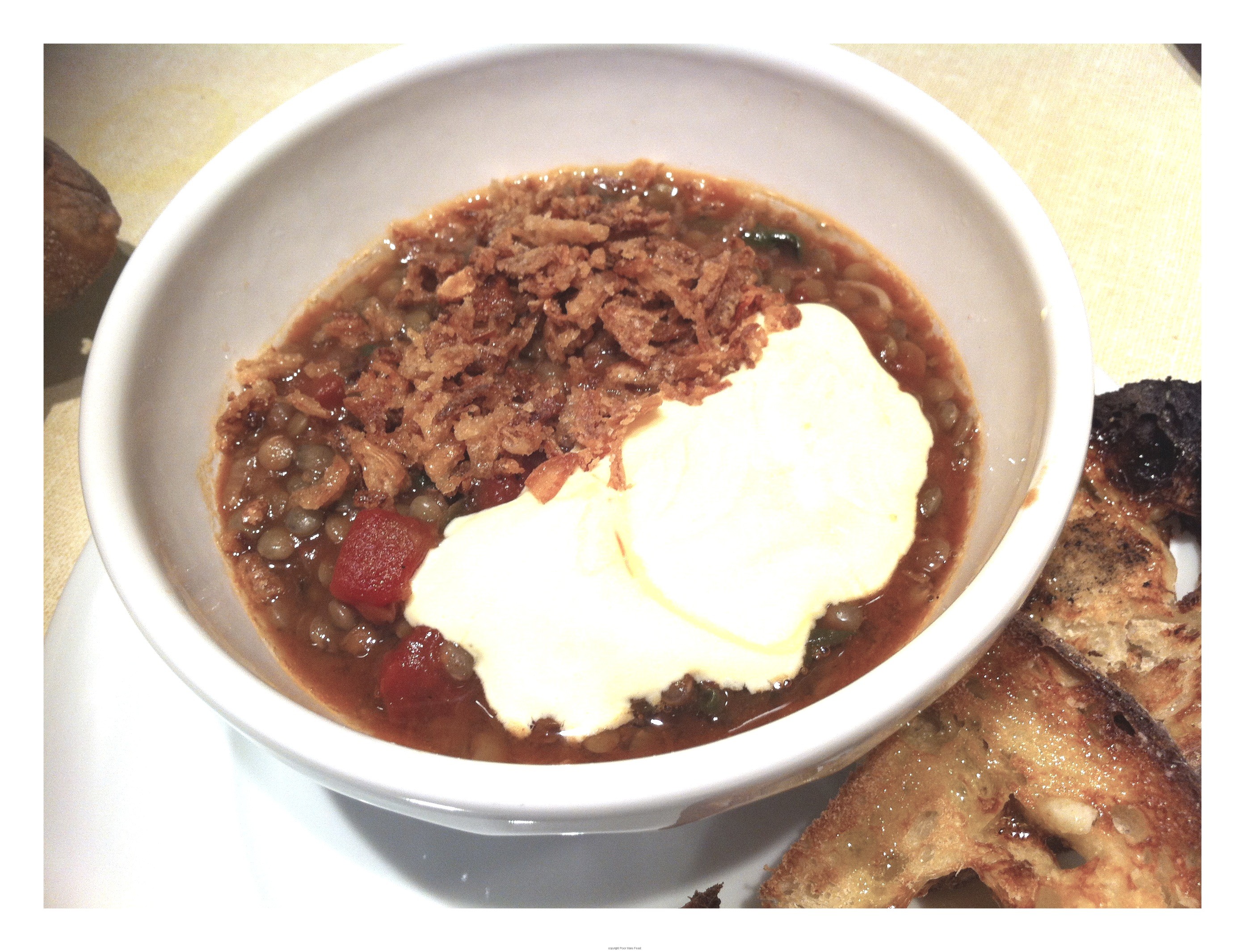
Tomato Lentil Soup with Pimenton, Fried Shallots, and Saffron Yogurt
(Adapted from Heidi Swanson)
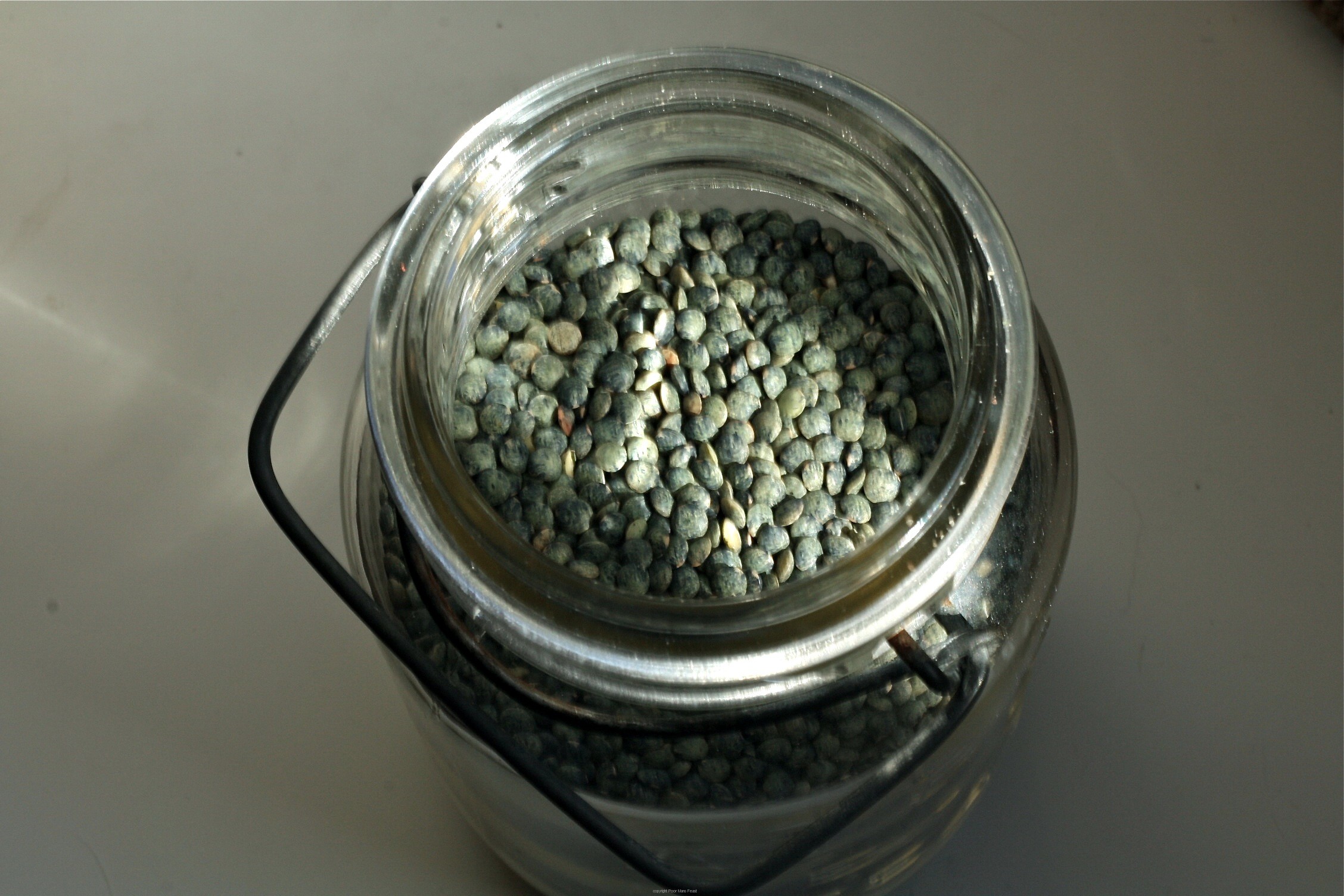
As Heidi says, it really is imperative that you use black lentils, or Lentils du Puy for this soup; you not only get incomparable earthiness, but they hold together beautifully. In my version of this insanely delicious curative, I’ve swapped out water for vegetable stock and added a pinch of pimenton, cayenne, and toasted, ground cumin, which I find adds depth. Unless you’re really up for frying sliced shallots, you can find them at any good Asian grocery store. This soup only gets better if it sits in the refrigerator overnight, and should you have any leftovers (I’ve had very little, every time), serve them over a slice of garlic-rubbed crusty bread drizzled with good olive oil, like a quasi-ribollita.
Serves 4
2 cups rinsed Lentils du Puy
1 tablespoon extra virgin olive oil
1/2 teaspoon pimenton, or hot smoked paprika
1/2 teaspoon toasted, ground cumin
1/8 teaspoon cayenne
1 medium Spanish onion, coarsely chopped
1 teaspoon sea salt
1 28 ounce can crushed San Marzano tomatoes
2 cups vegetable stock
3 cups chopped Lacinato kale leaves
1-2 tablespoons crispy fried shallots
Saffron yogurt
1 pinch of saffron threads
1 tablespoon boiling water
1/2 cup Greek yogurt (Heidi calls for 2%; I made this with non-fat)
Bring 6 cups of water to a boil in a large saucepan, add the lentils, and cook until just tender, about 20 minutes. Drain, and set aside.
In a medium soup pot (clay is great if you have it, and I’m deeply in love with my Bram Cookware La Chamba pot, which I’m convinced adds flavor to anything I cook in it) over medium heat, warm the olive oil until it begins to shimmer. Add the pimenton, cumin, and cayenne, and stir well until the spices just begin to release their aroma. Add the onion, reduce the heat to medium low, and cook slowly, until the onion becomes translucent and glassy.
Sprinkle in the salt and pour in the tomatoes and the stock. Add the lentils to the pot, and stir well to combine. Raise the heat a little bit until the soup just gets to a burble, and cook for ten minutes, uncovered.
While the soup is simmering, make the saffron yogurt: combine the saffron and boiling water in a small bowl, and let stand for 3 minutes, until the water has taken on the saffron’s color and fragrance. Stir the contents of the bowl (the liquid and the threads) into the yogurt, and blend thoroughly.
Fold the kale into the soup, and cook until completely wilted. Serve immediately, with a dollop of saffron yogurt, and a sprinkling of fried shallots.