A Trip to Norway

October 2, 2012 · 15 comments

Some little girls grow up dreaming of Paris, and Madeleine; I grew up yearning for Norway, and snow-capped mountains. By the time I was six, I had eaten a small city’s worth of sweet Brunost, and far more lefse than matzo. By the time I was nine, I was carrying my schoolbooks in a royal blue nylon rucksack on a metal frame scaled down to child-size; it was emblazoned with the Norwegian flag, several of which also decorated my bedroom along with at least five David Cassidy posters. Instead of playing with Barbie or Chrissie — that frightening doll whose orange hair magically grew out of a hole at the top of her head — I played “viking” with a small collection of rubbery, bug-eyed trolls. I knew how to say please and thank you in perfect Norwegian, along with good morning and good night, and I was introduced very early to the works of Roald Dahl not because he was British, but because his parents were Norwegian and therefore, technically, so was he.

This was all a little weird for a Jewish child growing up in late 1960s Queens and in possession of not one drop of Scandinavian blood, but nobody bothered to inform me of that.

One of my mother’s dearest friends, Anne, was Norwegian, and had grown up as a young child in Nazi-occupied Oslo. She and her husband, who was American, lived in our apartment building and had two sons, one of whom was a year younger than I — there is a picture kicking around someplace of the two of us going trick-or-treating on Halloween in 1967 when I was four and he was three; I was dressed as a witch, and he, as Barry Goldwater. They were slightly strange, fun-loving people (who dresses a three year old up as Barry Goldwater?), and being an honorary part of their circle made me happy.

After the boys and I went off to school each morning, my mother and Anne spent their days together; they shopped and ate lunch — Anne taught my mother about Jarlsburg (the real stuff, as opposed to the low-fat waxy dreck that has replaced it in America over the years) and lefse and Brunost, made from caramelized whey. When the boys and I came home from school, we squirreled ourselves away in their bedroom and played with the dozens of trolls and ski jumping dolls that they’d brought home from Norway, where they’d visit their grandmother and cousins for a few weeks every summer.
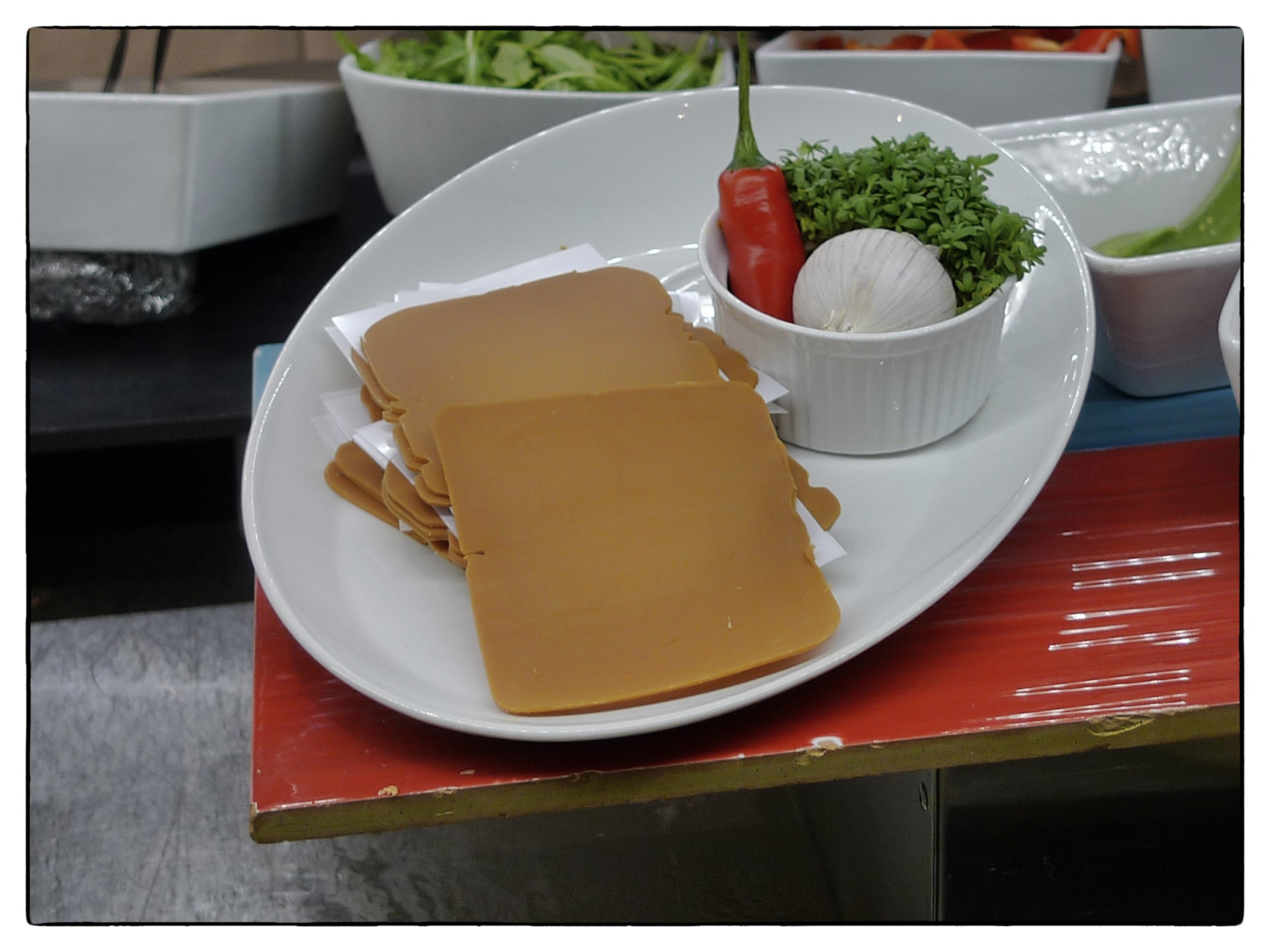
Eventually, our connection to Anne and her family frayed amidst the sort of unfathomable tragedy that renders people speechless: her elder son died at his own hand, and her husband, as the result of a hit-and-run on one of the busiest thoroughfares in Forest Hills. She packed up her younger son and moved to another part of Queens; we rarely saw them after that, and my connection to all things Norwegian — food, culture, language, idiom — was gone. I’ve missed Anne — and Norway — all this time, and while I’ve thought of her a lot over the years, it never once occurred to me that I could actually be homesick for a culture that was neither my own, nor that had I ever experienced first hand.

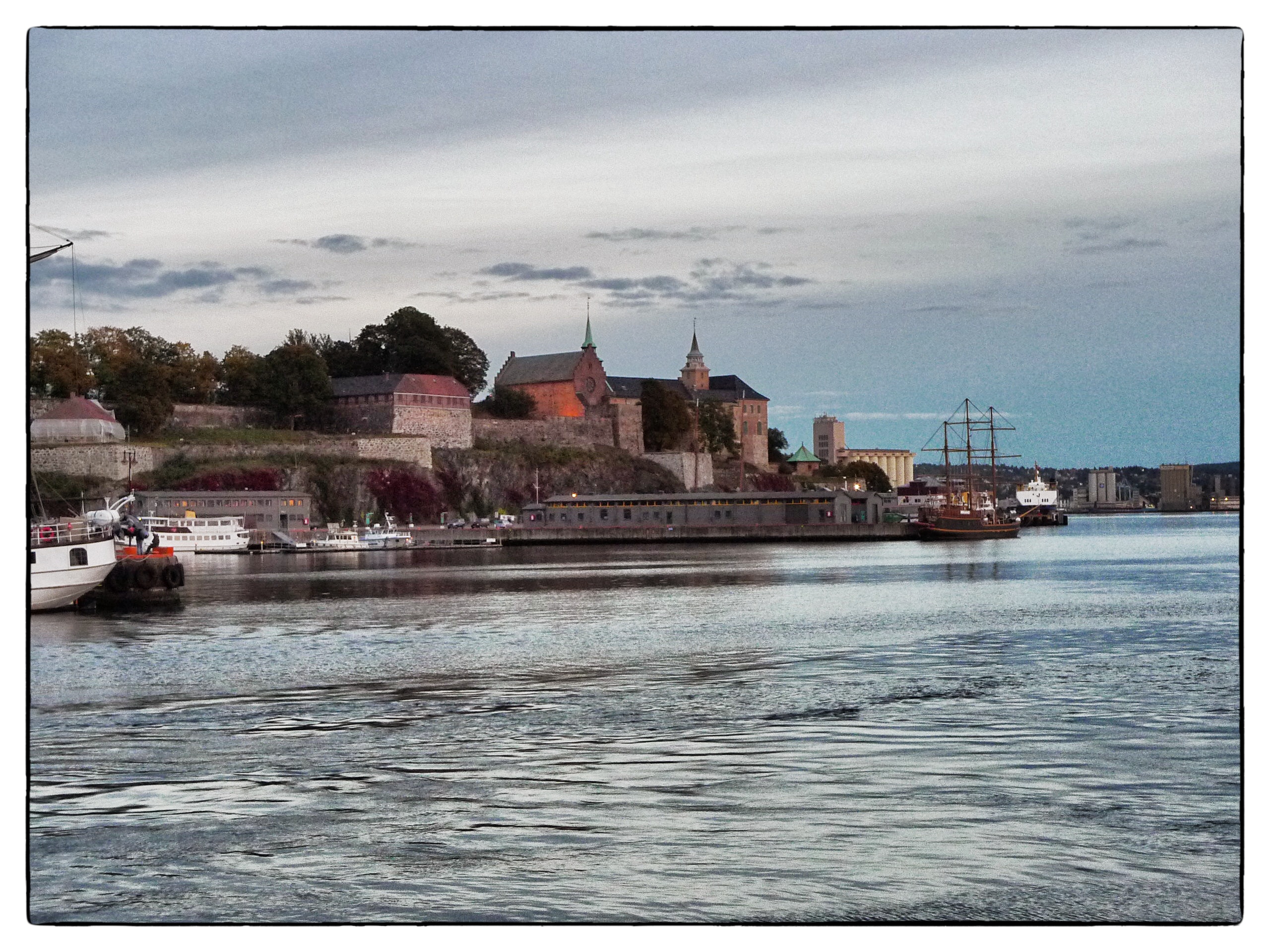
As a food writer, I’ve visited a lot of places situated on the map of culinary predictability: I’ve eaten picci in Lucca and civet in Paris, cacio e peppe in Rome and manti in Istanbul. My future plans include travels to Barcelona and Ho Chi Minh City; I expect to visit Argentina over the next few years, and Ireland, and possibly Malaysia. But until I received an invitation from the Norwegian Seafood Council to spend a week in Oslo, Tromso, and Skjervoy — the latter two cities are situated four hundred miles north of the Arctic Circle — Norway as a culinary destination wasn’t exactly on my radar screen: the place existed in my metaphysical rear view mirror, and faded into the mists like an emotional Brigadoon. Norway meant family and friends long gone, and another place and time in my life that’s not always comfortable to think about. But it also reminded me how easy it is for parts of our lives to be there one minute — front and center and laden with the flavors and sensibilities of a particular culture’s table to which we’re invited as guests — and gone the next. When the Council reached out to me, I said yes, immediately and instantly; for one thing, I very much want to be proven wrong about the way I think of aquaculture, and how it impacts the environment. But almost simultaneously, I also started dreaming that I was sitting around Anne’s table in Queens, and eating brunost and klippfisk, lefse and fiskeboller, salmon and mackerel and mustard sauce. And then going into her son Jeff’s bedroom to play with the fabulous trolls that lined the his shelves.

I called Anne the night before I left for Oslo, to tell her that I was going and to say what I never had before: that Norway — her home country — had meant so very much to me as a child, and that it was her doing. And that while other little girls dreamt of Paris and the Eiffel Tower on the cover of Ludwig Bemelman’s first Madeleine book, I dreamt of fjords and mountains, ski jumpers, and the midnight sun which, no matter how hard I tried, I could never completely fathom.

At first, she didn’t recall my name; she’s over 80 now, and I’d caught her by surprise. It had been ten years since we’d last spoken, after my father died. But when I said that I was finally — at last — going to Norway, that I had been invited to visit by the Norwegian Seafood Council because they wanted to show me what aquaculture — fish farming — can sometimes look like, it was as though we’d just talked a day earlier. The conversation ebbed and flowed until I said that I was leaving the next day, and that my destination was far above the Arctic Circle; Anne’s sweet, familiar hyperbole kicked into gear.

“You’re K-I-D-D-I-N-G me,” she said, the weight of her still-heavy accent dragging the sentence out for a full half a minute.

“I’m not,” I answered. “I wanted to call and tell you because Norway was such an important part of my life as a child, thanks to you—”

“You’re K-I-D-D-I-N-G me—” she repeated. “I had no idea—-”

And really, why would she? Do children ever possess the distance and sensitivity it takes to recognize that their normal might not exist at all without the presence of a single person’s influence? Not so much. At least not in my case.

So I went to Norway, and spent hours walking around the city that occupies that nugget of my brain where childhood memory, flavor, and the hope of travel are all plaited together; for reasons I don’t understand, I never thought I’d get there, but I did.

And there’s so much more to tell.

Norwegian Lefse 
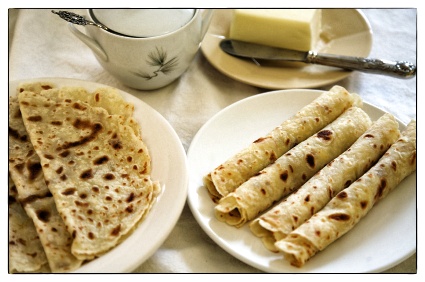
I’ve been crazy for flatbread since I was a little girl; apart from pizza and matzo, I probably ate Anne’s lefse earlier than I ate any other kind. I have a very distinct memory of her mother, who spoke no English, coming over from Oslo for Christmas, and making this potato-based bread. We ate it wrapped around thin slices of Brunost, or slathered with lightly salted butter and jam. Assuming you’re not anti-carbohydrate and therefore not terrified of potatoes,  you’ll find this flatbread easy to make, and an ideal way to spend an afternoon in the kitchen with a child.

Makes 12 lefse

2 cups starchy mashed potatoes, made a day in advance and refrigerated uncovered

2 tablespoons cream

1 tablespoon lightly salted butter, preferably European style (high fat)

3/4 cup unbleached flour, plus more for dusting

grapeseed oil

Place the potatoes in a large bowl, together with the cream, butter, and flour; using a large whisk or wooden spoon, fold the mixture together until everything is just blended. Fold the dough out onto a flour-dusted board, and knead by hand until smooth and no longer sticky. Cover with a flour-dusted linen napkin, and let rest for 15 minutes.

Pull off 12 evenly sized pieces of the dough, and form them into balls. One by one, place them on a floured board and, using a rolling pin, roll them until they’re paper thin rounds about six inches across.

Place a heavy skillet (well-seasoned French steel is ideal) over medium high heat, and  lightly drizzle with oil. When the oil is hot but not smoking, slip each flatbread into the pan and cook about a minute per side, until lightly golden. Stack them on a plate as they’re done, separating each with paper towels.
She married me. Again.

September 5, 2012 · 26 comments


This time, it was my mother’s idea. Mostly.

“It’s extremely important,” she said, “that you get married in New York.”

“But we’re already married in Connecticut–” I answered.

“But that’s not New York. Only New York is New York,” she said.

My mother possesses a slightly dippy sense of logic, but I understood what she meant: New York is home. It’s her home; she’s never lived anywhere else. She’s like that Saul Steinberg poster come to life. Stuff that happens outside New York is vague and slightly unreal to her, like Disneyland. Only New York is legitimate and although Susan and I are married in Connecticut, my mother didn’t think it counted.

Because Connecticut isn’t real, like New York.

So Susan and I started to talk about it in earnest a few months back, and not without some trepidation. Getting married a bunch of times to the same person can pose some problems after a while. Do you celebrate all the anniversaries, or just one? And how do you know which one? Is it bad form to accidentally forget one of them? Does celebrating five anniversaries if you have six mean that something’s missing from the relationship? Do people who traveled far and wide for the big one have to do the same for all of them? When does it begin to get onerous, for all parties? It can feel fraught after a while, but in our zeal to partake of the singular most culturally traditional act a completely in-love couple can possibly engage in, we decided to just keep on racking up the dates, and hope that our spotty memories are up to the task. (Of course, it would be so much easier if we could just celebrate one. But that’s a conversation for another place.)

Ours has been a marriage of love and a marriage of food; the last thirteen years have been a merging of styles and flavors and families and culinary sensibilities, and have totally changed the way we think about ourselves both singly, and as a unit. When we met, I brought a certain and deliberate culinary excess to the table, and a belief that everything destined for a plate had to be a celebration, and that celebrations always meant fancy (which also sometimes meant ridiculous, and almost always tall). Susan brought the exact opposite: her food was quieter, and often served on buttered toast. It was celebratory too, but in an understated, peaceful, and far less shoehorned-into-submission way.

I like to think that what I’ve re-learned about food, and life, and feeding people is thanks to her; that’s been her wedding gift to me, over and over again.


We had an unofficial union back in 2003, the year after my father died. Neither of us is religious — although I was raised in a Jewish home and Susan in a devoutly Catholic one — but we had two members of the clergy there and, because he couldn’t stand alongside us, our ceremony took place beneath my father’s Bar Mitzvah tallis (his prayer shawl) held aloft by my younger cousins. There were about sixty people there — family and friends on both sides came from far and wide — and because we were also celebrating some significant birthdays, it just felt like a big party. I worked for hours with our caterer to get the exact combination of Mediterranean dishes just right; I wanted the food to taste like Richard Olney had come back from the dead. There were thick Flintstone’s-sized, double-cut lamb chops coated in tapenade and fire-grilled. Susan doesn’t remember them. There was a tender olive oil cake, and gorgeous mounds of fresh fruit. I don’t remember them.  My unsmiling mother wore a Flashdance-y tee shirt with a strategically ripped neck that made it slide off her shoulder. Susan’s mother wore a black lace schmata in her hair, like a funereal mantilla.

That we remember.

In 2008, when Connecticut passed its civil union law, we had a second ceremony in our backyard, presided over by a local, sixty-ish Justice of the Peace who arrived wearing pigtails and a miniskirt. We didn’t mention it to our mothers and instead invited our neighbors and ordered twenty pizzas to go. The following year, Connecticut passed same-sex marriage, and we got married in front of our fireplace. A Justice of the Peace from the next town — a Republican elected official — performed the ceremony. He was a cross between Ichabod Crane and an undertaker dressed in a black wool Chesterfield coat, and he wept while we signed the paperwork. Our best friends Lisa and Alyssa were there with us, and we all went out for a quiet dinner afterwards, where I ordered fig-glazed quail legs that arrived in adorably tiny cast iron pans.

When we started to make plans to get married in New York City, Susan had one requirement.

“I don’t want to do anything big,” she said.

I agreed, and took her literally. I envisioned what the table might look like after our short ceremony: There would be small plates, and small bowls. There would be nothing tall. Everything would be light and seasonal. A French inflection would help. There would be wine, probably a lot of rose. Maybe a bottle of something sparkling, although not necessarily Champagne which, while I love it, sometimes just seems too big.

We limited our invite list to twelve. The wedding had to be during the day, and the food had to be simple, but stellar; some of our guests, who suffer real sensitivities to heat and spice (making it hard to believe that I’m related to them) required that whatever we ate had to be flavorful but on the mild and comforting side. During a recent lunch at Buvette — Jody Williams’ remarkable rustic jewelbox gastroteque that makes you feel like you’ve stumbled in to a tiny, deeply personal cafe in Paris that only a handful of people know about  — I found myself face to face with the exact same mirror we inherited from Susan’s Aunt Millie, who we adored and miss every day. It was hanging over a slightly sequestered farmhouse table for twelve. It was a sign.


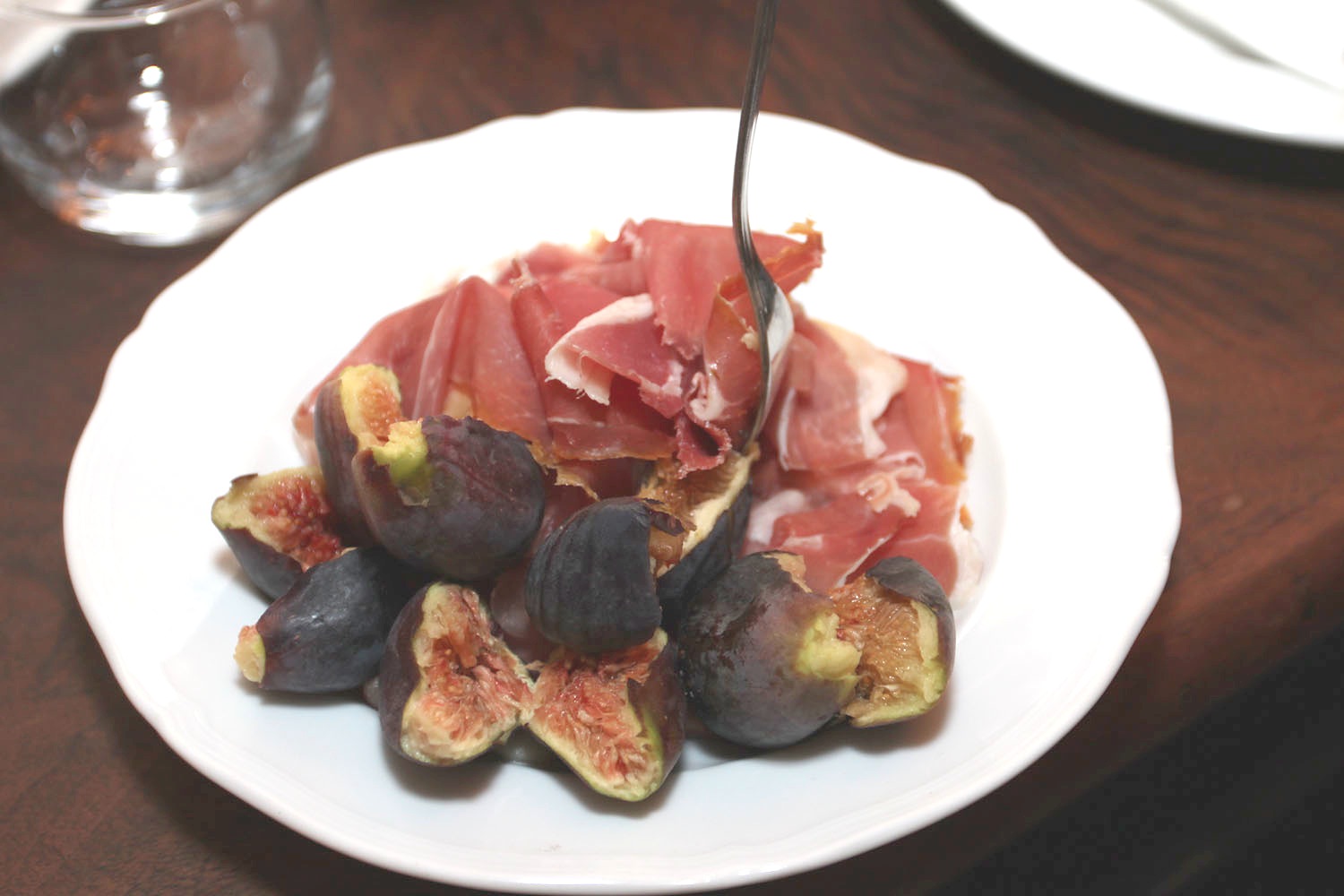
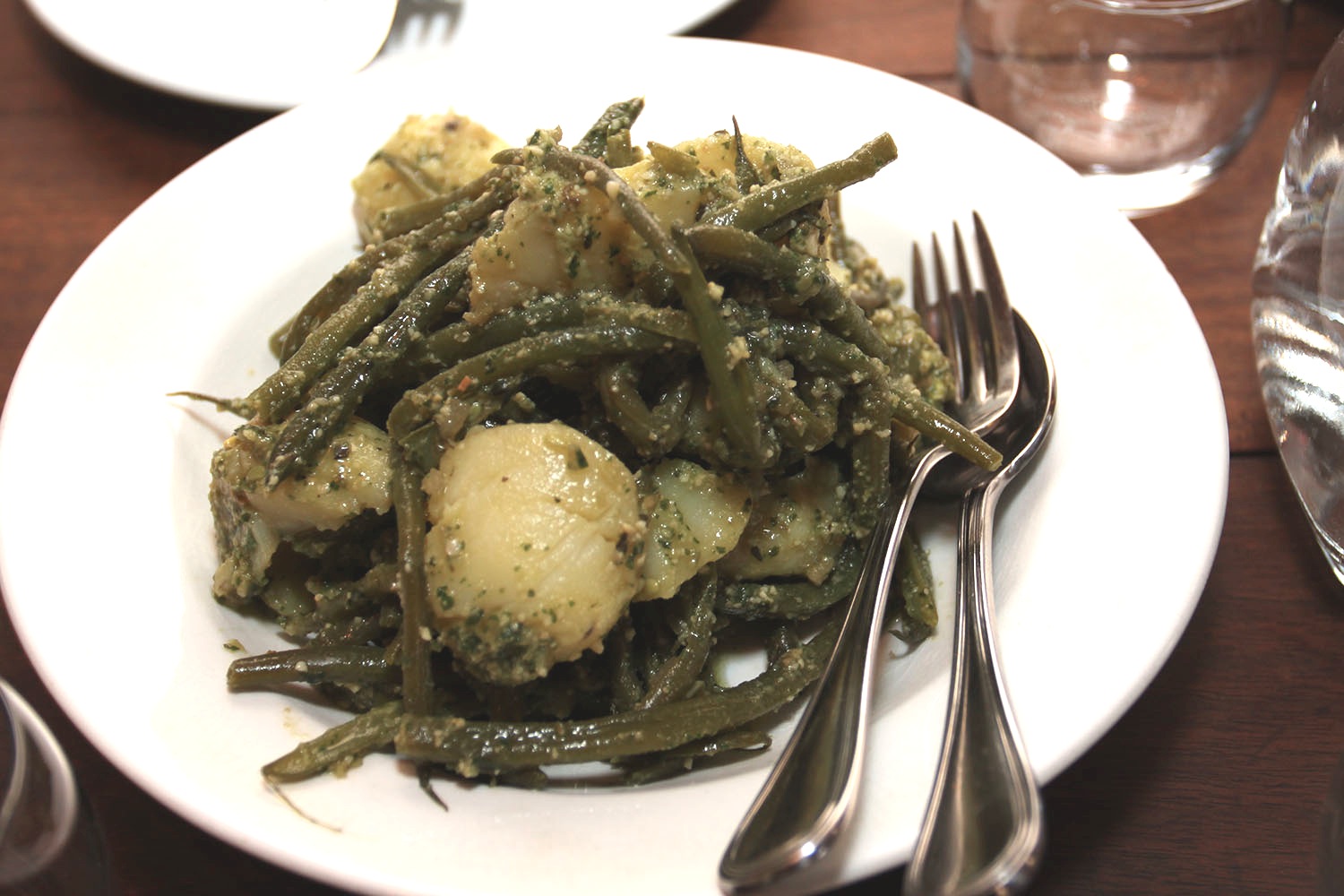
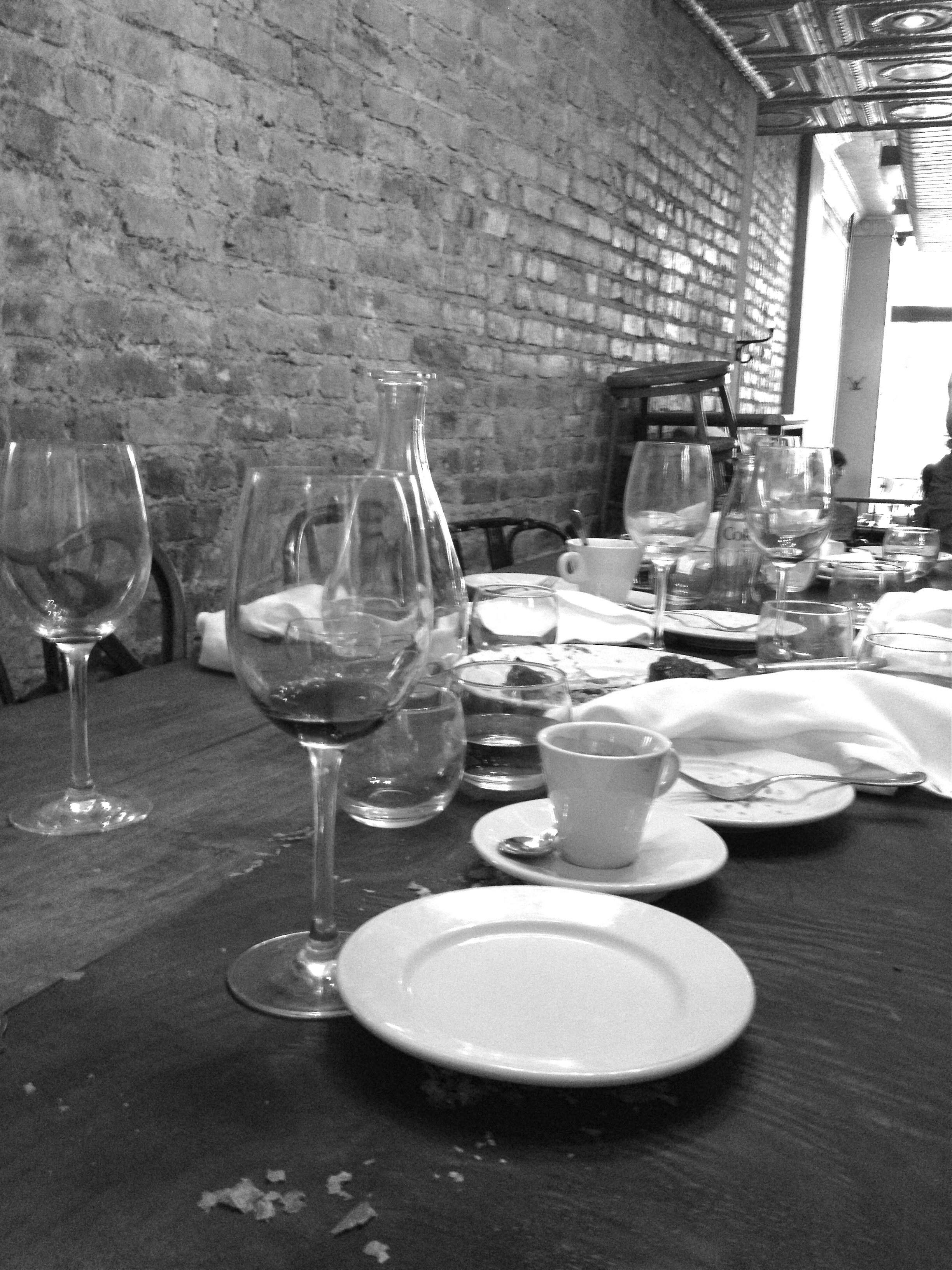
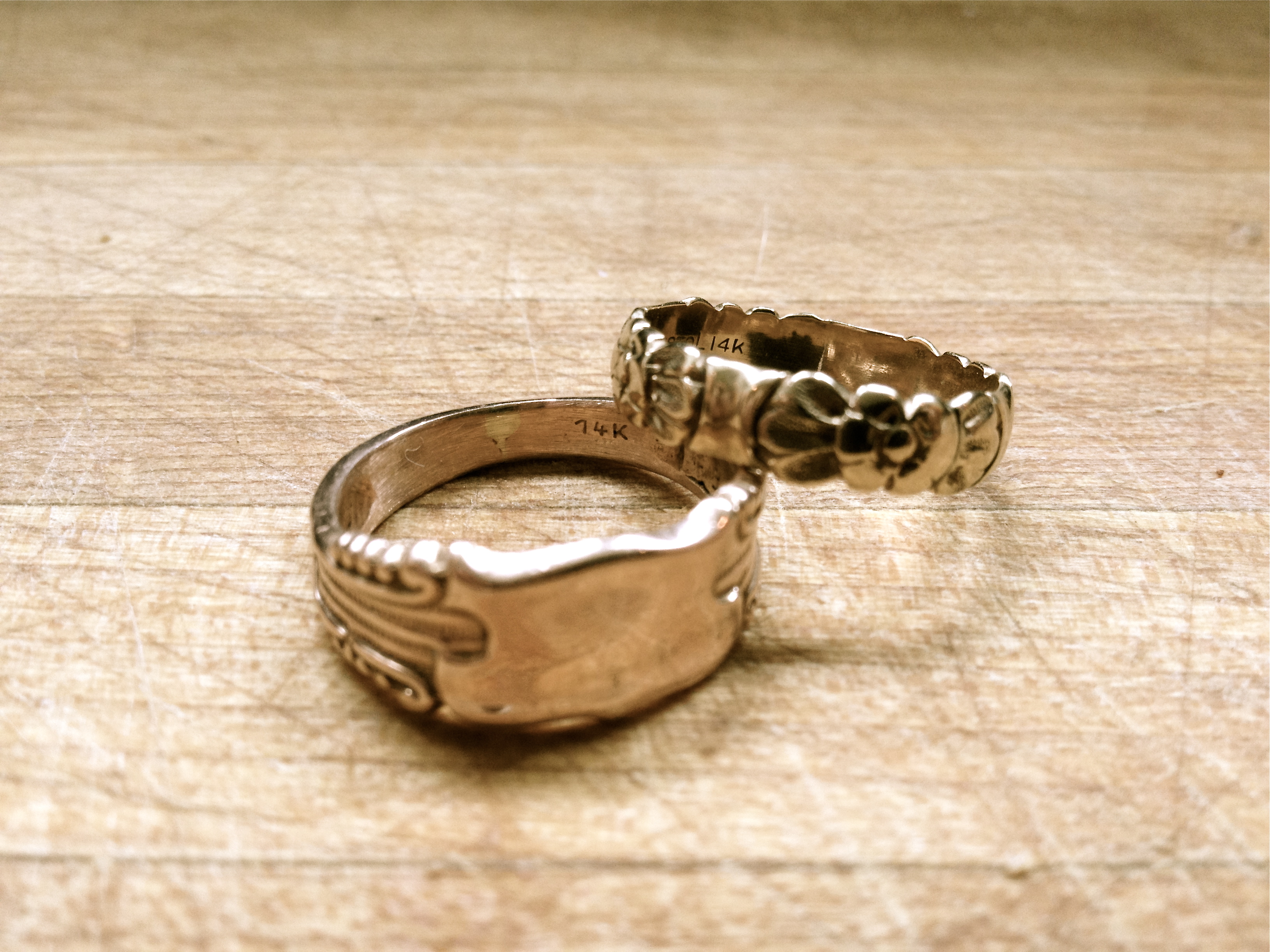
On August 24th, presided over by our dear friend, Judge Neil Ross, with whom I attended sleepaway camp in the 1970s, Susan and I were married in Buvette’s petite outdoor space, our backs to an immense window into the restaurant. Alyssa and Lisa were in attendance, again, along with my New York/Pennsylvania cousins Laura and Larry. Susan and I exchanged Victorian wedding bands while the restaurant’s patrons — sipping bowls of coffee; reading newspapers — looked through the window and beamed. And while we were outside making it legal, small bowls and platters were set down at our quiet wedding table: creamy, rich brandade. Rilletes. Ratatouille. Ripe figs and prosciutto. Fresh tomato salad. Roasted beets with almonds and horseradish creme fraiche. Roast chicken and wedges of crisp, brown pommes Anna. The most extraordinary green beans and potatoes in a luscious, rich, herby mustard vinaigrette. Tarte tatin instead of a tall, over the top, loud wedding cake. The rose flowed, and we drank a La Cueille Bugey Cerdon Rose — a sparkling demi-sec — as lunch neared its end, before our espresso arrived.


 It was beautiful, and perfect, and lovely.

And small.

Will Susan and I get married again? Who knows. This wedding was my mother’s idea; and when she raised her glass and toasted to our good health, and safety, and a lifetime of peace and joy, it made it the most delicious, real one yet.


Wedding Beans 

Inspired by Jody Williams & Buvette

In this riff on Jody Williams’ extraordinary beans and potatoes, I married steamed purple long beans with soft La Ratte potatoes that I slipped out of their skin; while still warm, the beans and potatoes were tossed with pounded basil leaves and garlic blended together with Deborah Madison’s thick, pungent mustard vinaigrette made with yogurt instead of creme fraiche. The result is mouthwatering, robust, and unmistakably herby, all at once.

Serves 4

3 -4 La Ratte potatoes, or small fingerlings

1 pound purple long beans, tipped and tailed, and sliced into 3-inch pieces

For the vinaigrette:

1 large handful Basil leaves, torn in half width-wise (about 3/4 of a cup, loosely packed)

2 peeled garlic cloves

1 teaspoon excellent quality olive oil

pinch of salt

2 tablespoons red wine vinegar

1 shallot, finely diced

1 garlic clove, minced

1 tablespoon Dijon mustard

2 tablespoons plain yogurt (I prefer Siggi’s)

1/3 cup excellent quality olive oil

3 tablespoons snipped chives

1 tablespoon chopped parsley

3 tablespoons capers, rinsed

In a large steaming basket set over a pot of simmering water, steam the potatoes until a knife inserted into them pierces the flesh with only light resistance, about 8 minutes. Add the beans to the steamer and continue to steam until they and the potatoes are tender, another 5 minutes. Slip the potatoes from their skin, remove the vegetables to a large bowl, cover loosely with a sheet of foil, and set aside.

While the vegetables are steaming, prepare the vinaigrette:

In a large mortar and pestle, gently pound together the basil and garlic cloves, drizzling with a teaspoon of olive oil and a pinch of salt; the consistency should be that of a thin pesto. Drizzle with a bit more olive oil to keep the basil from oxidizing.

In a separate bowl, combine the vinegar, shallot, and garlic; let stand for 15 minutes, then whisk in the mustard, yogurt, and oil, until smooth. Stir in the chives, parsley, capers, and the pounded basil until thoroughly combined.

Place the warm beans and potatoes in a large mixing bowl and toss with three quarters of the vinaigrette; let stand at room temperature for 10 minutes before serving.

The remaining vinaigrette can be used to drizzle on other steamed or boiled vegetables, white-fleshed fish, or hard-cooked eggs.

 Note: IMAGES 2, 4, 5, and 6 COPYRIGHT Eileen Miller


indiebound


©2009, ©2010, Poor Man's Feast. All rights reserved. To reprint any content herein, including recipes and photography, please contact rights@poormansfeast.com