Earth and Sky

November 6, 2014 · 10 comments

DevilsTower

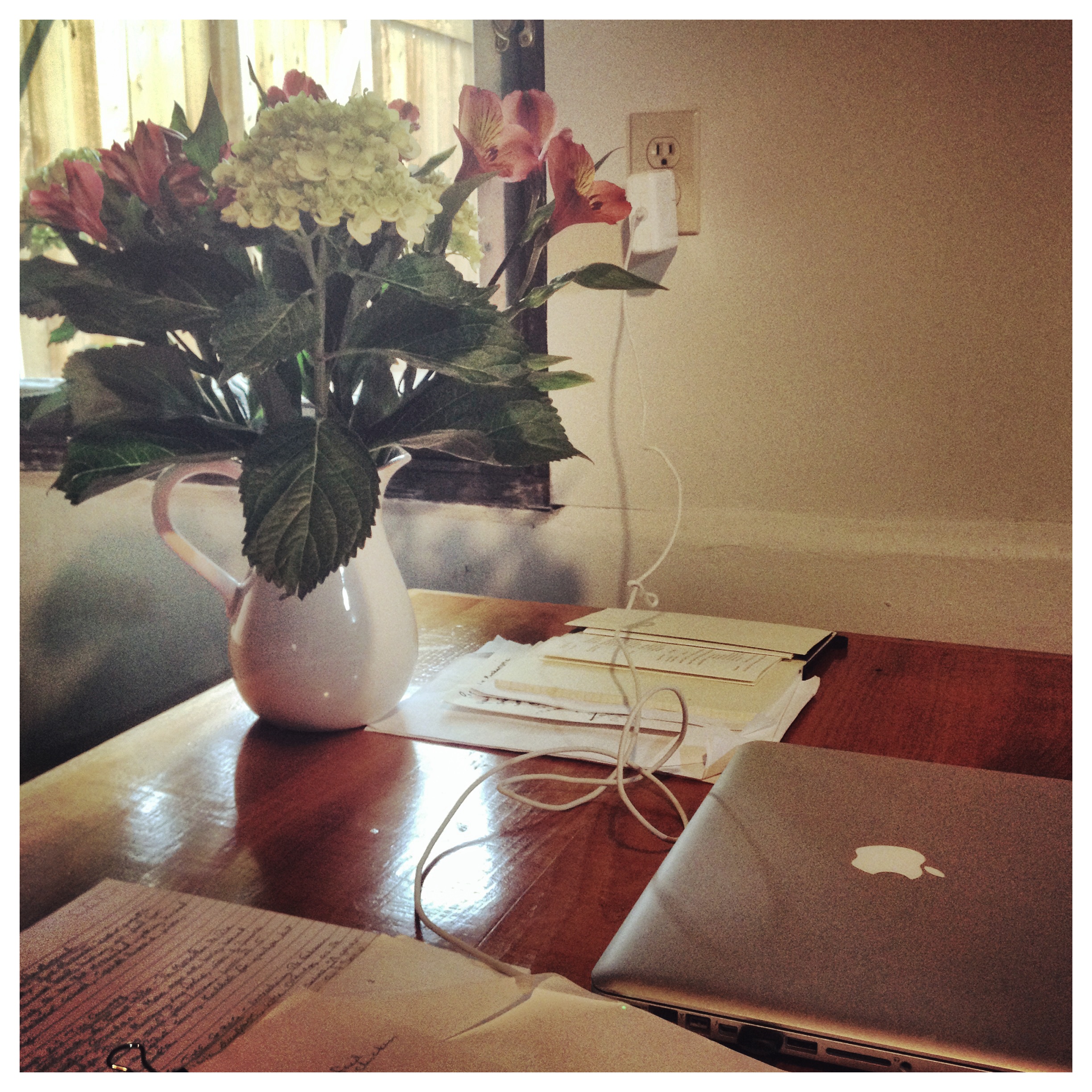
It’s hard to say for sure, but I’m starting to believe that the minute I go into my writing cave — I’m at work on my next memoir which is due out from Berkley Books sometime in 2015; the “cave” is what happens when I hit the place where I think, 24/7, about nothing other than what I’m writing. I go to bed thinking about it, I wake up thinking about it, and I think about it every waking moment in between — the world laughs at my pathetic attempt to control my own schedule. Which means that if I block out a solid month for nothing but work, the gods roll their eyes and suddenly my dance card gets slammed, and what began as uninterrupted writing time ends up being small threads and tiny snippets into which I have to glue my ass to my chair and take the phone off the hook. Even if it’s for two hours.
FlowersandDesk

Which has been no easy feat lately: my mother, a former television and cabaret singer and model who lives alone in Manhattan, has taken to calling me five times a day to regale me with stories of her days in front of the camera, and to wonder whether she should call William Morris to set up a meeting — they represented her some time ago — or should she just walk in and ask the security guard to let her upstairs. There are long conversations about why it doesn’t seem right that she’s so obsessed with Perry Mason because 1) he was played by Raymond Burr, who was gay, and 2) he isn’t real, and other conversations about why it’s not okay for her to defrost a bucket of chicken soup on the counter for three days, even though that’s the way her grandmother did it in 1943, and nobody died. There was the small issue of her colonoscopy appointment which she had written down on three different dates in three different calendars; she ate the tiniest smidge of roast chicken during the 24-hour/clear liquids-only period because she was sure the doctor said she could. There’s also the new Facebook page that she’s launched, which offers readers daily tips on living and life as she knows it; she sleeps only two or three hours every night, so she has a lot of time to think about these things, she says.

And honestly, this is who she is; this is who she always was, forty years ago, and who she is now — this isn’t some weird manifestation of time — and I love her for it. Even though I’d like to take a Valium the size of a steering wheel.

Beyond dealing with the worry, the hand-holding, the constant calls, and the moving from crisis to crisis throughout the day while trying to write on a hysteria-inducing deadline, there was the issue of Susan’s long-awaited sabbatical from her job at Random House. This would mean that, in the throes of writing around my mother’s schedule, Susan and I would be traveling out west (the Southwest and the Pacific Northwest won out this year over Paris. Sorry, Paris.) for three weeks, driving from Santa Fe up through Utah, Idaho, and Oregon, and finally arriving in Seattle where we would perch for ten days before spending another four in Friday Harbor, in the San Juan Islands. With my mother calling. And me scribbling writing notes before sunrise and again very late at night. And generally trying not to have a stroke while remaining calm and cheerful and a pleasant travel companion for Susan, who has worked mightily and brilliantly for ten years.
Highway

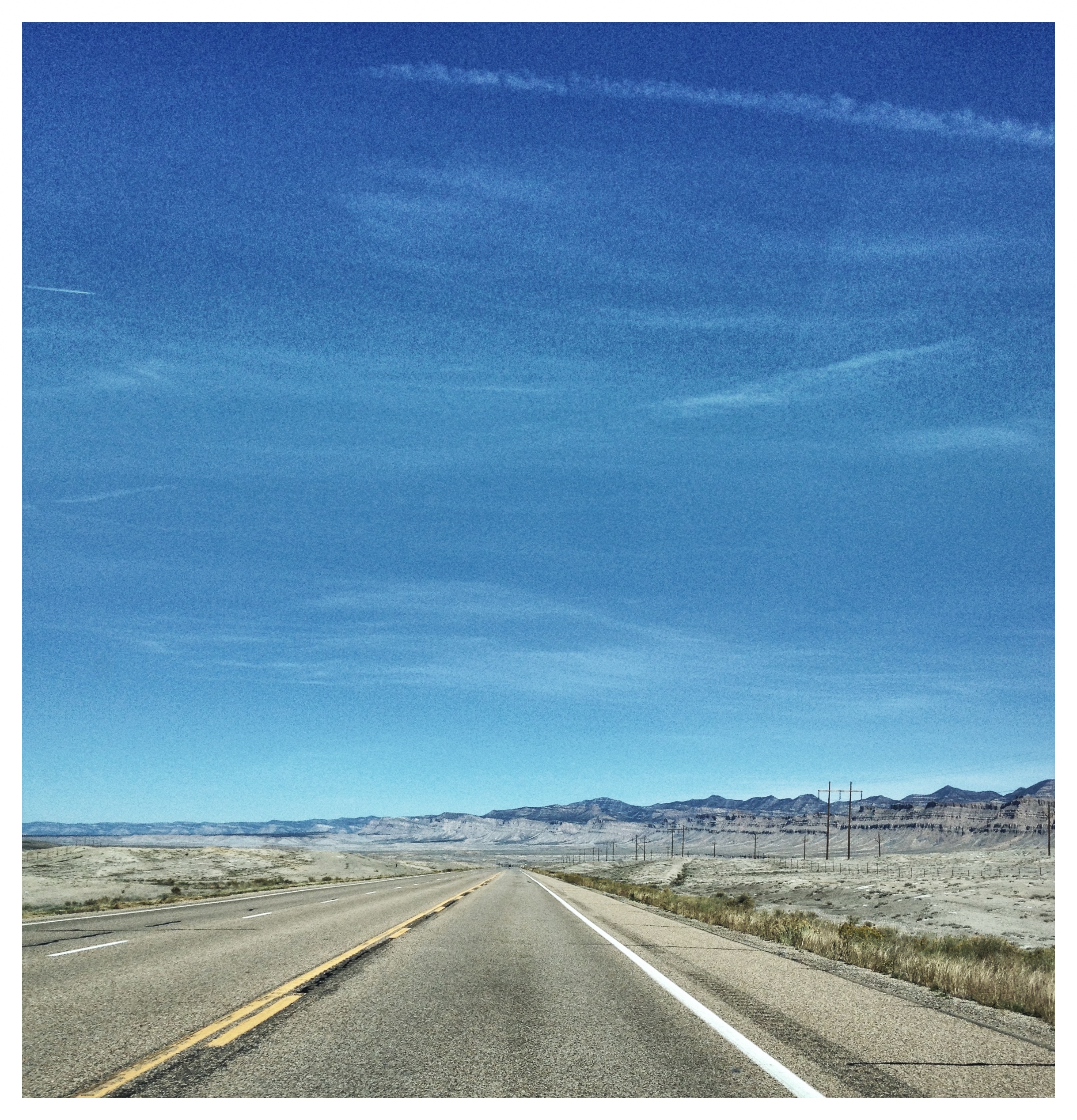
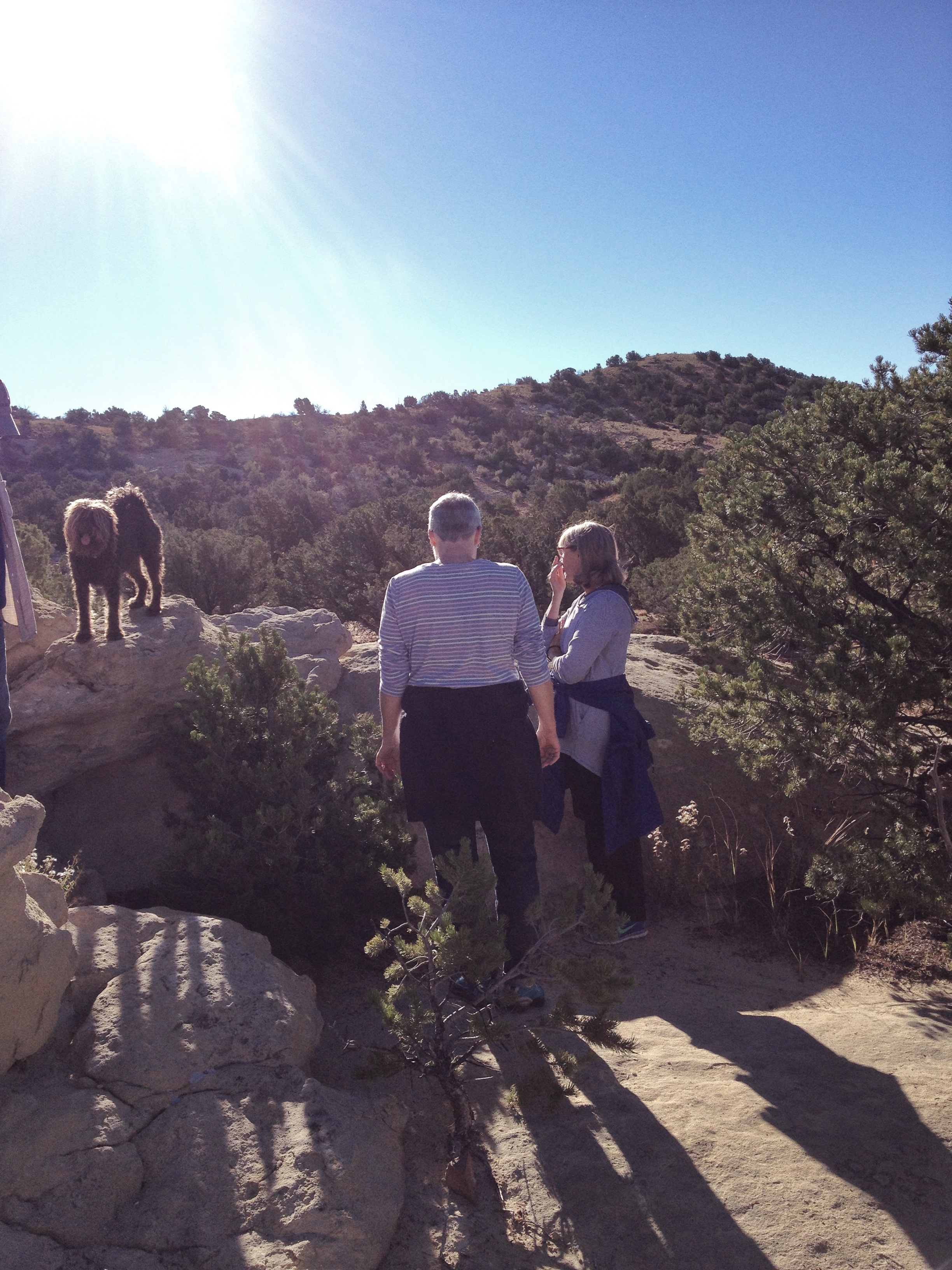
I was a complete wreck when we left, but I quickly learned that a road trip through the west is actually the ideal thing for a mind that is clogged with the debris of life like a hair-packed drain; before we hit the road, I had been feeling existentially warm and sticky, as though I’d rolled around in vat of honey and then put on a sweater. But when the earth opens up long and quiet and the sky feels so close that it seems like a ceiling of blue; when you realize the years that it took for nature to carve the Arches outside of Moab, and what those Arches bore witness to as the centuries and the millenia rolled by, you then also realize that all of the aggravation and the worry, the hand-holding and the constant calls, and the crises that keep you from writing the book that you are certain will win you that MacArthur you so obviously deserve —- when you see the west unfold in front of you, you realize that you and your problems and worries are nothing but, as my late father would have said, a speck of fly shit on the great windshield of life.
SusanAndDeb


HatchChileRoaster


MormonTemple

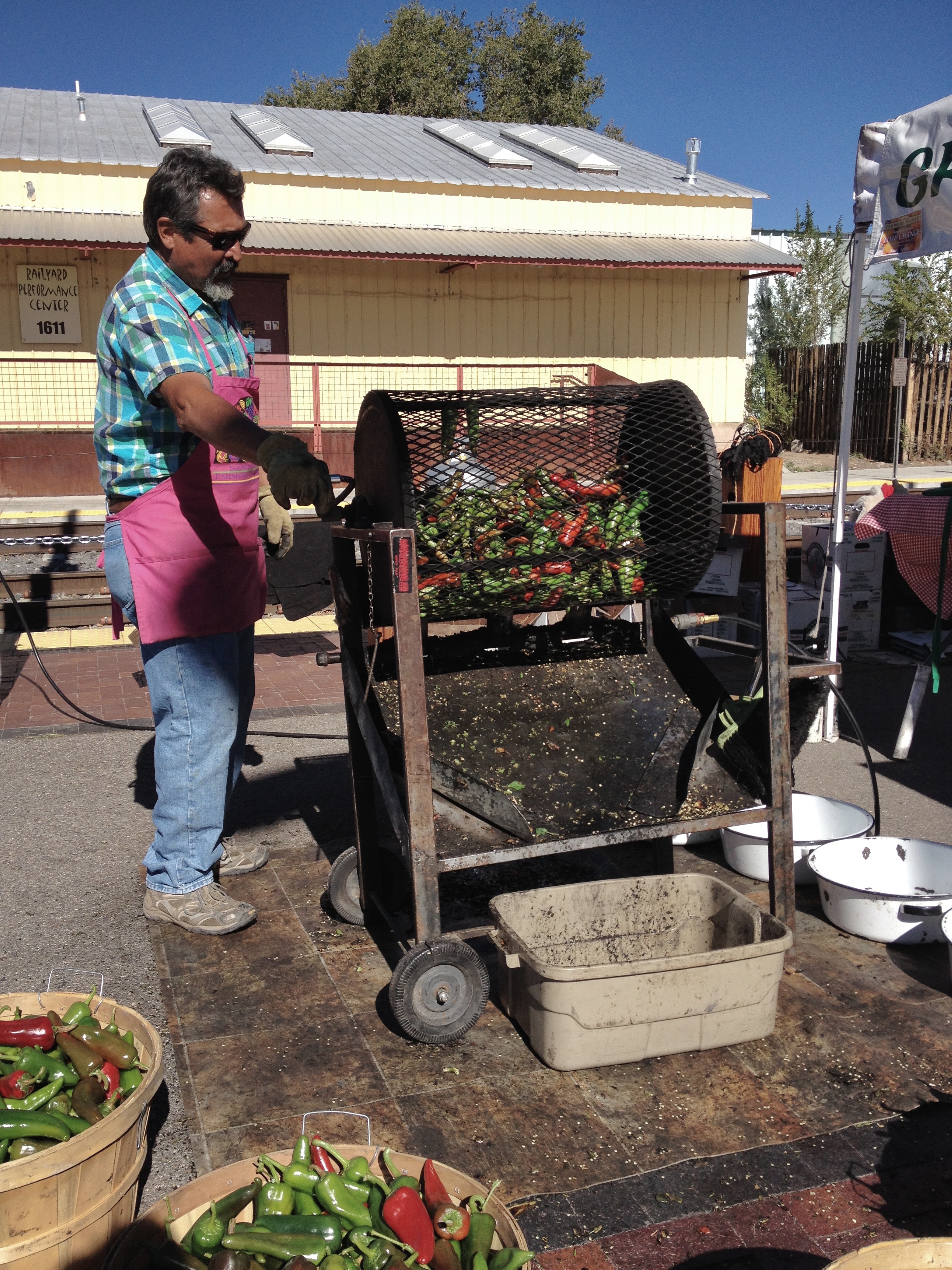
So, there was The West, and Santa Fe, and seeing dear friends who feel more like family every time we’re together, which is a rare occasion; there was the farmer’s market down by the old rail yard, and the guy who roasts Hatch chiles while proclaiming his to be the real thing: Organic and Hispanic. There was Moab, which looked like the set of a 1950s spaghetti western run headlong into a creature feature about Mars. There was Salt Lake City, where we watched the Mormon Tabernacle Choir rehearse before visiting a bookstore I thought was just another wonderful local indy (the lovely and kind folks at Deseret Books were as confused about our being there as we were; I expected to see stacks of Gone Girl. The racks of Jesus coloring books should have been a dead giveaway). There was the endless drive through southeastern Idaho, which was the color of a baked potato, straight through to Pendleton, Oregon, where we landed on Kol Nidre and, in the shadow of the Pendleton Roundup ate Thai food before the sun went down, and I quietly pleaded to God/Jesus/Buddha/Whomever to forgive the sins I’ve committed, knowingly and not, against people I love and people I don’t, and to please, please bless me with patience and compassion for my aging mother despite wanting to stick my head in the oven after her fifth call about the William Morris Agency, and how handsome Raymond Burr is if he’d only lose some weight.

(He’s probably very thin at this point, Ma. He’s been dead for years.)
BeachinSeatt

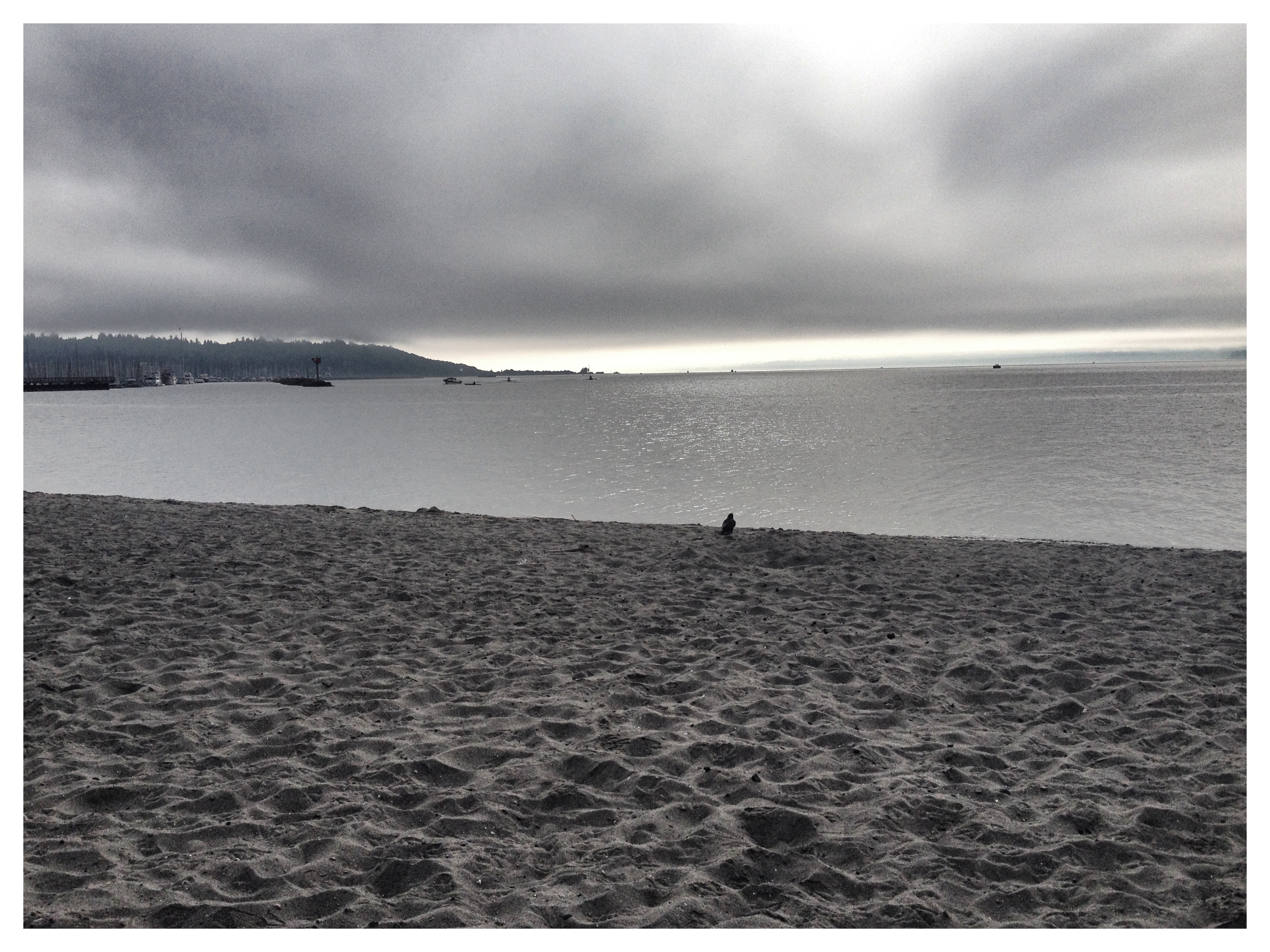
We had traveled for days on end without seeing or smelling the water, so when we eventually arrived in Seattle and moved into the tiny Ballard bungalow we’d rented, it was a (gorgeous, gray) relief. Our first night there, after arriving late, we ran out to the local supermarket and bought a thick, fatty Coho salmon filet caught in local waters, and roasted it slowly alongside tiny new potatoes and a handful of fresh chanterelle. We expected days of relaxing and reading, of my squirreling myself at the basement desk we’d set up so that I could keep writing, but every day and every night we saw friends we never get to see across platters of some of the most remarkable, fresh, simple food I’ve ever eaten. When Jess Thomson, co-author with Renee Erickson of Renee’s brilliant new cookbook, A Boat, A Whale, and a Walrus told us about Renee’s author dinner at our friends’ Brandon Pettit and Molly Wizenberg‘s restaurant, Delancey — one of my favorite places in the world — we splurged, and went, and laughed and drank and ate copious amounts of Brandon’s remarkable food, sitting shoulder to shoulder in the packed dining room, shouting over the din to be heard, and woke up the next morning in a bed that wasn’t ours in a cottage we didn’t know with sore throats and hoarse voices and feeling like maybe we should move. Maybe this was really home.

Or maybe we were just running away.

Slow Roasted Coho Salmon

salmon

Ordinarily, I buy my fish — wherever I am, but especially in fish-forward communities — from small fishmongers, but when we arrived in Seattle very late one day, famished from the road, it was all I could do to get myself to the Interbay Whole Foods, not far from our cottage in Ballard. Yes, it really did look like this when I had the fish guy slice me a filet from the center of the fish; October is Coho season in Puget Sound, and with salmon this fresh, the less you do to it, the better. Which meant that I turned to a tried-and-true method by Alice Waters, which she mentions secondarily in her wonderful The Art of Simple Food: slow roasting. I find her recommendation to serve the fish with a drizzle of vinaigrette far too rich for such an already-rich fish. Instead, I melt a tablespoon or two of sweet butter together with the juice of a whole, very juicy lemon, which cuts the fat while remaining silky. Nothing could be simpler, or better.

sea salt and freshly ground black pepper

2 very fresh Coho salmon filets, about 6 ounces each, skin on, preferably at room temperature

Extra virgin olive oil

fresh herb sprigs (I prefer rosemary; rosemary and salmon is an unbeatably earthy combination)

1 tablespoon sweet butter

juice of one whole lemon

Lightly season the fish with sea salt and pepper.

Preheat oven to 225 degres F. Lightly grease a rimmed baking sheet, and cover it with a layer of fresh herbs, placed roughly in the same dimensions as the salmon. Set the salmon down on the herbs, skin-side down. Drizzle the salmon with a bit more oil, and bake at 225 degrees F for 30 minutes.

Two minutes before it’s done, warm the butter together with the lemon. Plate the salmon and drizzle with the sauce. Serve immediately.
Bowls and Beans

September 28, 2014 · 5 comments


Bowls1_Snapseed

It’s been a while since I’ve posted here, but I have a reasonably good excuse: I’m (very) deep in the throes of writing my next book, which is slated for publication in the Fall of 2015. I won’t/can’t talk too much about it for reasons mired in everything from superstition to the unspoken rules of the road, but I will say this: my office presently looks like the Collyer Brothers live here. There are piles of stuff everywhere. I’ve managed to unearth pictures of my childhood home from an on-line Columbia University Real Estate Brochures collection, and I’ve taped it up next to my desk; every time I look over at it I end up feeling like I’m in the front seat of a roller coaster, climbing to the peak, itchy with that familiar combination of mild terror, who-the-hell-conned-me-into-doing-this fury, OFF OFF GET ME OFF hysteria, and weak-kneed curiosity. I can’t look away, but when I do, I get to work.

As my beloved spouse has discovered, I tend to fall into certain patterns when I’m working on a book: I’ve learned that I’m most productive in the afternoon. The morning’s phone calls have been made, emails have been sent, editing has been done, articles have been written, I’ve read the New York Times, scanned (and spent too much time on) Facebook, walked the dogs and fed them, fed the cats, gone to the gym across town, gone to the grocery store or CSA or farmer’s market, come home, and after showering, I manage to get my ass in my chair. At which point, assuming I got up early, it’s probably noonish, which means I have roughly eight hours to write until Susan comes home, exhausted and spent, after a five hour round trip commute to a job she loves in Manhattan.

It used to be that I’d get so carried away with the writing — so totally sucked in — that I’d look up and it’d be 7:30 and I could hear Susan’s car pull into the driveway. I wouldn’t have noticed it getting darker outside, I wouldn’t have looked at the clock on my computer, and then suddenly I’d have an OH SHIT moment — what had I made for dinner? (This is the way we do things here: if Susan is going to haul herself out of bed at 5 am in order to make a 6 am train in order to get to Manhattan by 8:30 am, then work all day, then race back to the station to get the 5:50 which will have her walking through the door at nearly 8 pm, it is my job and responsibility to feed her, and feed her well. It is my job and responsibility to make sure that dinner is on the stove, waiting for her, and that all that’s left for me to do while she sits in a chair in the kitchen, sipping a glass of wine, is stir the pot. And I don’t mean that metaphysically.)

All of which is to say that I’ve slipped into small-bowl-mode; when I’m writing a new book, weeknight dinners are very often anything that can served in a single, small bowl. They don’t have to be vegetarian, or vegan, or they might be. They might be something as simple as a bowl of vegetable soup, or pork-and-vegetable fried rice topped with a poached egg gifted to me from my neighbor, Melissa, who is very gifty when it comes to her chickens (we’re very lucky around here, egg-and-neighbor-wise). It could be a pile of spinach, wilted to a tangle and tossed with garlic and hot red pepper flakes, or pasta, or Hatch chile posole.

MixingBowls_Snapseed

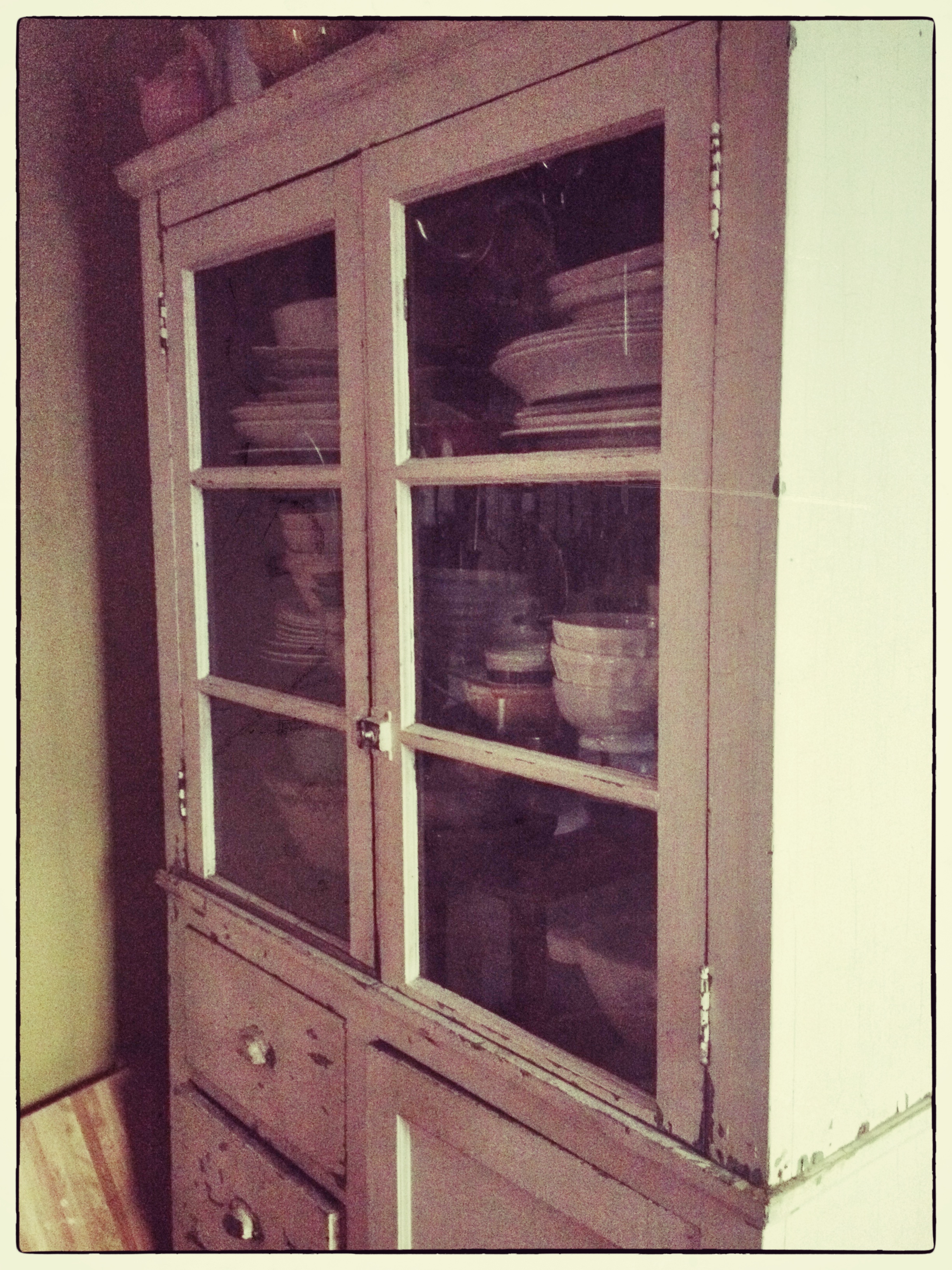
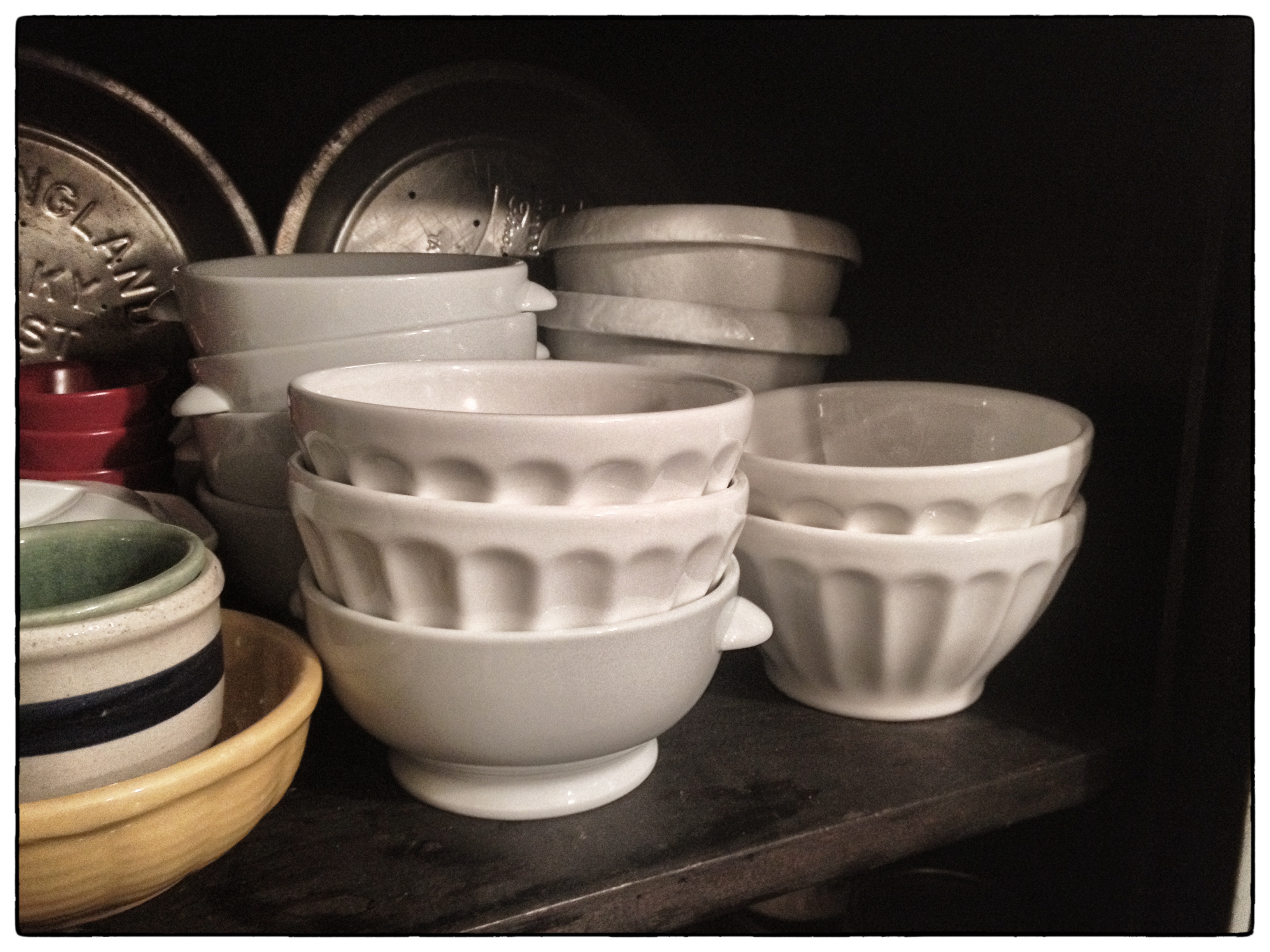
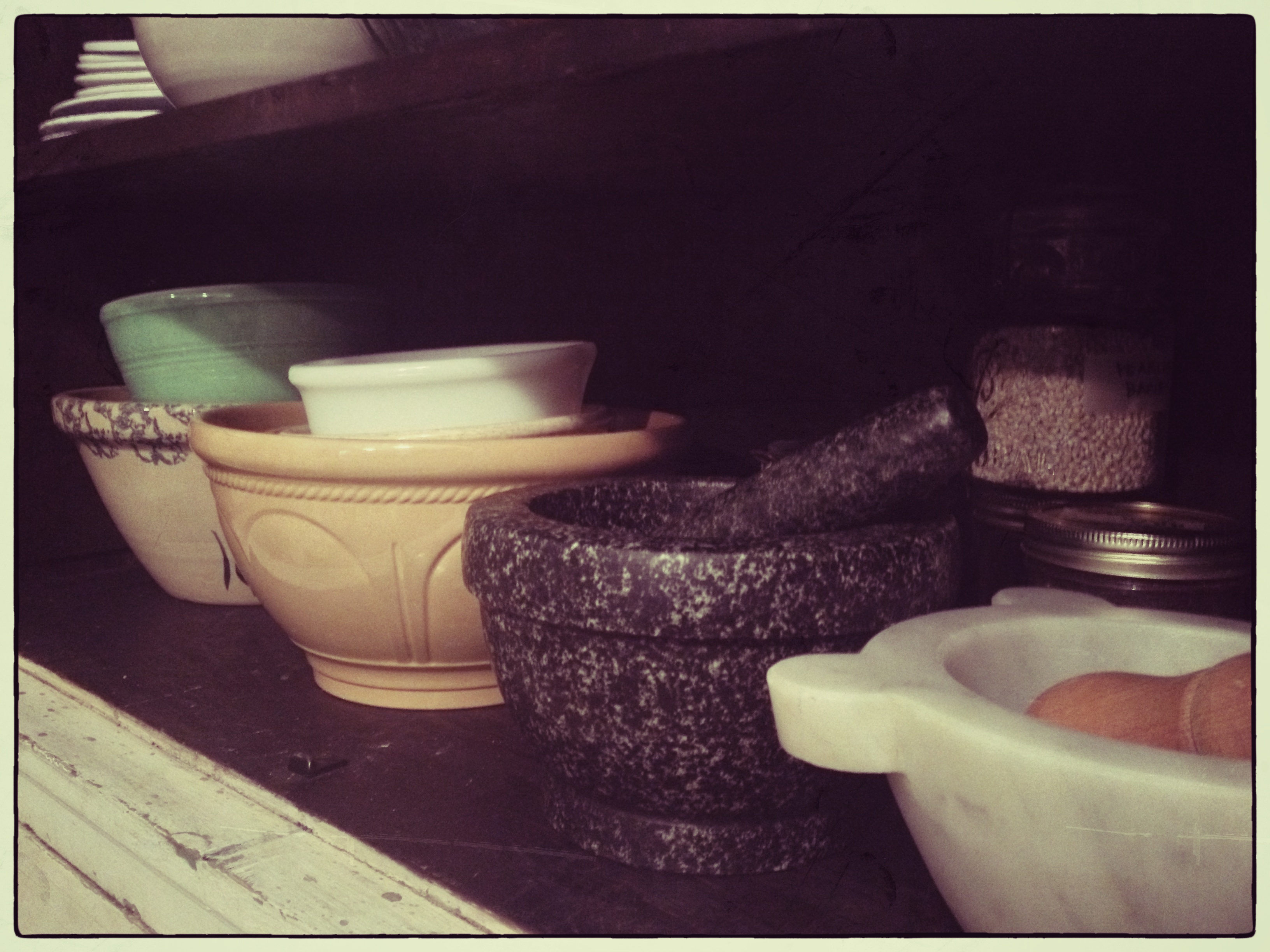
if you step into my kitchen, one of the first things you’ll see is an immense, battered glass-doored cupboard that Susan and I bought about eight years ago at a furniture consignment shop not too far from where we live; it’s vaguely white, and as the chipped milk paint shows, was once forest green. One of my cousins asked me when we were going to refinish it, but we’re not; we love its aged-ness. It took the delivery guys two trips to get it here — so huge were the two pieces that there was no way we could get it here in our car — but once set up, it became the center of our kitchen, and the repository for a ridiculous number of platters (lots of ironstone, lots of old Pillyvuyt, a beloved antique turkey platter that came down to us from Susan’s Aunt Millie). It holds the heavy result of my mortar and pestle addiction. But more than anything else, it is home to dozens of small bowls: coffee bowls, old Bennington white-on-white bowls that I bought years ago when I still lived in Manhattan, Asian bowls, cream-colored cereal bowls that we bought at a Goodwill in Middlebury, Vermont, only to discover that they were handmade by a relatively famous potter in the mountains of North Carolina. There’s Susan’s grandmother’s favorite cereal bowl, a stack of Duralex Picardie glass bowls, and footed/earred Pillyvuyt bowls that are perfect for making onion soup because you can pop them under the broiler without worrying about breakage.

Armoire_Snapseed

I don’t recall when I became so bowl-crazed, but I think it was right after my pitcher fixation went on the wane; in my tiny, dark Manhattan apartment, I had dozens of them — some antique, some not — and it took me a while to realize that my pitcher addiction was ridiculous because, for one thing, I don’t actually ever put anything in my pitchers: while I love cheese, I don’t drink milk and never have. When I use cream in my kitchen, it goes directly into whatever dish I’m cooking that requires it, and is therefore acquired in small half-pint containers. So once I got the pitcher thing out of my system (which, to be totally transparent, came after the antique teapot problem), I turned my attention to platters and bowls. Both of them imply serving, but also, practical intimacy, and what’s more intimate than feeding people, and sitting down on an early autumn night with the person you love, and feeding them something soothing out of a vessel that, when held in your hands, forces you to cradle it as you would the face of a small child.

During a particularly long writing binge, I heard Susan’s car pull into the driveway and realized that I had made nothing — literally nothing — all day; I hadn’t thought about dinner, hadn’t gone out shopping in the morning, and now she was about to walk through the door, hungry, wanting to be asleep by ten, and all I had sitting in front of me in the kitchen were two cans of garbanzo beans and a lemon. And, as the old saying goes about necessity being the mother of invention and all that….

Toasting garbanzos_Snapseed

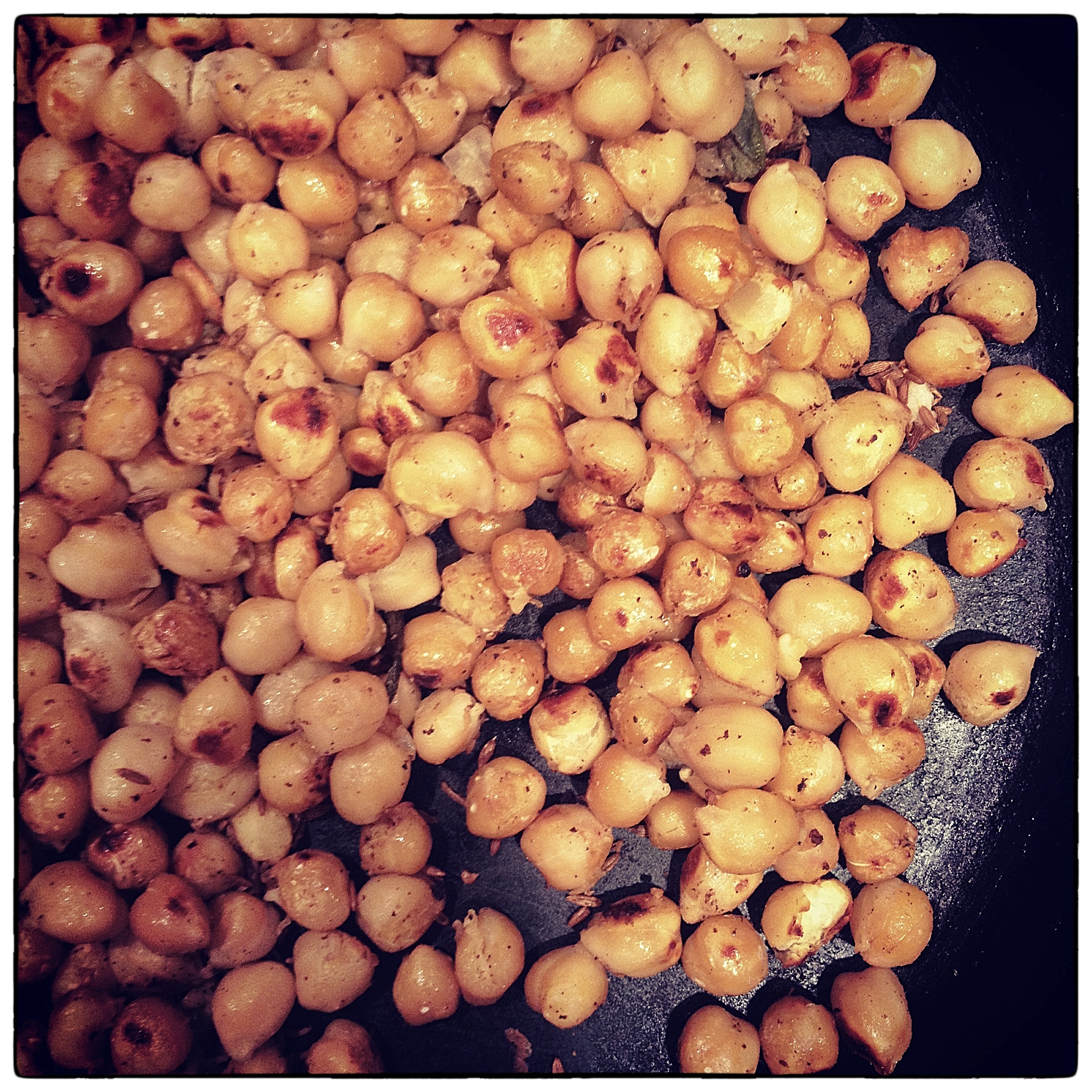
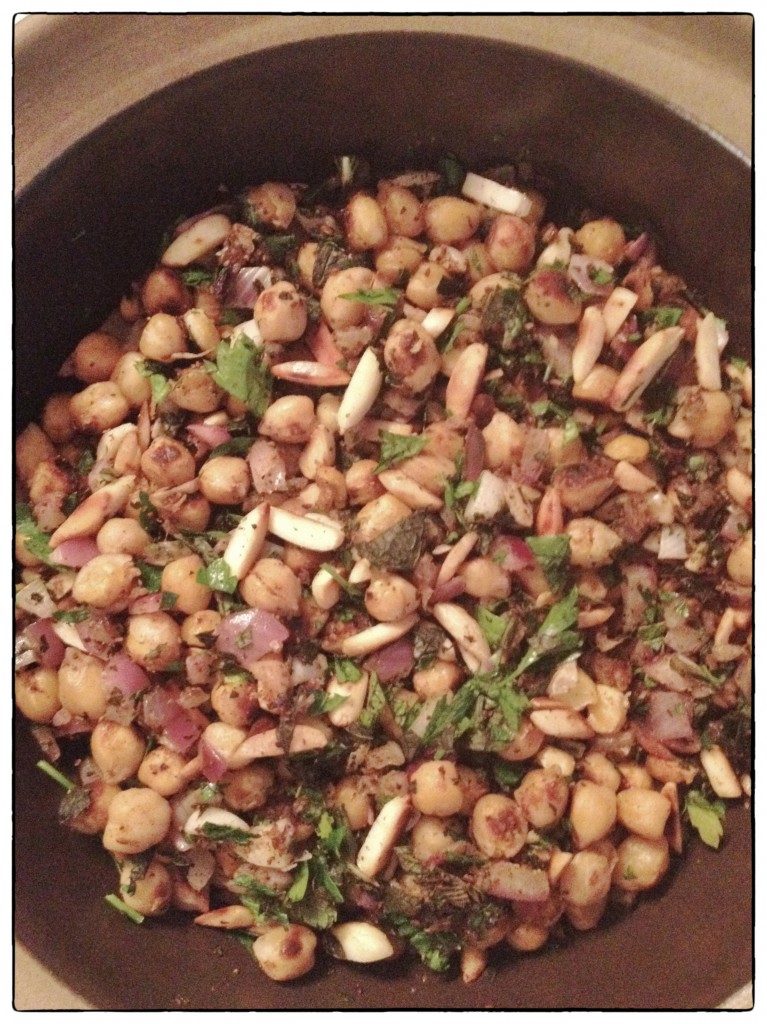
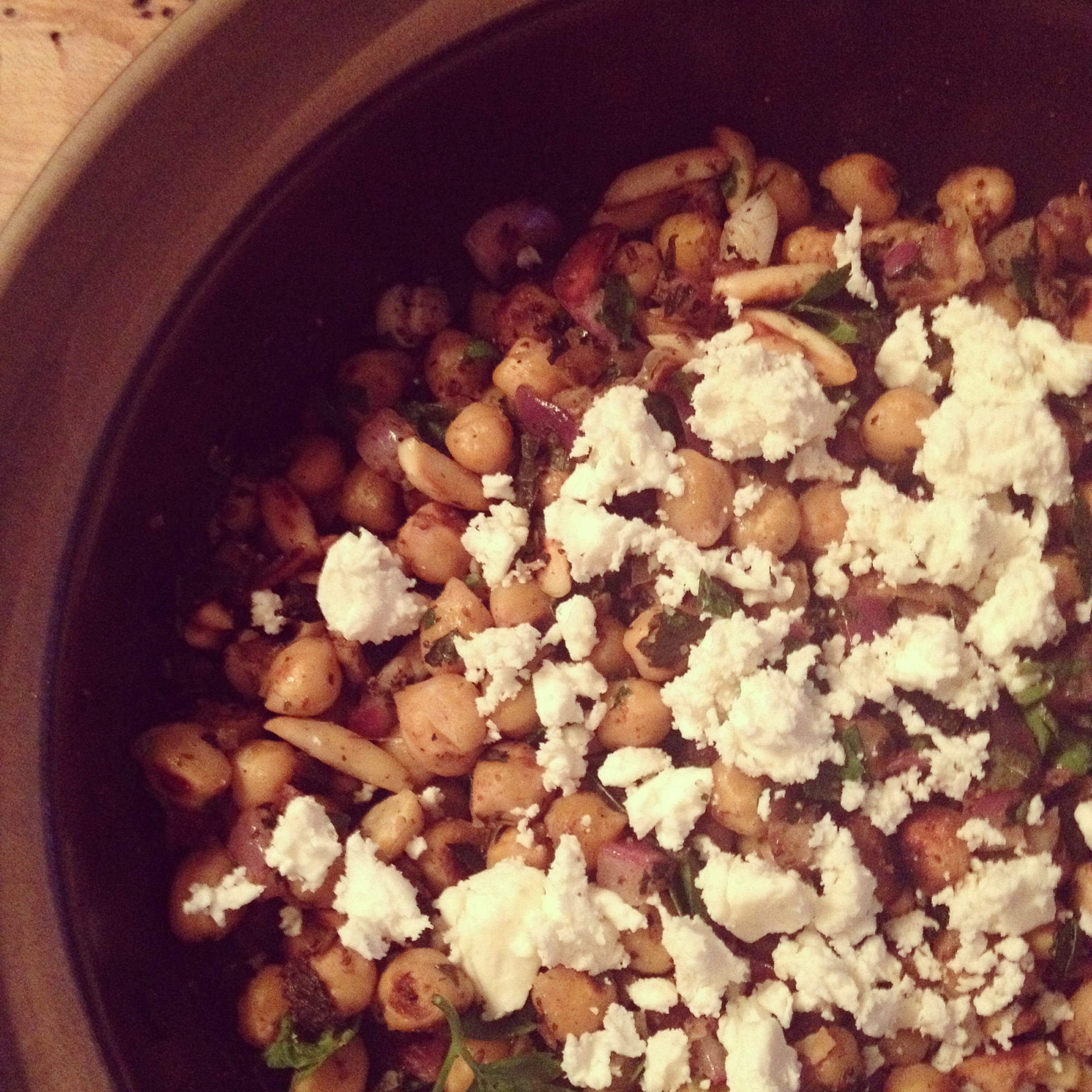
I adore garbanzo beans; I always have. But after years of eating them damp and slimy and bland out of some office cafeteria salad bar, I wondered what would happen if you toasted them. Not toasted them as you would to make them crunchy — I’ve made many batches of them spread out on cookie sheets, dribbled with olive oil and tossed around with pimenton and cumin and salt (totally addictive) — but toasted as you would nuts, so that they retain their tenderness, inside a small amount of delicate toothsomeness. I wondered if by toasting them they’d get aromatic, and nutty. And the answer was yes and yes. That night, that’s what I did, and the result — after I tossed the still-hot beans with diced red onion and garlic, dried lemon peel, cumin, toasted slivered almonds, and feta — was this salad-y kind of thing that’s savory, toothsome, bright, earthy, and so good that when I made a triple batch to take to an outdoor concert with some of our neighbors this summer, it was gone before the music started.

What made it so good, though, that first time I served it to Susan? It was one of those inventions that stuck, that required total focused attention in the kitchen. I couldn’t think about work, or writing, or deadlines the first time I made it. Instead, I had to focus on texture and flavor, and what would add brightness and what would be overkill. And whether I would incinerate the beans if I stepped away at the very moment they released all of their beany sugar and starch, and threatened to go black in the amount of time it takes to sneeze.FinishedSalad

I’ve made this dish at least ten times this past summer, and I think that it’ll be perfect as we head into the cooler days of autumn; on a busy weeknight, it’s been the perfect thing.

But always out of a small bowl, with a glass of wine.

Toasted Garbanzo Bean Salad with Lemon Peel, Mint, Feta, and Almonds

IMG_7339

 Having made this salad approximately ten times in the last three months, I’ve learned the following: it takes a comparatively long time for the beans to expel their starch, sugar, and beany liquid, and to actually begin to toast (whether you use canned or dried beans apparently matters little; I’ve done it both ways), so patience is required. You’ll also want to do this in a relatively dry cast iron skillet: add olive oil — too much olive oil — and everything will fry, which is what you don’t want. The diced red onion added raw to the hot beans is not a mistake; the heat from the beans softens and slightly cooks the onions, but only slightly. Finally, the amount of parsley and mint in the dish seems ridiculous overkill: it’s not. Aromatically-speaking, the result is a bit like being in a souk (I say this never having been in a souk). Leave out the feta and the dish will be vegan; leave out the almonds and it will be nut-free. (But you know that.) I leave out salt (between the lemon, vinegar, and feta it hardly needs it) but if I did add it, it’d be coarse flakes, like Maldon.

Makes 6 servings

1 tablespoon cumin seeds

1/2 tablespoon coriander seeds

1/2 tablespoon extra virgin olive oil

2 14-ounce cans good quality garbanzo beans, drained, rinsed, and shaken dry in a colander

1/2 medium red onion, finely diced

2 cloves garlic, minced

1/2 cup slivered almonds

1 tablespoon dried lemon peel*

large handful mint leaves, chopped

large handful flat leaf parsley leaves, chopped

1 large lemon, zested and juiced

Extra virgin olive oil, to taste

Red wine vinegar, to taste

1/2 cup crumbled feta

In a large dry cast iron skillet set over medium heat, toast the cumin and coriander until fragrant; remove from the pan and grind in a clean coffee grinder (or smash in a mortar and pestle) and set aside.

Do not wipe out the pan; heat the half tablespoon of olive oil until it begins to ripple, and add the garbanzos to the pan. Toast them slowly, shaking the pan every few minutes: they will appear to stick to the pan, but they will ultimately release, and blister. Stir frequently with a small spatula; this should take approximately 10 minutes. If they appear to burn, lower the heat slightly.

In a small pan set over medium heat, toast the almonds until just fragrant, remove from heat, and set aside. Return the toasted cumin and coriander to the pan with the beans, and gently fold (so as to not smash the beans). Remove the pan from the heat and add the onion and garlic; stir well to combine and let rest for 5 minutes.

Fold in the toasted almonds, the lemon peel, mint and parsley. Add the lemon juice and zest, and toss well to combine. Drizzle with olive oil and red wine vinegar, and toss again.

Top with the feta, and serve warm, cold, or at room temperature.

*Find lemon peel in your local Middle Eastern grocery store.


indiebound


©2009, ©2010, Poor Man's Feast. All rights reserved. To reprint any content herein, including recipes and photography, please contact rights@poormansfeast.com