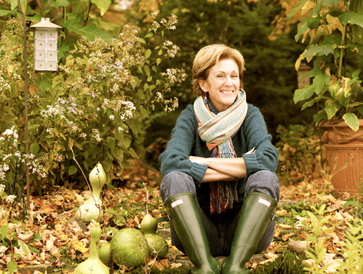
Katherine Whiteside, author of The Way We Garden Now, and home cook extraordinaire.
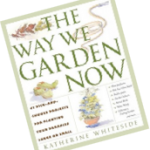
When I first moved to the country from Manhattan, I constructed six 10 x 4-foot garden boxes in the acre-sized backyard I shared with Susan. I had never grown anything beyond mold before, but suddenly, I had visions of edible grandeur, and by the time the summer was over, Susan and I were eating home-grown vegetables almost exclusively. I was hooked on the whole process and idea of growing, sowing, and eating, but I could also see where one’s eyes could be a lot bigger than one’s stomach; I had a lot to learn about what to grow and how to use it, and what I was better off buying at a farmer’s market. What I needed at that time was a conversation with Katherine Whiteside, author of the critically acclaimed Forcing, Etc, and more recently, The Way We Garden Now (2007, Clarkson Potter)–a book that I would go on to acquire and edit while I was a senior editor at Clarkson Potter. When Katherine’s manuscript for the book landed on my desk , I breathed a sigh of relief: here was a book that was going to teach me what I needed to know, and it did. A bonus? I got to know Katherine well…well enough to discover that she’s also a fabulous, old-fashioned home-style cook who eschews gadgetry and trend for what is simple and delicious.
And who owns exactly one knife.
1. I gather that you only have one knife. Is this possible? Why? I could send you another one.
I do have one perfect knife–an ancient Sabatier carbon steel knife with a cracked black handle. I sharpen it on the concrete step outside, and it holds an edge for a long time. I use it for carving, de-boning, cutting vegetables, capping strawberries, slicing cheeses… well, everything really. Truthfully, as a Southern bride, I was given a silver cake knife that I never use because I don’t bake cakes. It stays in the drawer with the cheesecloth, extra batteries, wine corks, and that kind of stuff.
My perfect knife never goes in the drawer because either I am using it, washing it, or drying it in the dish drainer. I have no knife storage issues. Sure, you could send me another knife, but I probably won’t use it and suddenly, I’ll have a knife storage issue.
2. You authored Forcing, Etc, back in 1999, which was a brilliant look at how to bring bulbs and branches into bloom indoors. We met when you made a leap into the world of the potager with The Way We Garden Now, which focuses heavily on teaching anyone how to create a simple kitchen garden, regardless of skill or size of property. How important is it that everyone get their hands in the dirt? Are there any excuses not to?
The Way We Garden Now is an empowering garden book. I adore gardening and am big on shortcuts. I promote my own tried and true methods that I call “Lazy Girl’s Ways.” I hope that people who want to garden, but don’t know how yet, will find my book really fun and helpful. Gardening—an activity that almost everyone can do– has been portrayed (by certain garden writers) as a back-breaking, puzzling, failure prone, expensive heartbreak. Well, frankly, that’s how I feel about golf. Some people like to play golf, some people like to garden. As long as no one makes me play golf, I’m going to give folks a break if they are not called to garden.
However, I do think that supporting a local CSA or going to the farmers’ market is a sound investment in your cooking enjoyment, your family’s health, and the greening of America.
3. Last I saw your garden, you had a profound amount of red perilla coming up everywhere. What do you intend to do with it all?
I grow perilla as an ornamental more than as an herb. It’s really useful in flower gardens because it is easy to grow, not fussy about soil or water, it is pretty, and it is a gorgeous filler under roses, with nasturtiums, or between boxwoods. In the old days, perilla was called roast beef plant and, to me, that’s what it smells like. I don’t make my own sushi, but if anyone does and needs perilla, I have tons of it.
4. What are you putting in this year, and when do you expect to start harvesting? What, exactly, do you intend to do with it, since you are a single-person household?
I might have a tiny household, but I cook big. For example, when I recently got the urge for a great ham sandwich, I cooked an entire ham. Really. I had the most mouth-watering sandwiches for several days, then I chunked the rest off the bone, made split pea soup with lots of meat for a relaxed winter dinner with friends, then froze the rest in chicken broth for another time. I don’t get it when people moan about “just cooking for themselves.” Honey, you can cook whatever you want!
My present vegetable garden is very small but I grow lots of things. Raised beds are miracles! In one 4X4 bed, I can grow 6 kale plants, lots of beets, leeks, parsley, and shallots. Multiply that by 9 beds and you can see that I grow plenty of food to eat and to give away. I eat out of the garden all year—kale and Brussels sprouts are awesome in winter, leeks are still there from last year, lettuces and spinach are coming up.
5. Where do you stand on the practice of seed-saving, and why?
Last year your neighbor gave me seven mystery beans that her grandfather had brought over from Italy. I grew them and, without a doubt, they were the best flat beans I have ever eaten. No one knows what they are, so—yes– I saved seeds (beans) to plant this year. But usually, I buy fresh seeds each year because I like to support the garden industry, try unusual varieties (I go for the heirlooms not the new miracle things) and I like the way seed packets look.
6. Quick question: lawn, or garden?
Mow or eat?
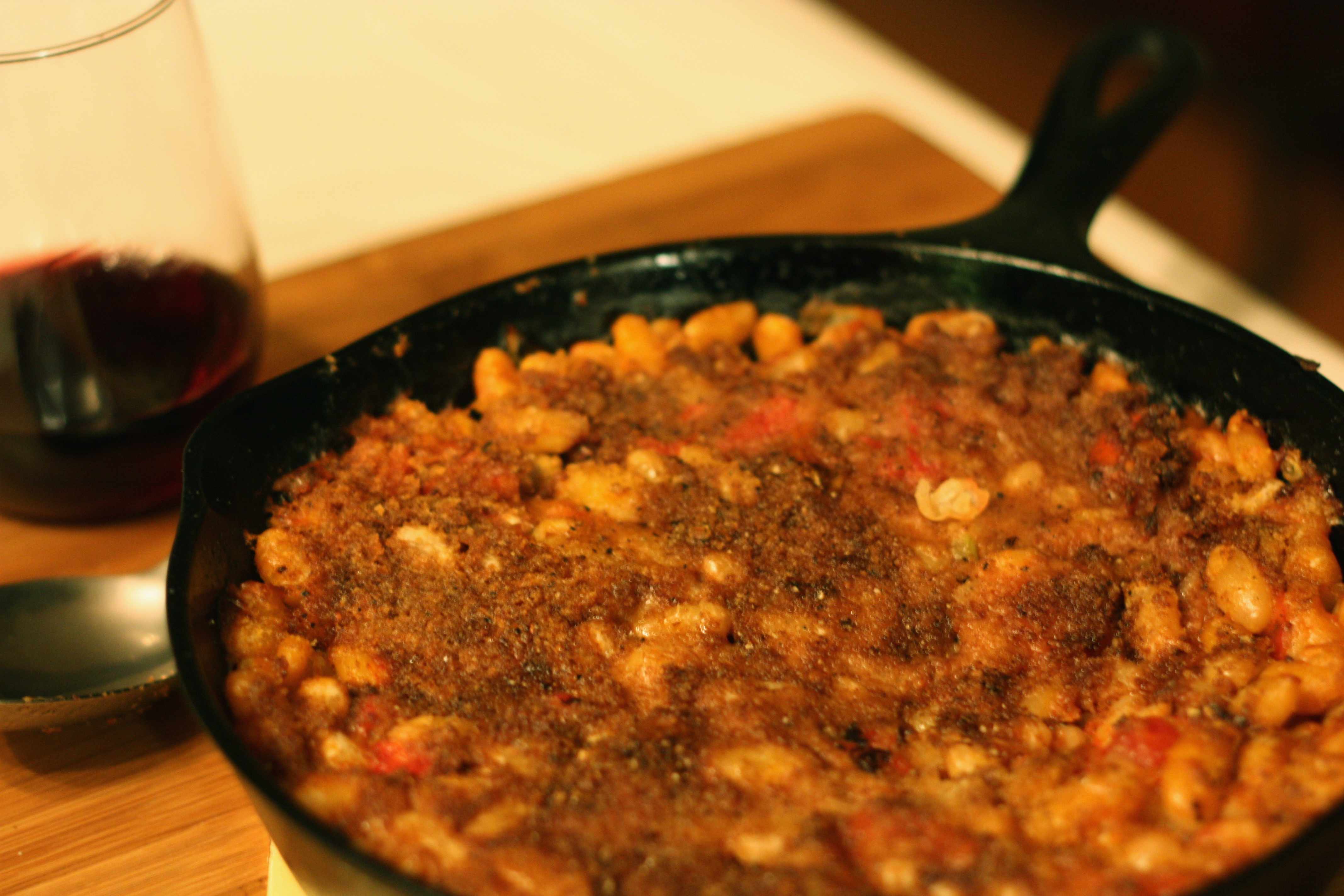
7. You seem to prefer old-style cooking methods and tools, like crock-pots, pressure cookers, and cast iron pans. In a day of home sous-vide baths, home foamers, and other single-purpose gadgets, everyone can attempt to cook like Ferran Adria and Thomas Keller while not being able to make basic scrambled eggs. Is this a good thing?
To me, haute cuisine is interesting, just like I find haute couture fascinating. I am a never going to spend a dime on high fashion, but I really enjoy looking at it, I appreciate the artistry, I like that it is a venerable industry supporting lots of craftspeople, and I like it because it is just sometimes so darn funny. (I mean, would you go out with a guy who showed up at the door dressed like Pee Wee Herman St. Laurent?)
I’d love to sit and eat with Ferran or Thomas and talk to them about their food. For sure I would enjoy looking at it, I’d appreciate the artistry, I’d like all the people their restaurants teach and employ, and hopefully we could have a giggle over some of the more crazy dishes. (I will try anything set before me, but I might not ever eat it again.)
As a one-knife gal, I think everyone has the right to cook just as they please. Some people need lots of tools to get the job done, some people don’t . But everyone– whether they have a chef’s kitchen or a kerosene burner– deserves good, health-giving, life sustaining food.
8. What’s your favorite dish to prepare, and why?
The one that I am hungry for.