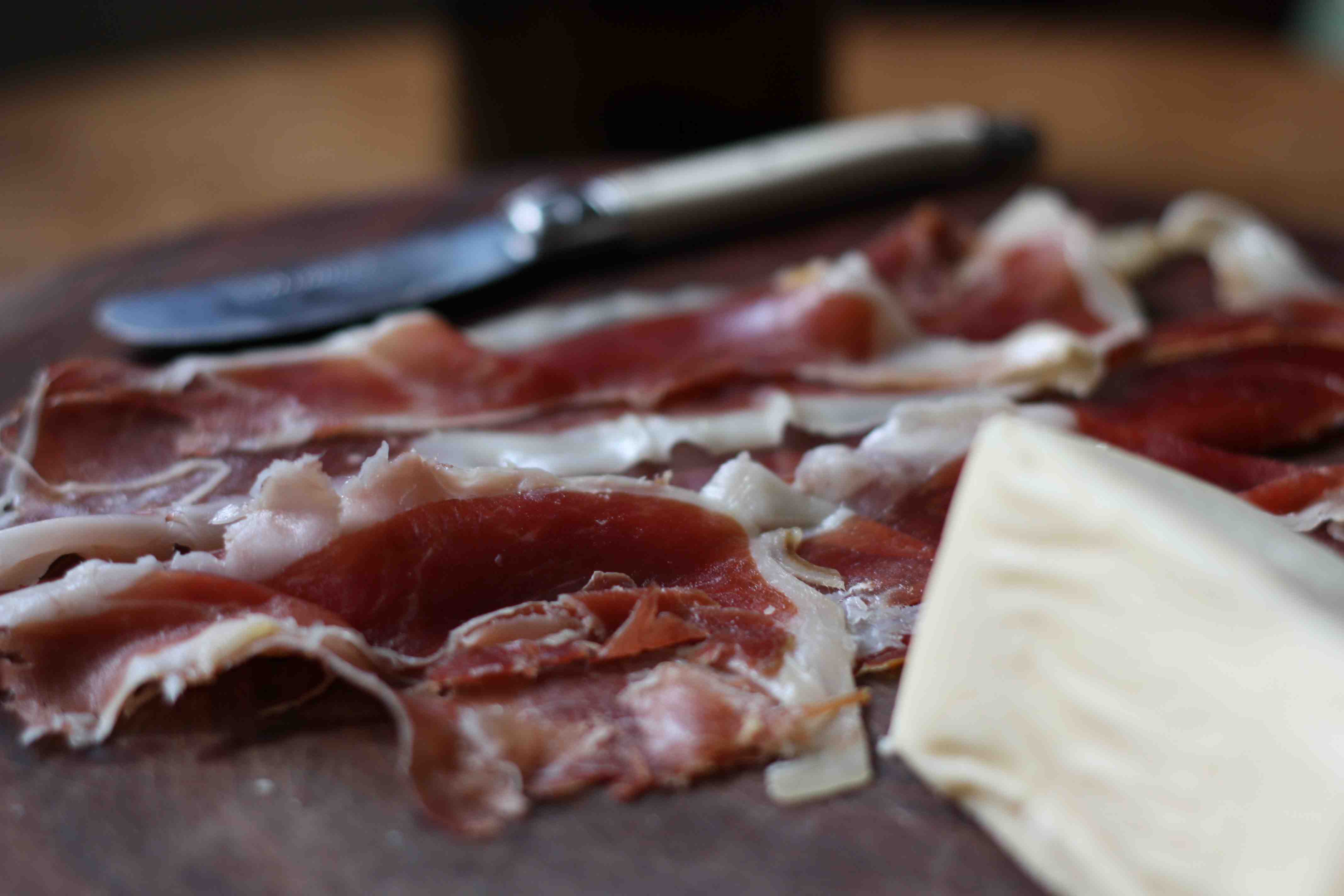
A midnight snack: Caerphilly and Jamon Serrano
They say you can’t go home again, and generally speaking, you can’t. Mostly, you shouldn’t. In some cases, you don’t even necessarily want to, which is why I haven’t been back to Forest Hills in almost 30 years. The idea of visiting the place where I grew up, without having two key life-supporting elements of my childhood—my father, and my grandmother—along for the ride or just around to talk to, was just too off-putting and fraught for me. So I studiously avoided it.
But when my artist cousin Mishka Jaeger told me that she was part of a group show at Long Island City’s Climate Gallery, I said to Susan “it’s time.” And it was. Forest Hills is exactly eight minutes by car from Long Island City, so I had no excuse. Finally, after ten years together, Susan would see the place where I lived so long ago, and it would cease being a mystery for her, and a vaporous, shrouded memory for me.
Naturally, everything looked a little bit smaller; the building I’d grown up in now seemed to be three quarter-size, like Main Street in Disneyland. We drove down 67th Avenue, and I showed Susan all the places that had some meaning for me: the nail salon that used to be the pizza place that produced a pie against which I still measure all others; the corner candy store, where Charlie, the guy behind the counter, used to make me a grilled cheese sandwich, oddly sliced into thirds; the low-rise apartment building down the street, where my great Aunt Millie and her corset-wearing husband Ben (he had a bad back) lived, and where, every Saturday morning around eleven, their second-floor neighbors’ Harlequin Great Dane, Danny, used to fling himself out of the plate glass living room window and onto the sidewalk, for no apparent reason.
We parked just off Austin Street, and walked, dodging baby carriages and teenagers and older people pushing shopping carts. Susan stopped, and pointed to a small storefront across the street.
“Cheese of the World?”
There, amidst the big chain stores that signify the malling of what once had been a thriving town of independently owned businesses, it stuck out like a sore thumb. And I remembered, almost instantly: this was the place where, in 1975, at twelve years old, I made two important discoveries: first, not all ham is the boiled dreck that comes in a can, and second, some people treat food far differently than others. This was where it had all started for me, and all this time, I had forgotten. Every time an interviewer has asked me the inevitable “how did it begin for you—” I could never answer clearly, because I’d conveniently lumped Cheese of the World together with the existential gnarl that was my young life in this town.
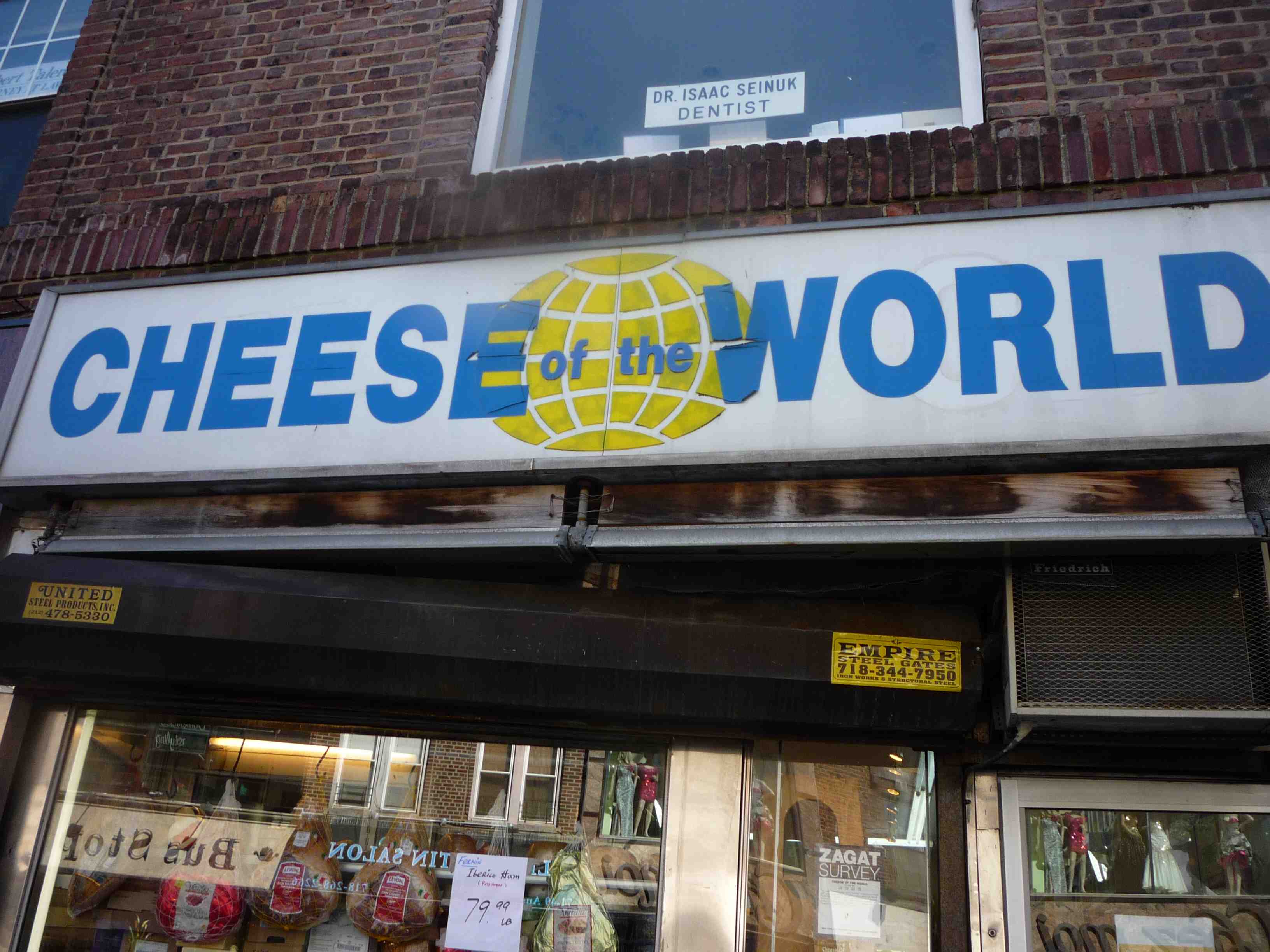
We walked in, and there they were: sitting on a shelf, the loaves of square, dense, black bread that my friend Rachel’s mother used to buy from the German guys who owned the place in the 1960s and 70s. I’d spend almost every day after school with Rachel and her family, and was always included on shopping trips; other families shopped at Key Food, or Associated, but my friend’s mother would walk us all the way down Austin Street to this odd and alien store, and Rudy would say to her “I have a cheese that I think you’ll love,” and he’d give her, and us, a sliver, and she’d take half a pound that he would wrap up in old-fashioned white butcher paper. The store was packed with things I’d never seen: there were twelve different kinds of mustard from France and Germany; piles of Landjaeger sat on the counter; and the cheeses? This was Cheese of the World.
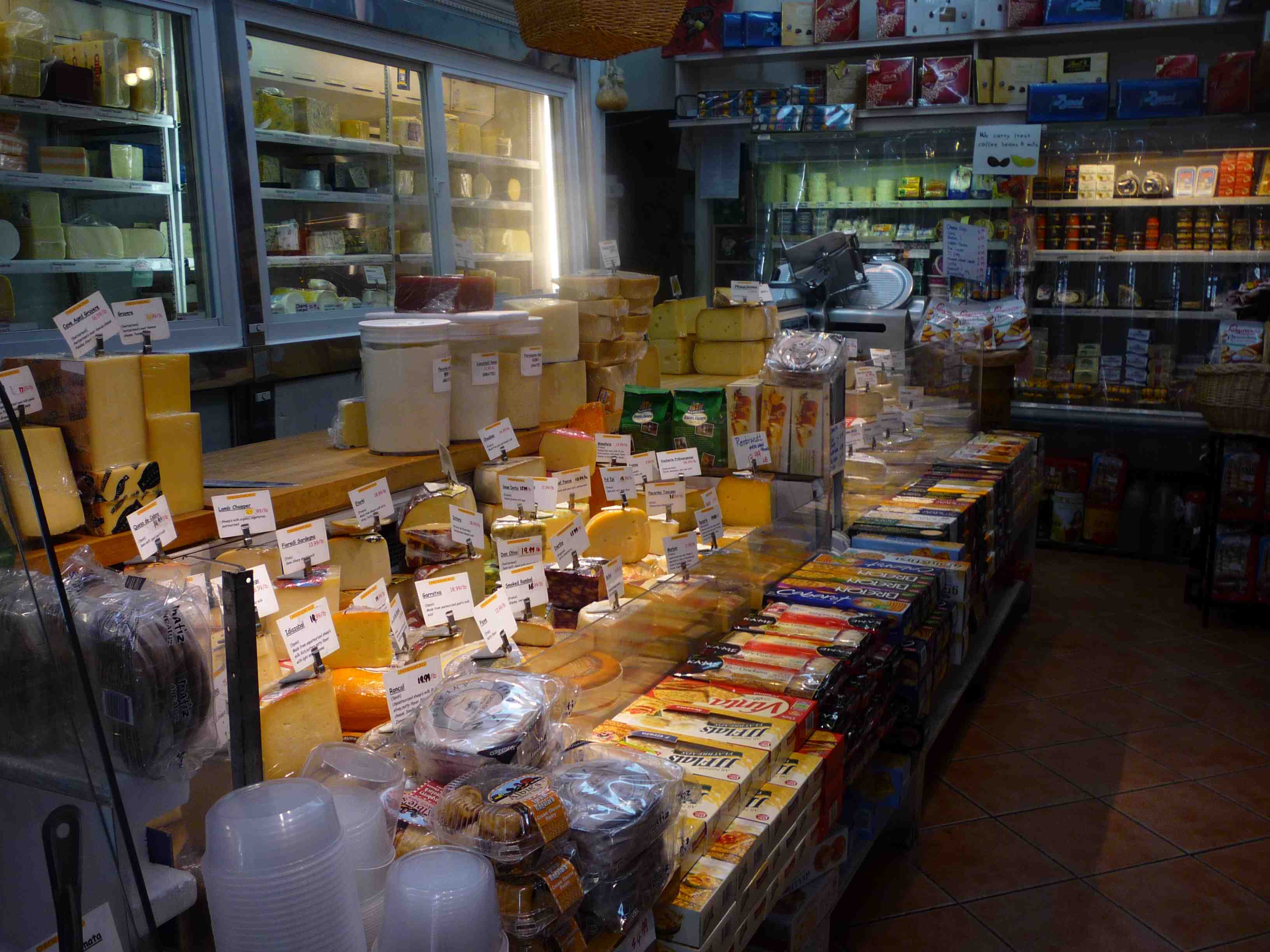 One afternoon, Rachel and her mother and I walked in, and Rudy presented us with hair-thin slices of Prosciutto di Parma; it was earthy and salty and sweet all at the same time. We brought some back to Rachel’s house, and her mother made us a snack of dark bread sliced into four squares, spread with sweet butter, and topped with the ham.
We did not snack like this in my house.
My grandmother would sometimes make a mid-afternoon batch of latkes, but this was different. Very, very different. And all this time, I’d forgotten.
Rudy is probably gone now, and I have long since lost touch with Rachel and her family. But when Susan and I walked into Cheese of the World yesterday and bought half a pound of Jamon Serrano for me, and half a pound of Susan’s beloved Caerphilly, I remembered it all. When I posted my doings on my Facebook page, a dozen friends from Forest Hills—people I haven’t seen in three decades—responded, and swooned. The store meant as much to them as it did to me, only I never knew it. My old high school friend Joey responded that he used to make up bedtime stories for his little girl, involving a family of mice that lived at Cheese of the World, in a crack in the wall. I cried. And then I wondered: did we all know that one small cheese shop in our home town meant so much to all of us?
We got home late last night after Mishka’s gallery opening—it was after midnight, the usual time for refrigerator and pantry grazing. We broke out the ham, and the Caerphilly, and poured ourselves glasses of a cheap Portuguese red, and these three things comprised one of the best late-night meals I’ve had in forever. At 2 am, it was time to go to bed, so we packed everything back up in the same, old-fashioned white butcher paper that Cheese of the World still uses, after all this time.