Sometime in mid-April, I began noticing that whenever Susan and I walked the dog, she would waft over to one side of the street in a non-committal sort of way, like it was earth’s gravity that was tugging her over. She thought I didn’t notice, but I did, because I’d be talking to her about something particularly grave—like how sick I am of the 1960s powder blue toilet in the master bath—and suddenly, she was gone and I was mumbling to myself like those people you used to see outside the methadone clinics in Manhattan back when Gerald Ford was in office.

Susan, of course, was checking the same spot from which we absconded with ramps last year, when we made the discovery that they were growing around the base of the oldest oak tree in my neighborhood, on the cusp of two pieces of property (neither of which we own). Days before, she had come home with a few expensive bunches of ramps from Whole Foods, and we fell in love with them, their earthy flavor, their promise of warmer weather, their ever-so-slightly subversive je ne sais quoi. But I had never  actually foraged before that fateful day that found us on our knees mere inches from someone else’s land, the car idling nearby in case we had to make a quick getaway.

But once we cooked these things that had been in the ground just moments before, we were hooked—both on ramps, and on the idea itself of foraging. So every day this spring, when we walked Addie, we looked for the ramps, and last week, they were ready.

“I have an idea,” Susan said, as we talked about when we would liberate them.

This sort of statement usually makes me nervous.

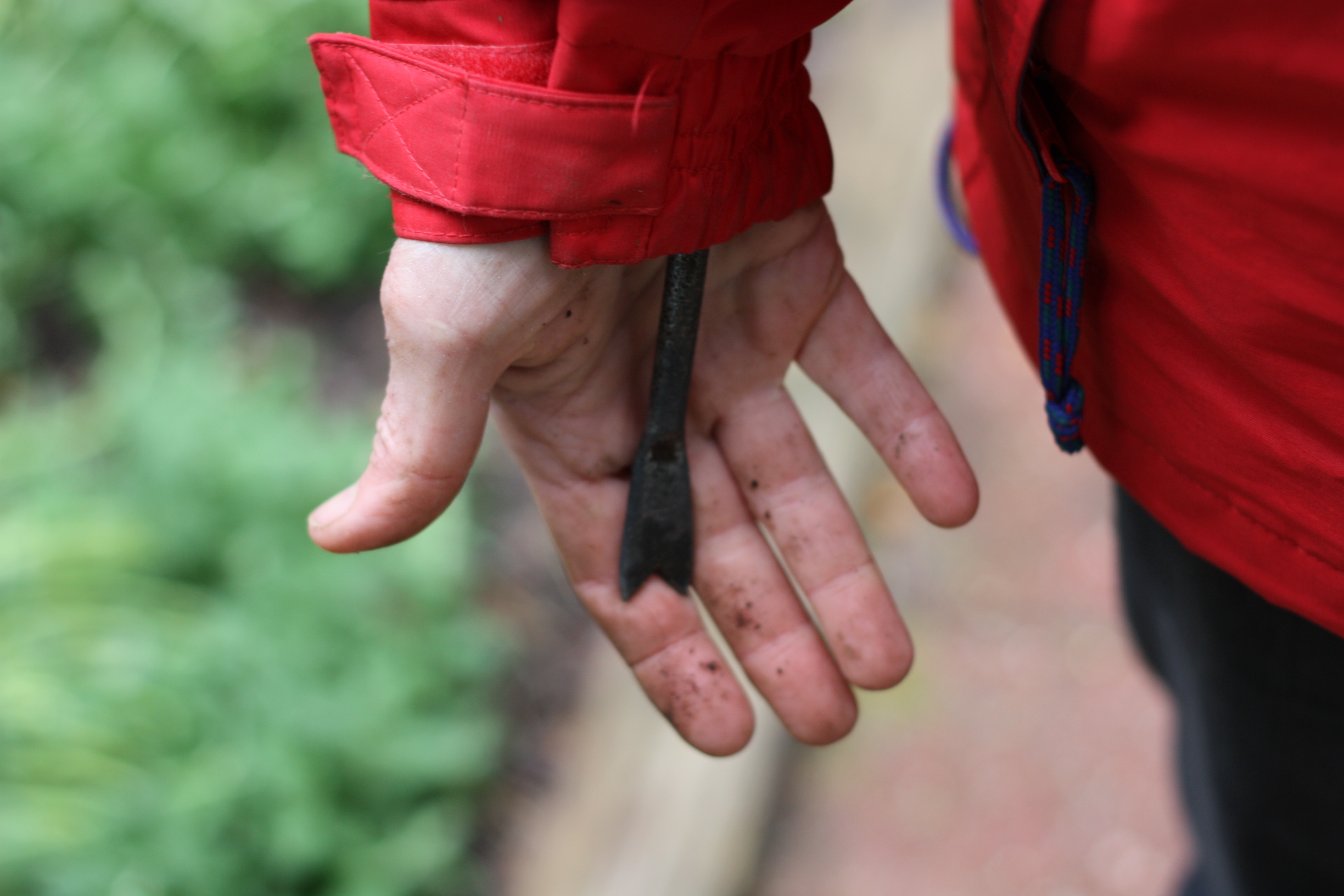
“I’ll take the dandelion weeder,” and off she went into the garage to rummage around for this tiny tool. We’re not particularly great with a place for all things and all things in their place, but she showed up with it in our entry way moments later, stuffed up the sleeve of her bright red anorak.

“Shouldn’t you be wearing, you know, black? Like Peter Graves in Mission: Impossible? And maybe a knit cap?”

“Let’s go,” she said, and slipped the collar on our dog, and off we went, looking for all we were worth like sane New Englanders going for a stroll around their neighborhood with their big yellow Lab, a weeding tool and zip lock bag hidden in the sleeve of one our day-glo garments.

As we approached the oak tree, Susan said, “bring the dog over here.”

Great, I thought. We’re involving the dog now.

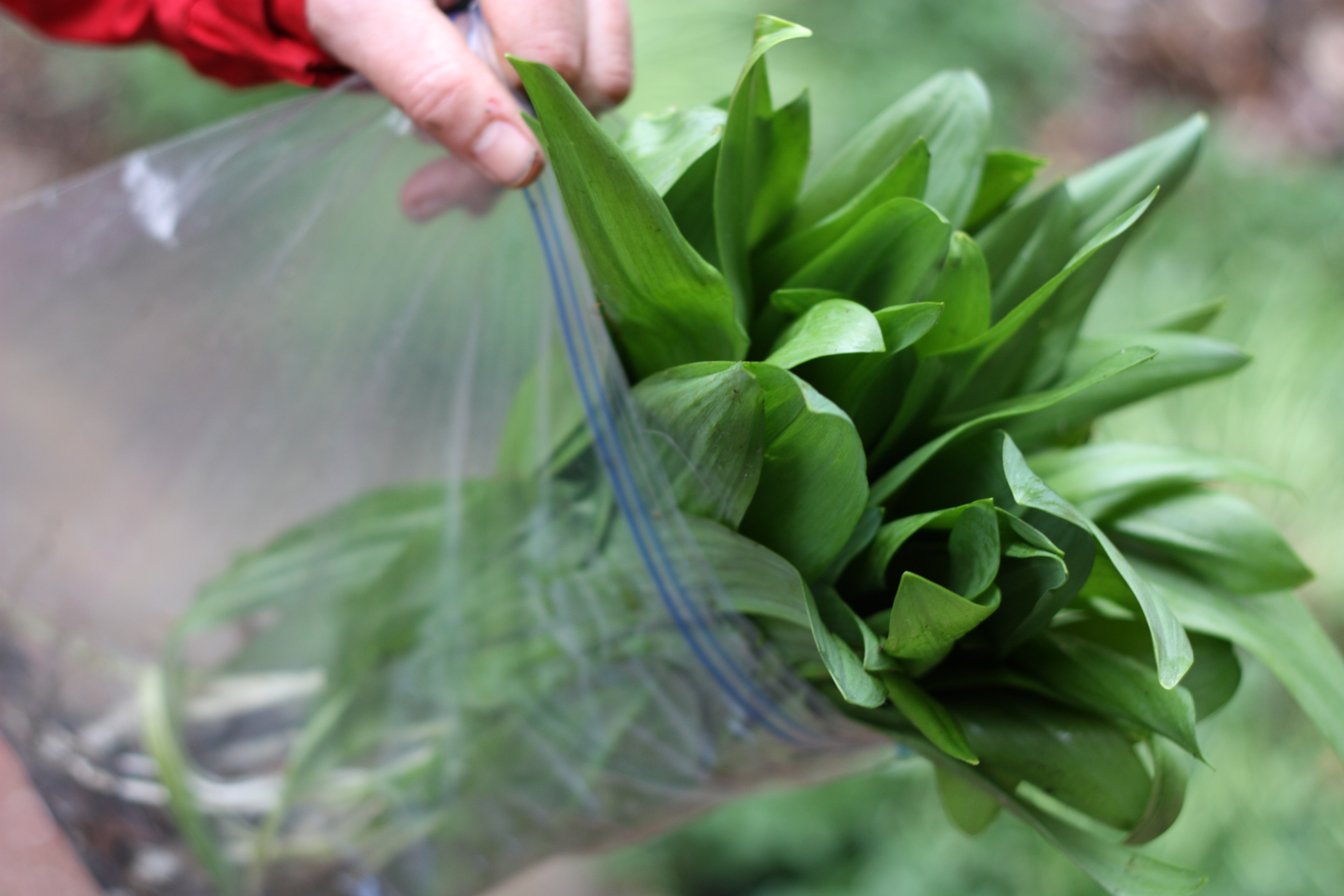
But, I did, and Addie nosed around the tree for a while, and I came to the realization that a big, sweet, happy, zoftig dog is a pretty good foil for almost anything. Susan dug and pulled and dug and pulled, and in what seemed like seconds, we had a bagful of ramps, which would go into a frittata that night.
We walked home, and Susan put on a pair of rubber gloves, and went around the back to pull some of the weeds that someone had informed us were stinging nettles, and which almost take over our property every year. We took them inside and I looked them up on line. Not stinging nettles, unfortunately; mustard garlic, which is very nice, I’m sure, but I’ve never heard of it being used in a frittata and since my Epi-Pen needs to be replaced, I didn’t want to run the risk of being allergic. Or it being poisonous. Which I’m sure it’s not, but who knows. I’m from Queens, and we don’t know about these things.
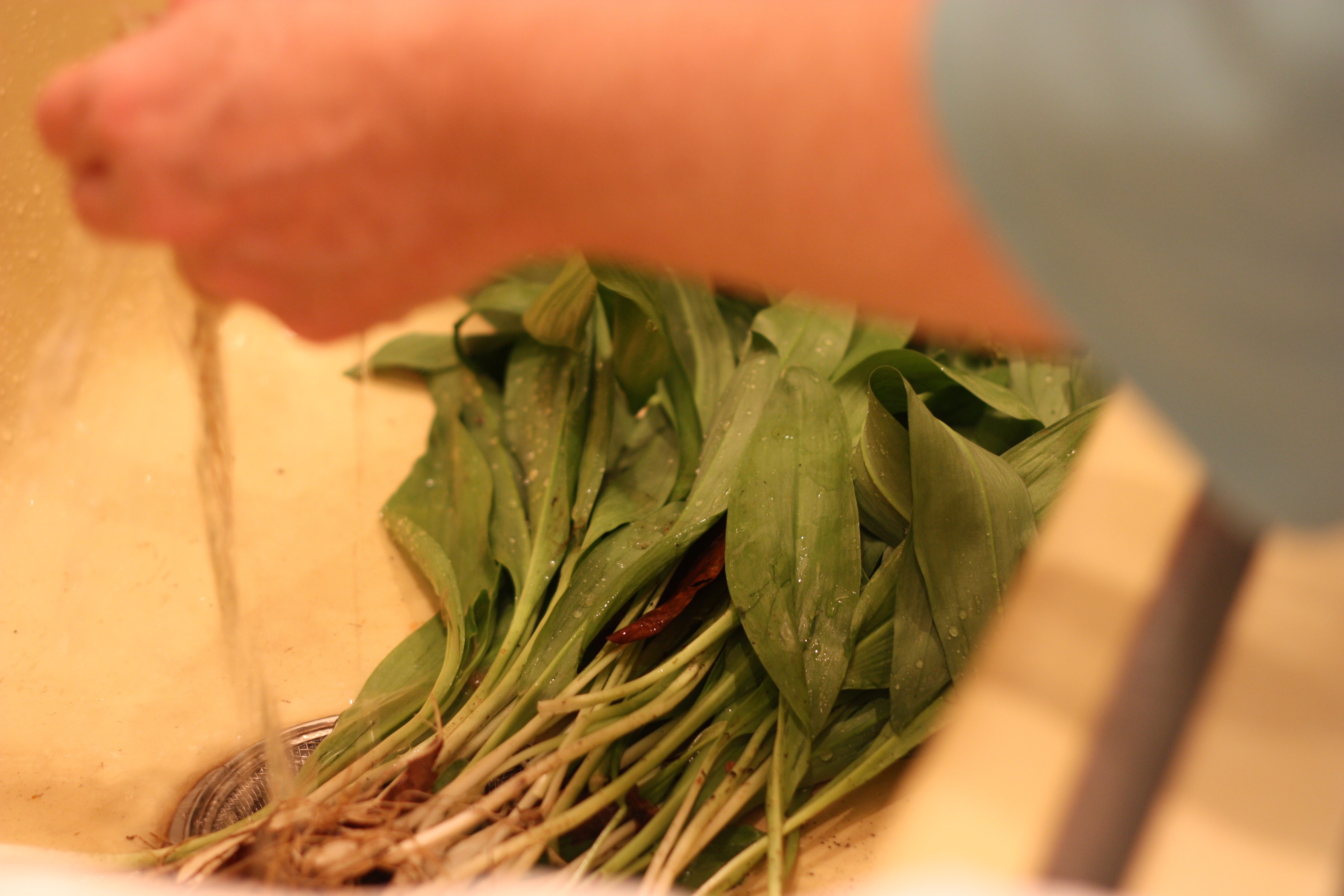
But the fact is that foraging for ramps has compelled us to want to forage for other things too. Me, a city girl, foraging. Who knew.

What’s next on our agenda?

Truffles. The dog is practicing already.
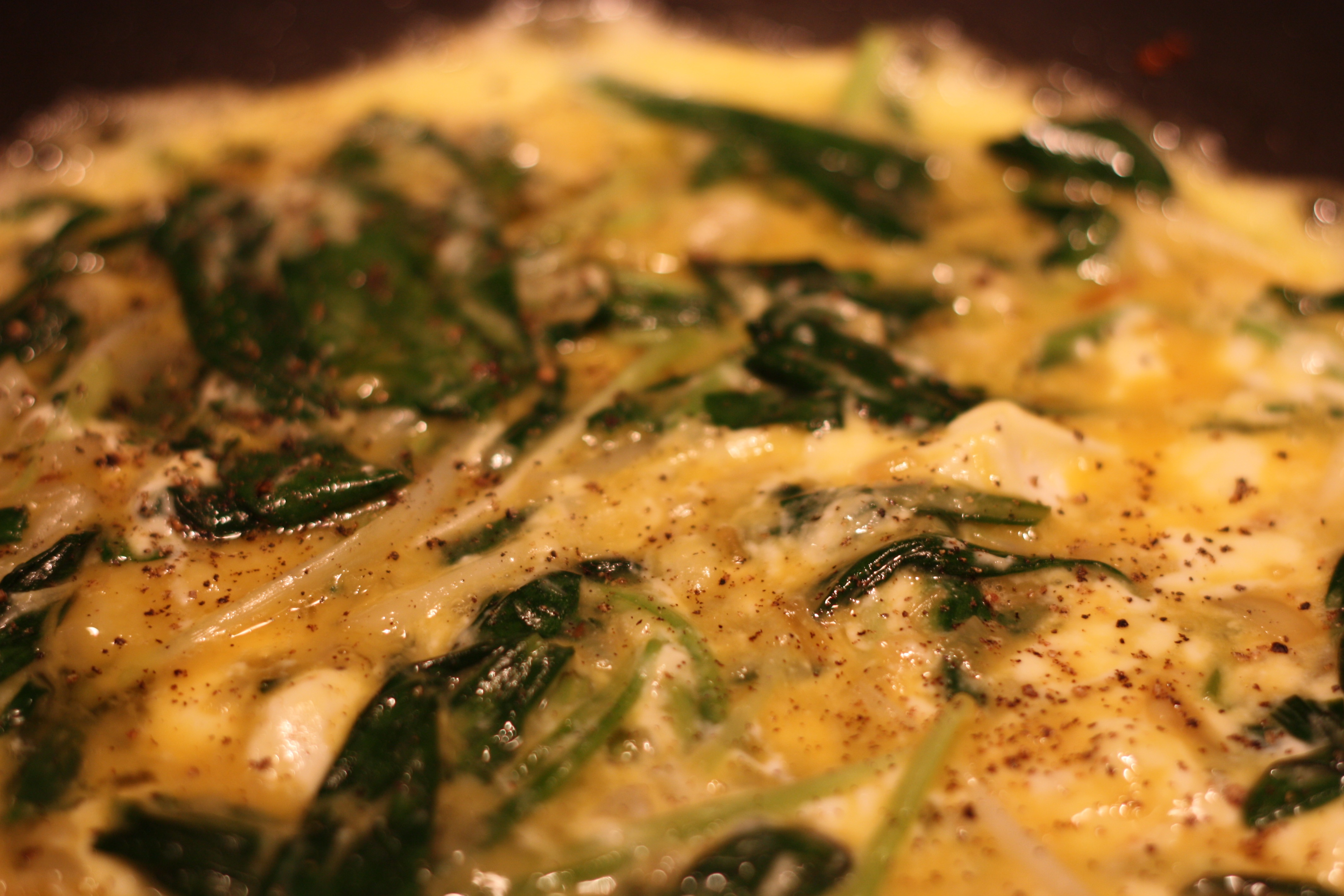
Frittata with Ramps and Ricotta

I’ve always been a fan of frittatas, because they pretty much prove the point that if you blanket anything in eggs, cover it with cheese and then bake it, it’s going to be good. This version, which is a loose riff on Deborah Madison‘s wonderful nettle and ricotta frittata from Vegetarian Cooking for Everyone, was as delicious for lunch the next day, served at room temperature, and with a green salad.

Serves 3-4

1-1/2 tablespoons extra virgin olive oil, plus extra for drizzling

1 pound ramps, cleaned, leafy greens separated from stems, and chopped into thirds

2 shallots, peeled and minced

6 fresh eggs, beaten

1 tablespoon fresh thyme leaves, minced

1/2 cup fresh ricotta

1/2 cup grated sheep’s milk cheese, like Manchego

black pepper, to taste

1. Preheat oven to 350 degrees F.

2. In a large, ovenproof, stickproof saute pan set over medium high heat, warm the oil until it shimmers, and add the ramp stems. Cook until almost soft, approximately four to five minutes, and then add the shallots, toss, and cook until just translucent.

3. Add the ramp leaves to the pan, give it all a stir, and cook until the leaves begin to soften and wilt, about five minutes. Reduce the heat to low, and pour in the eggs and the thyme, shaking the pan so that they evenly blankets the ramps. Cook for about three minutes, until the edges just begin to set.

4. Evenly dollop the ricotta onto the frittata, and sprinkle with the sheep’s milk cheese. Pop into the oven for approximately 10 minutes, until the top of the frittata has turned a golden caramel brown.

5. Carefully slide a dinner knife around the edges of the pan, and give it a shake, to dislodge the frittata. Slide it out onto a plate, drizzle with more olive oil, and fresh black pepper, if desired, and slice into wedges.

I have to say right off the bat that I’ve never been much of an awards person. It’s not that I think that people shouldn’t be honored for their skill/creativity/talent/impact; it’s more because the galas that go hand in hand with these functions tend to be populated by gigantically tall people, and no matter how high the heels are that I dig out from the bowels of my closet, I still invariably get elbowed in the chest by the same statuesque blonde who I always decide may or may not be Donatella Arpaia.

But this year, I had been asked to judge a division of the James Beard Awards, and I felt it my duty to attend. I also wanted to meet—at long last—my friend and landsman Andrew Zimmern, with whom I have kept up a year-long correspondence; he was hosting the first night of awards with Kelly Choi, and I really didn’t want to miss this man who is the embodiment of what it means to eat locally (even if you’re turned off by his love of crawling multipedes). So I put on the suit, and off I went.

It was fun. A lot of amazing people were there—folks I’ve been in touch with for a long while, but haven’t actually ever met, like Naomi Duguid and her remarkable publisher, Artisan’s Ann Bramson; Sara Kate Gillingham-Ryan of Apartment Therapy; Nathalie Dupree (who was sitting three feet from me and who I still managed to not meet); and, of course, Andrew and his lovely wife, Rishia Haas. But also in attendance were Claudia Roden and Judith Jones, James Oseland; and Thomas Keller and David Chang, who at one point I spied book-ending one of the bars in the reception area. I figured they knew something I didn’t, so I sidled up and decided that whatever was being poured, I would drink it.

It was tall. It looked like cranberry soda. But it tasted sort of oddly smoky, and I couldn’t quite put my finger on what it was. Neither could Rishia. I didn’t know what it was until I checked my menu, which called it a Smoked Ribena Collins, crafted from “Beefeater Summer Gin with Fresh Lemon Juice, Smoked Ribena Blackcurrant Syrup, Soda Water, Lemon Peel, and Garnished with Fresh Blackcurrants.”

Mine appeared to be garnished with only a small wedge of lime, but then again, I had a free ticket. It was pretty good, but somewhere between my first sip and my last, I decided that I don’t want anyone smoking my syrup. Ribs, yes. Brisket, fine. But for god’s sake, leave my syrup alone.

I knew, of course, that the various cocktails being poured–the Smoked Ribera Collins, the “Chamomile Smile,” fashioned from Beefeater 24 with Chamomile Tea Syrup, Aperol, and a Grapefruit Twist, and the “Cucumber Mint Creole,” which married Plymouth Gin (my favorite) to sherry, Aquavit, cucumber, mint, lemon juice, and simple syrup, and which I missed entirely—were a clear indication of what was to come in the dining room. I expected layer upon layer of description and ingredient, and I was not disappointed, especially given who was in the kitchen that night: John Besh, Suzanne Goin, Karen deMasco, and Gerald Hirigoyen.

Waiting for me when I sat down was poached asparagus in a “perfect blonde vinaigrette” (Gerald’s contribution); next came a remarkable redfish courtbouillon with brown shrimp and “crab pearls” (Besh); then came braised short ribs with baked ricotta, olives, pine nuts, and crumbled feta (Goin); and lastly, white chocolate panna cotta with morello cherries and cherry sorbet and some sort of Green & Black chocolate add on, which I couldn’t find (deMasco).

It was all very nice even though Besh’s luscious pearls were in fact chunks and Goin’s short ribs were shredded and miniscule, like a string or two of ropa vieja. I’ve done some catering, and I know that it’s tough cooking for 200 people; the food itself was delicious, but, like the cocktails, the dishes  felt so overwrought and verging on a kind of rushed hysteria that all I could think of was the fact that while the culinary world’s greatest minds and hands were all huddled under one roof and deconstructing dinner, a few blocks away, the Martha Stewart people were getting ready to air an episode featuring Alice Waters, Scott Peacock, Bryant Terry, and Cal Peternell, who were making steamed turnips, and greens on toast.

Is there sort of a mixed message going on here? All we seem to talk about these days is the evocative beauty of simple food—the preparation of seasonal ingredients of stellar quality, and their presentation in an elemental manner (see greens on toast, above). And to be fair, Alice hasn’t been the only one harping on about this for years and years; Peter Hoffman, Paul Bertolli, Dan Barber, Deborah Madison and scores of others have built their worlds—and ours—on the beauty of simple food.

I know that “gala” food has to be prepared and presented differently, and that for a lot of people, implied complexity is expected and desired. This explains the reaction of the cranks at the table next to me last June, when Susan and I were having dinner at Chez Panisse; they were completely unimpressed by the local pork served three ways, and they were loud about it. The dish was simple. It was unfettered, and uncomplicated. My neighbors didn’t get it. They wanted height. They wanted culinary fanfare. They wanted vertical plating.

They wanted pearls.

So which will it be? Vertical and complicated? Or simply and exquisitely prepared?

I’ll have the greens on toast.

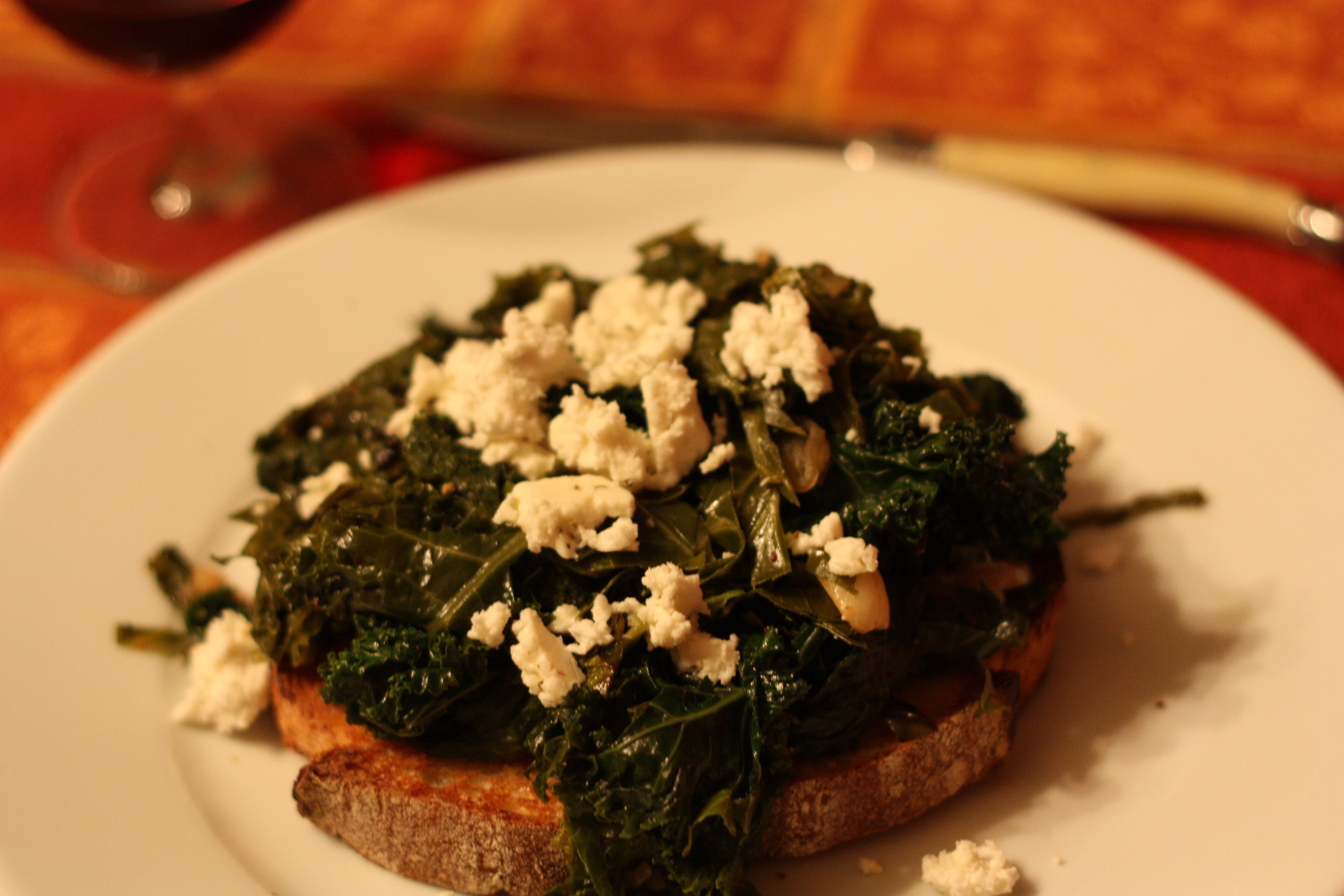
Baby collards, kale, and mustard greens on garlic toast

Seasonal Greens on Garlic Toast

The best way to prepare this dish is to head to the market, and look for fresh, seasonal greens of different consistencies and flavors. I was lucky enough to find baby collards, which are tender enough to cook quickly; young kale; and young mustard greens. Sauteed together in a wok with a handful of smashed garlic, a bit of broth, a squeeze of lemon, the result is delicious hot, on toast, room temperature and topped with a poached egg, or even cold. I crumbled Greek Fetiri on the dish, and called it dinner.

Serves 2

1-1/2 tablespoons extra virgin olive oil

6 garlic cloves, peeled and smashed

1 small bunch baby collards, trimmed and chiffonaded

1 small bunch young kale, trimmed and chopped

1 small bunch young mustard greens, trimmed and chopped

1/3 cup chicken stock (or vegetable stock)

salt, to taste

pinch red pepper flakes

wedges of lemon

4 slices toasted country bread, rubbed with a garlic clove

crumbled feta or other sheep’s milk cheese

1. In a large saute pan or wok set over medium high heat, warm the oil until shimmering, and add half of the garlic cloves. Cook until just beginning to caramelize, tossing regularly, about 6 minutes.

2. Add the collards and toss well, cooking until they begin to soften, about five minutes. Add the kale, toss, and add the mustard greens. Cook for about 5-7 minutes, until they begin to reduce. Drizzle the stock over the greens, toss, set a cover or large cookie sheet askew over the pan, and continue to cook for about 3 minutes. Taste for salt.

3. Add a pinch of red pepper flakes, toss, and serve directly on garlic toast, with wedges of lemon and topped with the crumbled cheese.

indiebound


©2009, ©2010, Poor Man's Feast. All rights reserved. To reprint any content herein, including recipes and photography, please contact rights@poormansfeast.com