Camping in the backyard, just like The Brady Bunch.

I’m a city girl, born and raised. I spent most of my life in and around Manhattan, and my idea of saying goodbye to summer used to involve standing on line for three hours at the Barney’s Warehouse Sale while reading the September issue of Vogue.

But since 2004, I’ve lived in a northwestern Fairfield County town that can run the continuum from suburban to rural in the blink of an eye: my street is littered with ranches and raised ranches, and on the corner is a nice old farm house inhabited by our friends Sherry and Mark, who raise chickens.
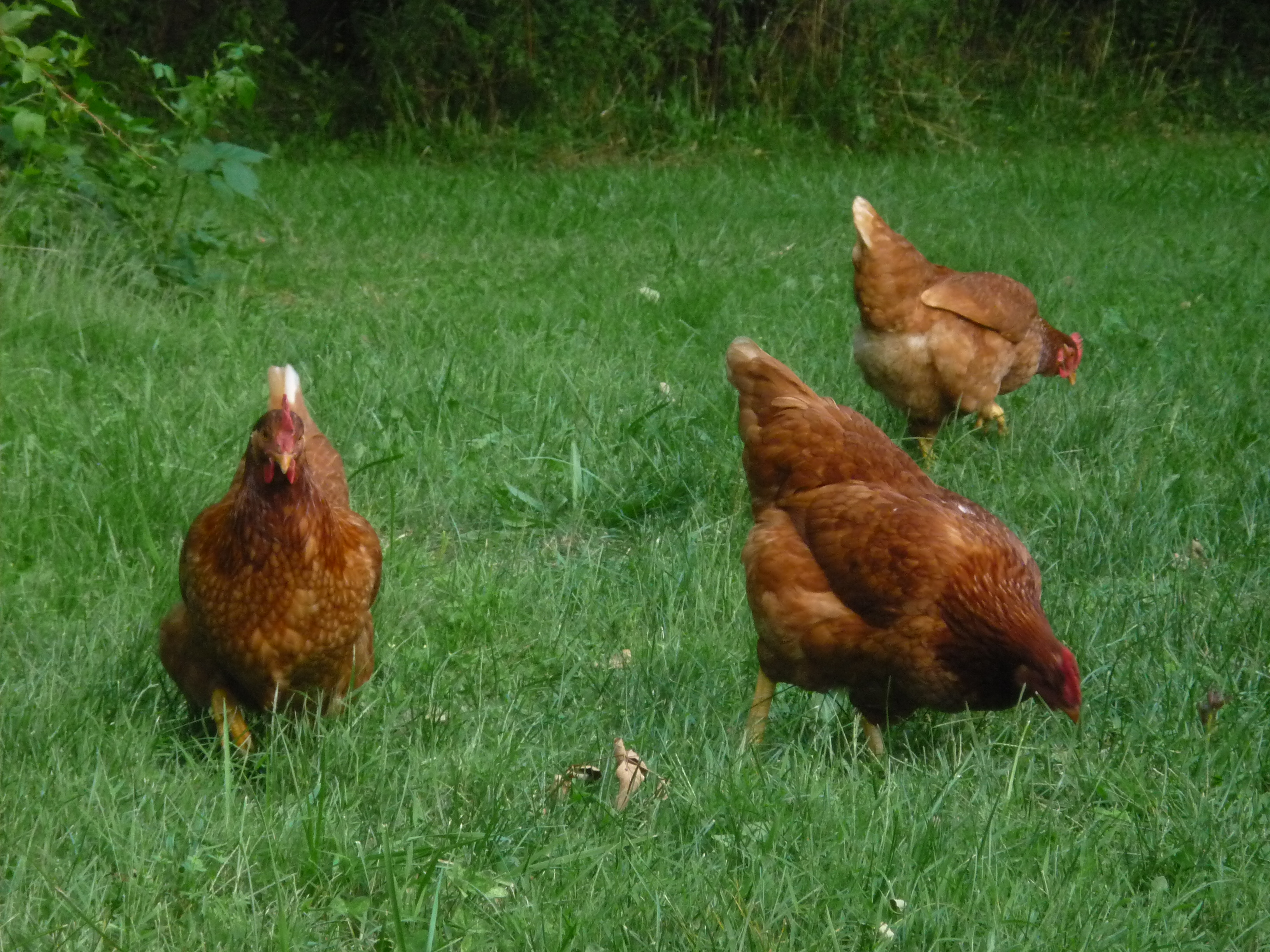
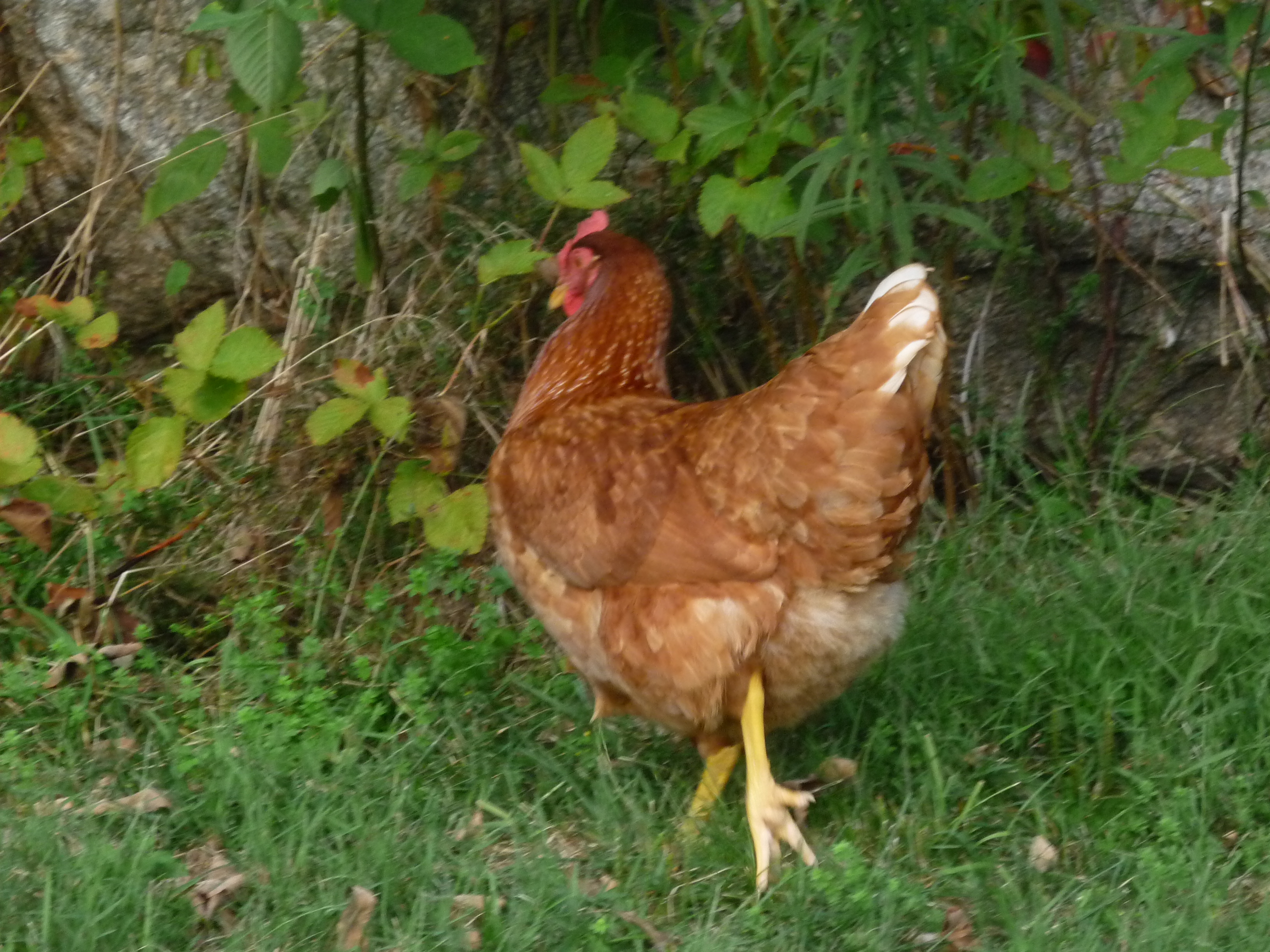
Sherry and Mark's ladies, in the backyard.

Those chickens (being chickens) often cross the road, and one early evening not long ago—right around the time that the sun was going down and the coyotes were starting to howl—I tried to herd the girls back onto Sherry and Mark’s property to keep them safe. It was not an attractive thing to do, and I’m certain that I looked like a lunatic, but I did it. Because in our neighborhood, we all take care of each other, and that includes our animals. Who include chickens.

Anyway, I never for the life of me imagined that I’d ever be so lucky to live in a place where I’d herd someone else’s chickens; or where we’d have snowstorm parties in deepest winter (we just carry over what we were planning on eating for dinner that night to someone’s house, and eat together); or where my neighbor’s teenagers would just let themselves in to play with the cats while I’m testing recipes; or where we’d love everyone so much that we’d invite them to stay in a rental house with us while we were on vacation. But that’s the kind of neighborhood we live in, and so when Sherry made the executive decision a few weeks ago to have us all spend Saturday night of Labor Day weekend sleeping in tents pitched on her backyard, it didn’t necessarily seem weird, except maybe a little bit to me and one of our other neighbors; we’re the only Jews on the street, and generally speaking, we’re not historically rugged people.
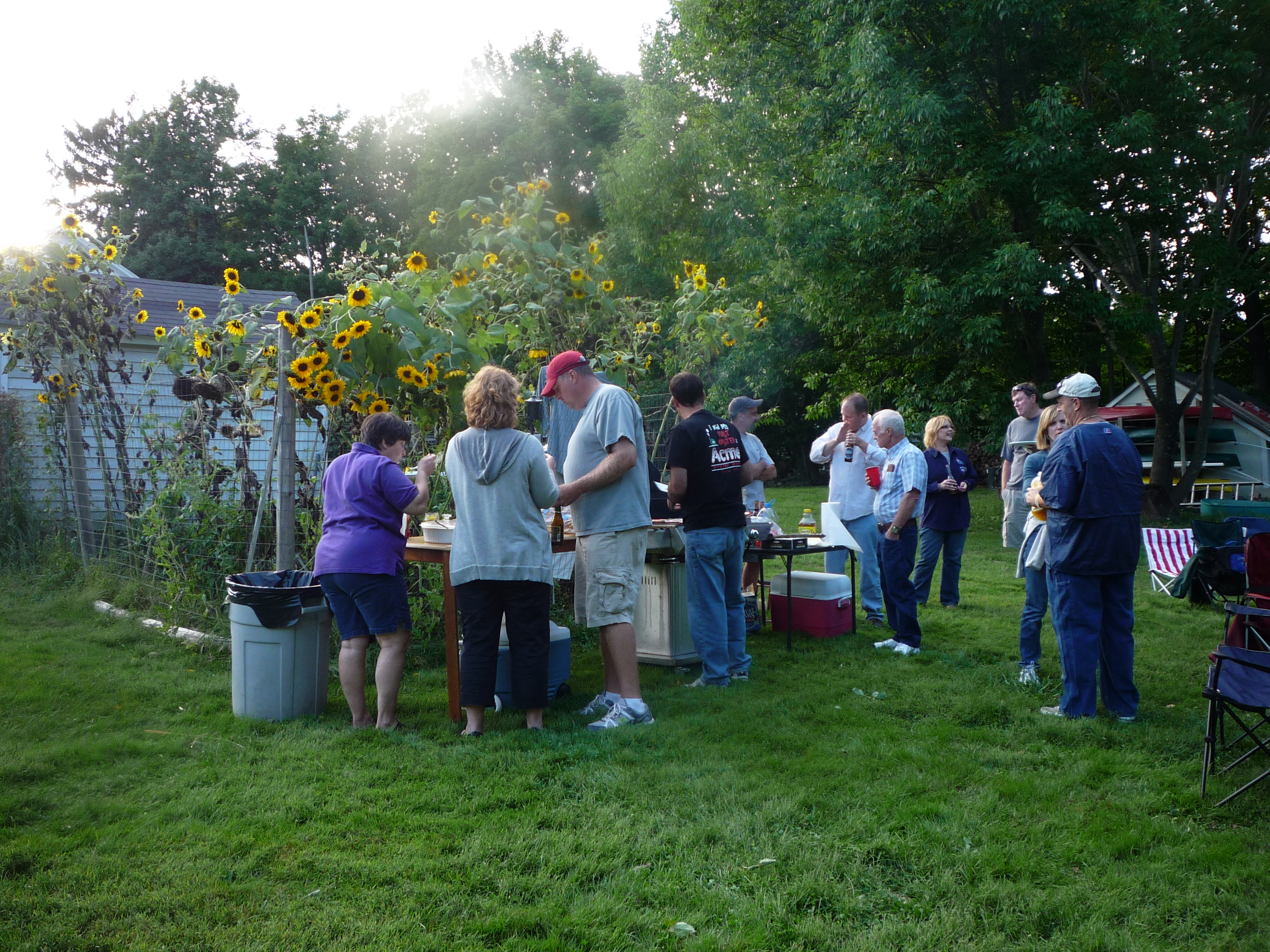
So Saturday afternoon rolled around and by four o’clock, there were seven McMansion-sized tents pitched about a hundred yards from everyone’s respective houses. The campfire was going full steam, and by six, we had all shown up with various dishes: Neale and Joan made brats that had been braising in beer for the better part of a week; we made spicy chicken wings; there was macaroni and cheese, incredible homemade pickles, hamburgers and hot dogs, soft drinks for the kids and beer and wine for the rest of us, and by the time it was dark, one of the more gregarious children told ghost stories. We went home just as everyone else was
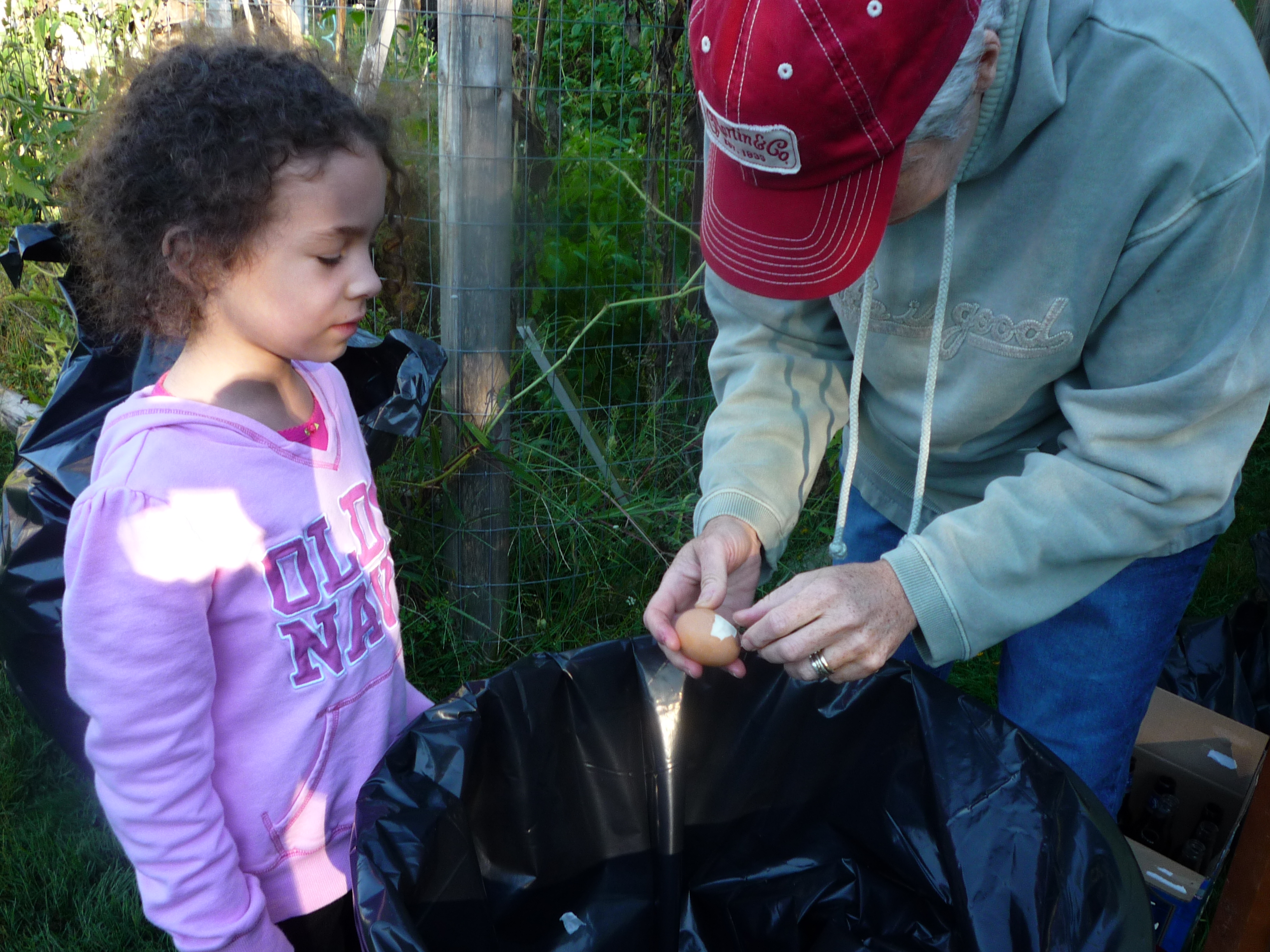
Susan peels a hardboiled egg for a young lady.

climbing into their tents, woke up early the next morning, and showed up in time for coffee, the blueberry muffins that Susan had made the day before, eggs in virtually every permutation (including scrambled on pizza), and mounds of bacon and sausage. It was a breakfast that would not have made my cardiologist happy. But every once in a while, who cares?
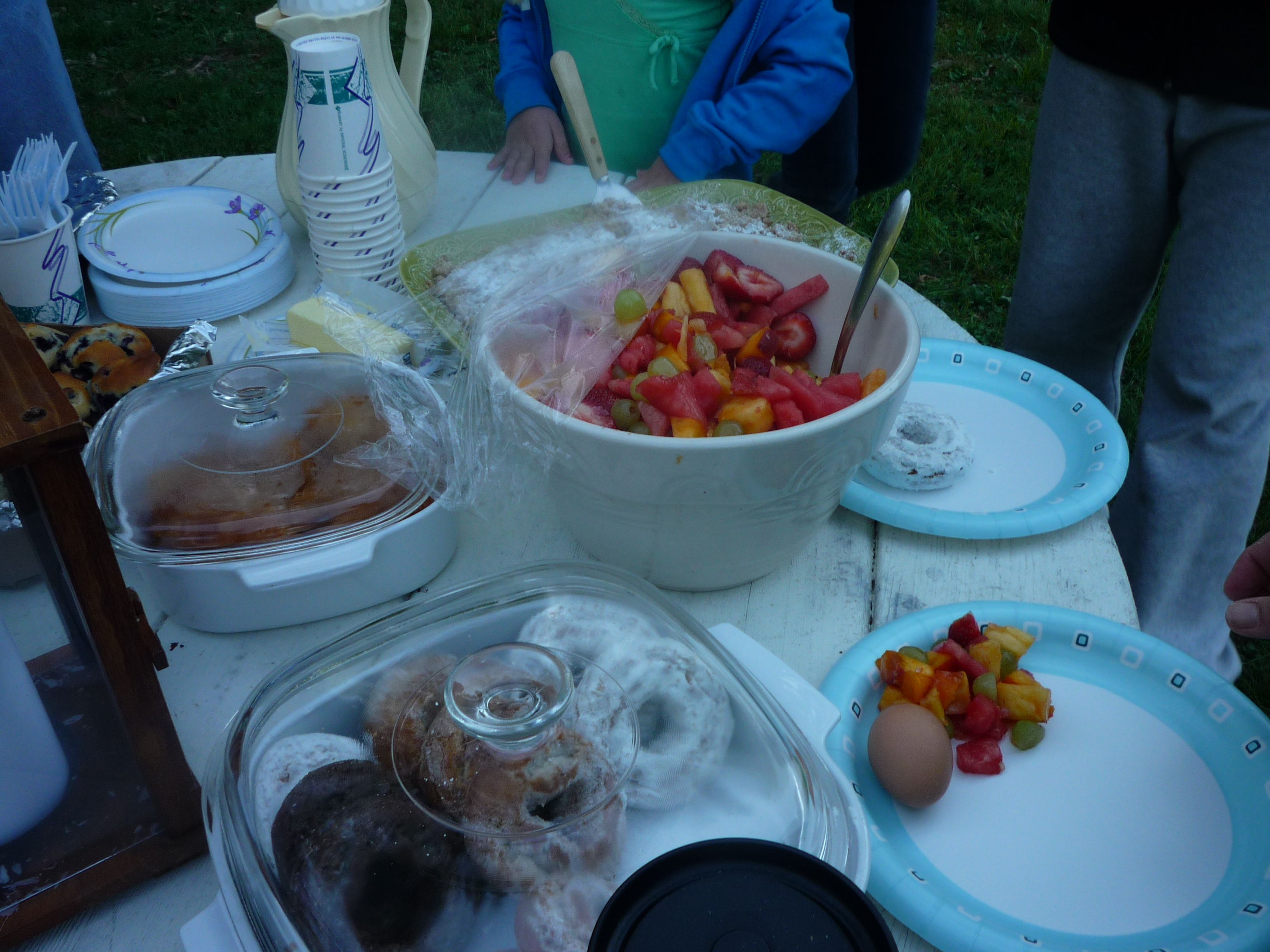
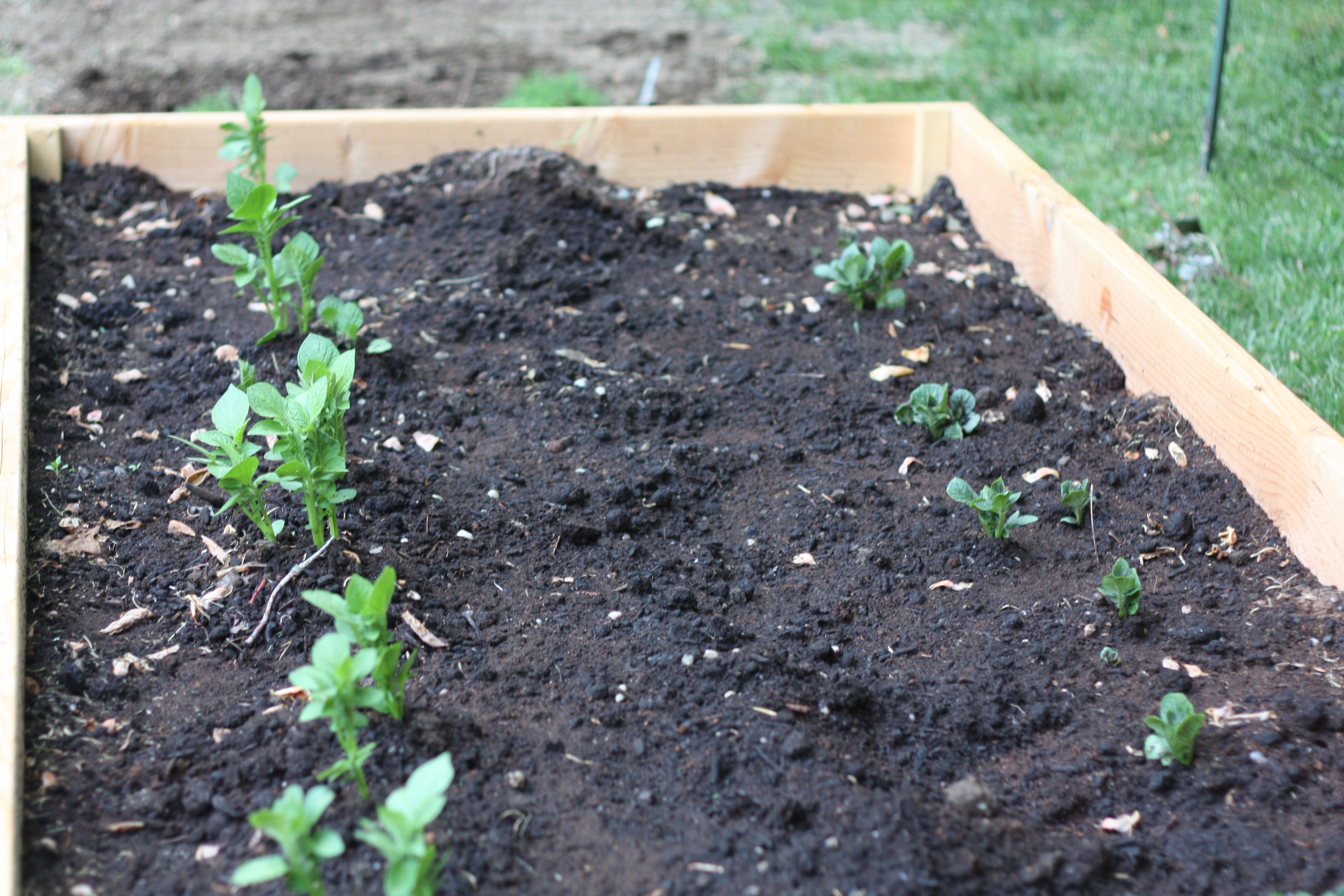
So summer—theoretically if not actually—is over; the conversation over the fire pit on Saturday night turned to pressing issues, like canning ratios and brines. The kids are back at school, and last night, Susan and I planted a ten foot box (formerly housing the potatoes) with chard, spinach,broccoli, and two types of kale. The air is a little bit crisper than it was this time last week, and when we showed up for breakfast on Sunday morning, we discovered that a bunch of the tent-dwellers had spent the wee hours of the morning shivering under their blankets.

We all agreed: Fall is on its way.
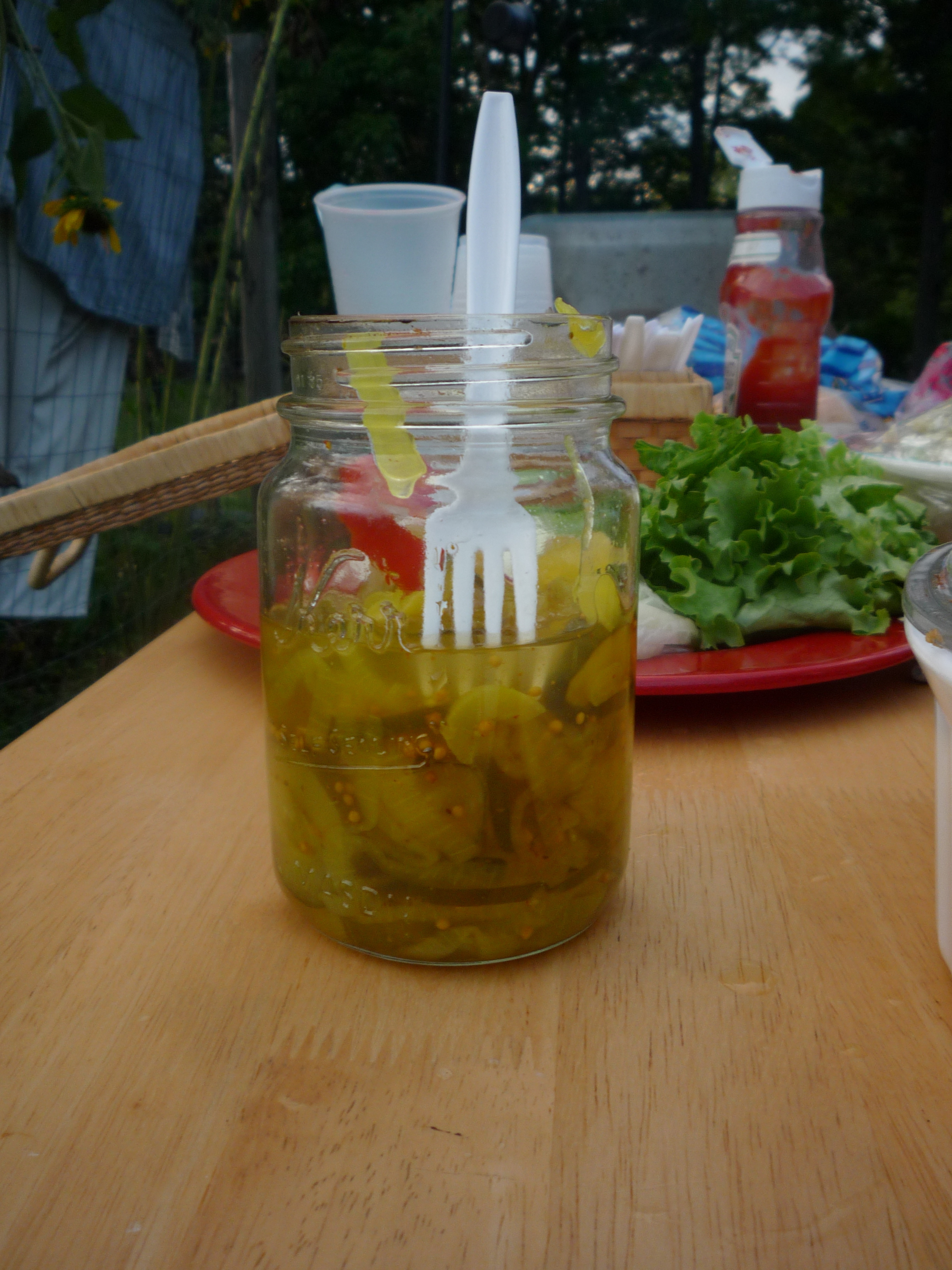
Sweet Pickles

I’m generally terrorized by the idea of canning, but this old-fashioned Slovak pickle recipe, adapted by Sherry—who is an astonishingly great home-style cook—is a keeper: it’s fairly simple, can be tarted up as much as you’d like (Sherry’s version contains neither cayenne pepper nor coriander seeds, and a bit less garlic), and is plainly delicious.

Adapted from The Anniversary Slovak-American Cookbook

4 quarts thinly sliced cucumbers

6 white onions, peeled and thinly sliced

5 cloves garlic, peeled and sliced in half

1 green pepper, sliced into thin strips

1 red pepper, sliced into thin strips

1 cayenne pepper, sliced in half, lengthwise

1/3 cup canning or pickling salt

3 cups white vinegar

5 cups sugar

1-1/2 teaspoons turmeric

1-1/2 teaspoons celery seed

1-1/2 teaspoons coriander seed

2 tablespoons black mustard seed

1. In a medium bowl, combine the cucumber slices with the onion, garlic, and peppers. Sprinkle with the salt, cover with cracked ice, and let stand for 3 hours.

2. Drain the vegetables, combine the remaining ingredients with the cucumber mixture, toss well, and pack into 8 sterilized pint jars.

3. Seal the jars, place in a canning bath, and bring to a boil.

Makes 8 pints
Mention wings, and I will kick you again.
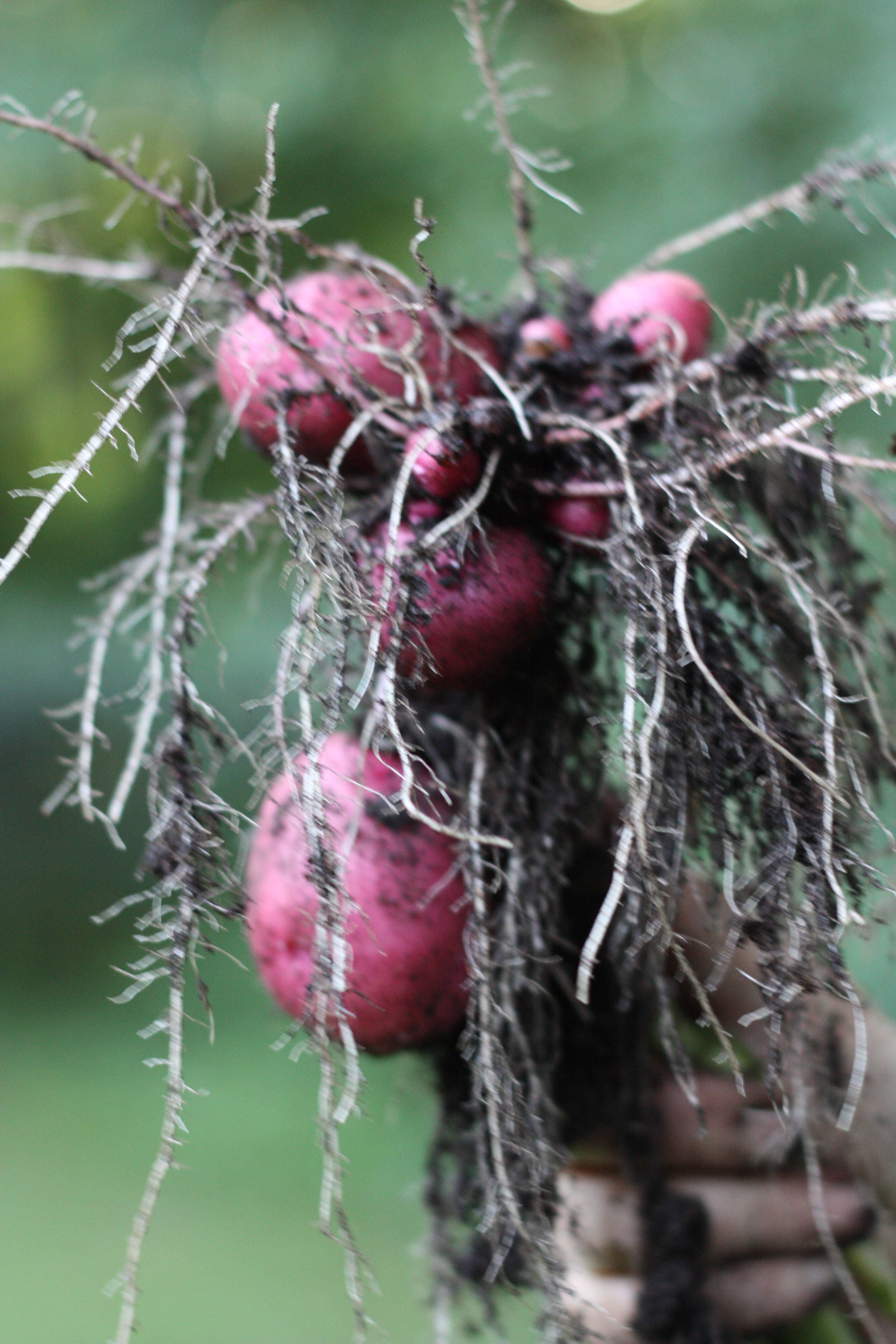
Just-picked All-Reds

“Honey–?

“Hi sweetie, what’s up?”

“She brought us seed potatoes–”

“Potatoes?”

“Potatoes. Heirloom seed potatoes from Iowa, that she schlepped all the way from New Mexico.”

And that’s the thing—When Deborah Madison carries seed potatoes all the way from New Mexico and presents them to you at lunch in Manhattan, you plant them. For a whole variety of reasons.

“You’re growing potatoes?” Susan’s mother asked us, bewildered.

“We are—”

“Why?”

“Because they’re special potatoes.”

“Why?”

It was like having a conversation about the birds and the bees with a seven year old.

We explained the whole seed saver-heirloom variety thing, and the Deborah Madison thing, and then we hung up and went outside to start digging our bed in the only remaining spot on our property that gets sun; we had no luck because the ground in New England is made of granite. We stared at the little shopping bag that had traveled great distances, and went out to Lowe’s to buy some untreated lumber for the new raised beds we were going to have to build. The only place left to put two more garden boxes was in the front yard, which, in our part of Connecticut, generally gets weird looks.

When we got home, our neighbor Kitty from across the street wandered over.

“What are you doing?”

We were sitting on the ground with the drill, attaching the long boards to the short boards. I looked up at her.

“Planting potatoes–”

“Why?” she asked.

“For the goats—-” I answered, squinting.

She turned around and went back home.

A few hours later, we had two gigantic, 10 x 4 foot boxes near our front driveway, and the next day, we were on our hands and knees again, planting two types of heirloom seed potatoes brought to us by the woman who basically invented modern vegetarian cuisine in America.

“You know,” my mother said, “you can buy potatoes in this country.”

But my mother doesn’t get the idea of vegetable gardening anyway. She once declared that non-organic food was inherently “cleaner” than the organic stuff, which she learned on a television news show was grown in shit.

“Watching Glenn Beck again, mom?” There was no  hope for her.

Anyway, about ten days after we planted the potatoes, we had spectacular potato plants; a week or so after that, they were nearly as tall as I am (which isn’t saying much, but still).

La Rattes on the left, All-Reds on the right

And when we finally had new potatoes that were ready for immediate eating, they were honest-to-god spectacular. The La Rattes–tiny, creamy, sweet orbs that are delicate and velvety–were remarkable; the All-Reds (also known as Cranberry Reds)–bright pink, stronger tasting, and very low in starch–were nutty and completely lacking in that cottony texture that store-bought potatoes often have. Together, they changed the way I think of mass-produced, grocery store potatoes in general: pasty, dusty, and without much flavor unless you drench them in olive oil, herbs, and butter, which is totally unnecessary.

We recently pulled up our end of summer vegetables, and there’s no question that of all the things we grew (except for tomatoes, which were excellent this year), the potatoes took the prize; the tatsoi was leathery, the Bright Lights chard nearly flavorless, the Dragon Tongue beans very late, the cucumbers pathetic, and the zucchini non-existant. All told, our spud yield was about ten pounds, so right now we’re planning on constructing some sort of box that will sit in the basement and allow us to have them through the Fall without threat of their being nibbled on by the tiny critters who sometimes squeeze themselves underneath the garage door, looking for warmth during the last bitter days of autumn.

Naturally, though, our spectacular potato harvest also coincided with my learning that my familial Triglycerides are through-the-roof, and that my carbohydrate consumption needs to be seriously minimal. “Lay off the pasta,” the doctor said.

“What about potatoes?” I asked.

“You’re kidding, right?” she said.

“No. We grew them.”

“You grew potatoes? Why?”

And I started my whole song and dance—why we grew them, how much more delicious they were, how easy they were to grow, and the fact that just because we grew them didn’t mean that we were having mashed potatoes every night of the week. We’d do things like offset their carbs with copious quantities of protein—namely shrimp, fish, chorizo, and kale. (Of course, we’d also just steam and toss them with fresh chopped parsley and a pinch of sea salt. That’s the part I left out.)

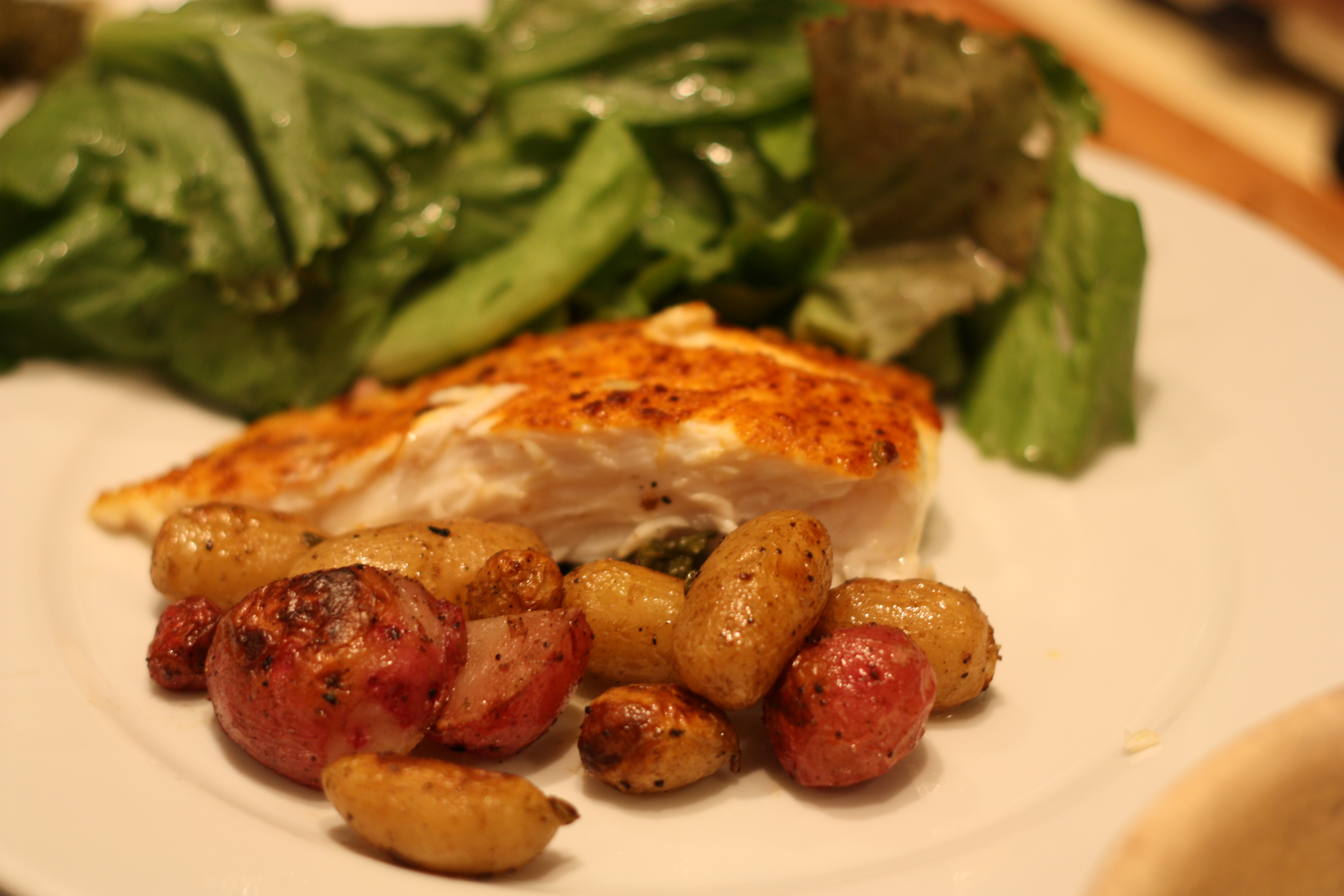
La Rattes and All-Reds with pan-seared halibut and greens

She looked at me with a gimlet eye.

Triglycerides be damned, next year we’ll be growing them again. And even if I eat two at a time, they will be well worth it.

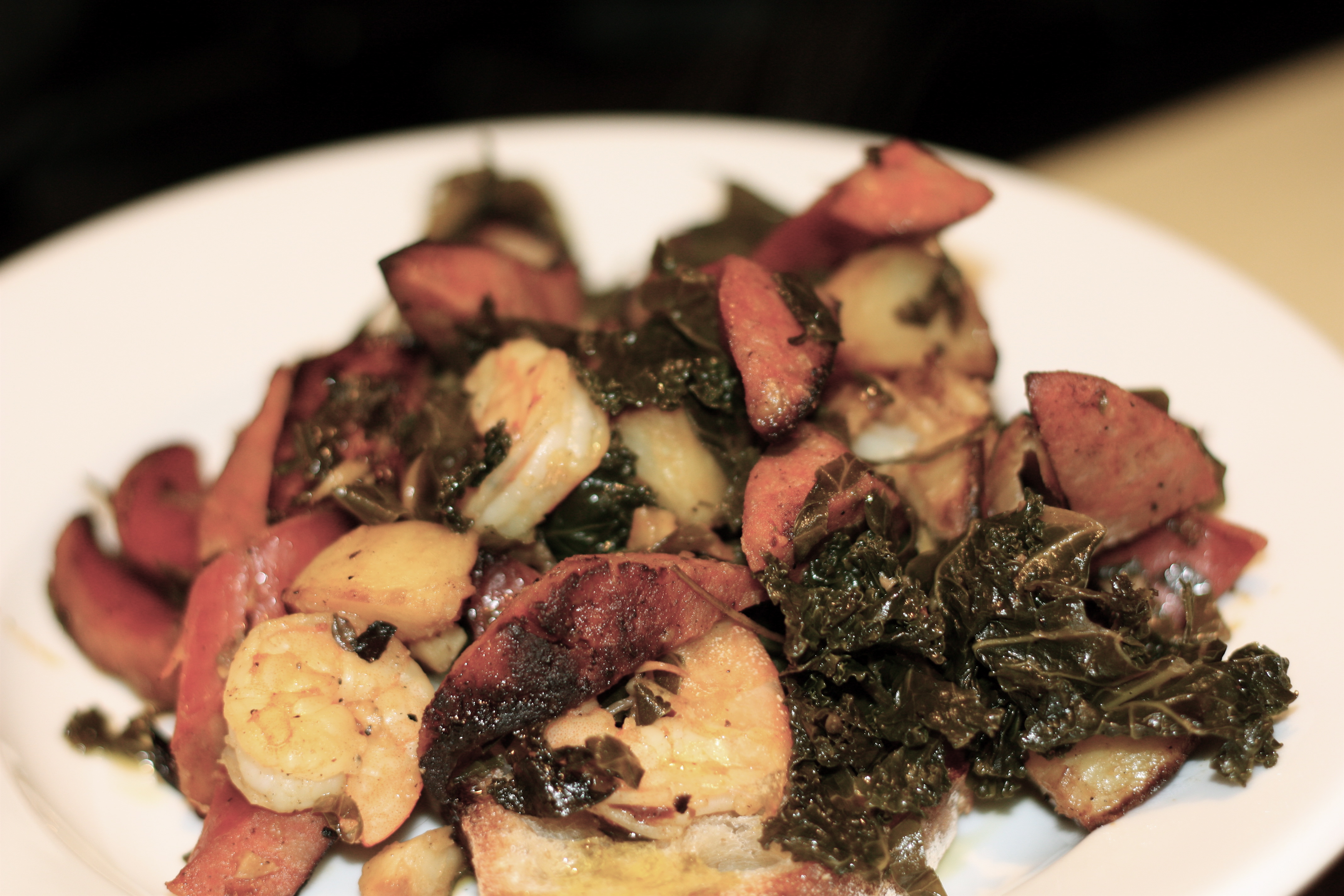
Potatoes, shrimp, chorizo, and kale

Portuguese-style Potatoes with Kale, Shrimp, and Chorizo

Admittedly, this is a robust, cooler-weather dish. But if you’re using potatoes and kale from your garden, the flavors will be far less sharp, and much more refined than they are when you make it in the dead of winter. Fold the leftovers into a frittata the next day, and enjoy a perfect room-temperature dinner with a glass of cold Albarino.

Serves 4 or 2 with leftovers

1 teaspoon extra virgin olive oil

2 links smoked chorizo, or one 6-8 inch length fresh chorzio, sliced into 1″ rounds

1/2 teaspoon pimenton dulce

1/2 cup diced onion

3/4 pound La Ratte potatoes, halved

1/4 cup water

1 medium bunch Lacinato kale, washed and roughly chopped

1/2 cup dry white wine

1/2 pound large shrimp, cleaned and peeled

1. In a medium, fire-proof earthenware dish (such as a cazuela, or similar casserole), warm the olive oil over medium heat until it shimmers. Add the chorizo, and cook for about eight minutes, stirring frequently, until it just begins to brown around the edges and releases its fat into the pan. Using a slotted spoon, remove it to a plate lined with a paper towel, and set aside.

2. Sprinkle the pimenton into the dish and stir well, until it is incorporated into the oil in the pan. Add the onions and cook slowly until translucent, about six to eight minutes, stirring every few minutes to keep it from sticking. Fold the potatoes in with the onions, add the water, stir, and cover for about seven minutes, until the potatoes begin to soften.

3. Return the chorizo to the pan, toss well, and add the kale. Stir briskly until the warm onion, potatoes, and sausage begin to weigh down the greens, and they start to wilt. Pour in the wine and add the shrimp, raise the heat to medium high, stir well, and continue to cook until the greens are completely softened, the shrimp are cooked through, and the potatoes are tender, about another six minutes.

Serve hot, or at room temperature on slices of grilled and garlic-rubbed whole-grain bread.


indiebound


©2009, ©2010, Poor Man's Feast. All rights reserved. To reprint any content herein, including recipes and photography, please contact rights@poormansfeast.com