(Beshert: Any good, or fortuitous match.)

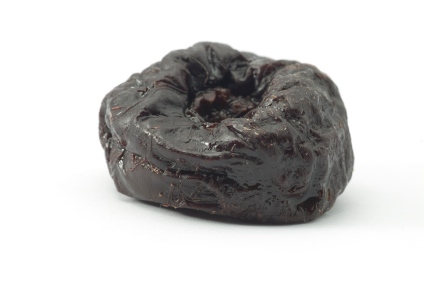
Five years ago, I was a senior editor at Clarkson Potter, and every week, we’d have an editorial meeting during which we’d talk about the various projects that had arrived the week before, and discuss their merit as possible additions to our list. At that point in time, someone named Gabrielle Hamilton—chef/owner of Prune, in Manhattan—had been publishing tightly-written, thought-provoking pieces in magazines that ranged from The New Yorker to Food & Wine. In a world filled with rock and roll chefs, obnoxious hipsters, and food writers with egos the size of the back end of an elephant, she eschewed pomposity. Her appetizer of choice involved a Triscuit. She did things like hire blind line cooks. She was a dishwasher at a tourist restaurant when she was 12. Flying in the face of everything in food that deserves a Bronx cheer and that has sometimes made it a caricature of itself, Gabrielle Hamilton was a little scary, because she was totally and completely real.

Anyway, one day during our editorial meeting, our editor in chief announced that she had received Gabrielle’s proposal for a memoir called Blood, Bones, and Butter. This particular editor in chief, not given to hyperbole, seemed reticent about wanting to declare the thing good, or great, or even just so-so. But she did want reads (wherein her staff would take home copies of the proposal and report back over the next few days), and so I volunteered. It was on the short side, and by the end of that evening’s commute, I’d read the whole thing. I was stammering. It was shockingly real, painfully honest, and wildly brave. This is a woman who says with her writing, “this is me. Take me. Or leave me. But what you get is me. Not some hyper-glossed, attitudinal, rhapsodic-waxing, MFK Fisher quoting, locavore-by-day, Twinkie-binging-by-night trend-Gumby.” Unfortunately, we dropped out of the book’s auction mid-stream. It went for a lot of money, and then it disappeared.

For years.

But I kept my copy of the proposal, and every once in a while, I’d re-read it. It was sort of like Draino; it would unclog the reading pipes every time a bit of overwrought, cloying writing landed on my desk. I waited for a long time for the book to come out, and then I stopped waiting and got on with my life. But the proposal lingered on, mysteriously showing up in weird places in my house: in the den, under a Pantone book. In my office, under a pile of books about drinking (I was writing No Sudden Movements at the time). In the bathroom. In the basement, half a decade later.

One day a little less than a year ago, Susan came home from work, poured herself a glass of wine, and pulled her aunt’s old ladderback chair into the kitchen, where I was cooking.

“So, I got a new book to design today—” she said, taking a sip.

“Cool,” I responded. “What is it?”

“Well, you won’t believe it. My boss came into my office to ask me if I knew who the author was—”

“And—?”

“It’s Gabrielle Hamilton. We’re publishing her memoir.”

I dropped my spoon. It’d been five years, and I’d carefully stuffed the fact of the impending book into the back of my brain, and now, here it was, on Susan’s desk at Random House.

“You’re serious—”

“I am,” she said, smiling shyly, which is what she does when she’s very, very excited.

The manuscript had gone underground for a while, and then moved from one publisher to another (as they often do), before landing on my partner’s desk. Over the next few months, Susan lived and breathed this book, as part of her list. She never offered to bring it home for me to read, and I never asked her for it. There’s the whole conflict of interest thing, for one thing. And sometimes, it really is just better to wait. Even for a long, long time.

When the fifth volume of Canal House Cooking (published by Christopher Hirsheimer and Melissa Hamilton, Gabrielle’s sister) arrived in my mailbox a few weeks ago, I sat myself down on the couch and read it from cover to cover. There, in the first section of the book, was an essay by Gabrielle—a simple piece about the meaning of celebration, and her struggle to take time for herself during the holidays. I read it, read it again, and reminded myself why, in this world of mediocrity run amok and the speed to market that often engenders it, five years is a perfectly fine amount of time to spend looking forward to something.

Especially when you still have the proposal, to tide you over.
I’m not sure what it was — the stress of having a new canine addition to our home; Susan’s picking up some wicked cold during her commute to the city every day, and passing it to me; deadline angst; or a combination of everything — but over the last week, I’ve been felled by a flu so hideous that I’ve spent most of every day flat on my back, trying to stave off the inevitable fever and queasiness and aches and general malaise. A lot of wasted time, if you ask me, so the parts of it where I was actually able to concentrate and focus were devoted to reading cookbooks and watching old Julia DVDs. What could possibly be better when you’re sick than watching Julia introduce Miss Caponette, or flip her sauteed potatoes onto her stovetop before dumping them back into the pan, or go supermarket shopping with Alice Waters (in the most obvious example of uncomfortable body language I’ve ever seen)? Not much.

Is it strange to be so food focused that while I’m at death’s door, all I can think about is dedicating myself to finally learning how to make terrines this year? Do other people do this? I don’t know. But the fact is that when I’m sick — which is not that often — all I can think about is cooking. Sometimes the actual eating part gets shelved for a little while, but never the cooking, and I’m certain it has to do with the memory of my grandmother standing in my kitchen and cooking for me when I was under the weather. Eighteen years of colds and flus and chicken pox and the resultant Wheatina, pastina, toast and tea, cold chicken, and chicken soup filter down into a sort of concentrated syrup of restorative goodness; I may not remember the actual eating, but I remember the cooking. And most strongly, my olfactory memory recalls the smell of chicken soup, which she used to prepare in the bottom portion of my mother’s all-glass, stovetop coffee percolator.

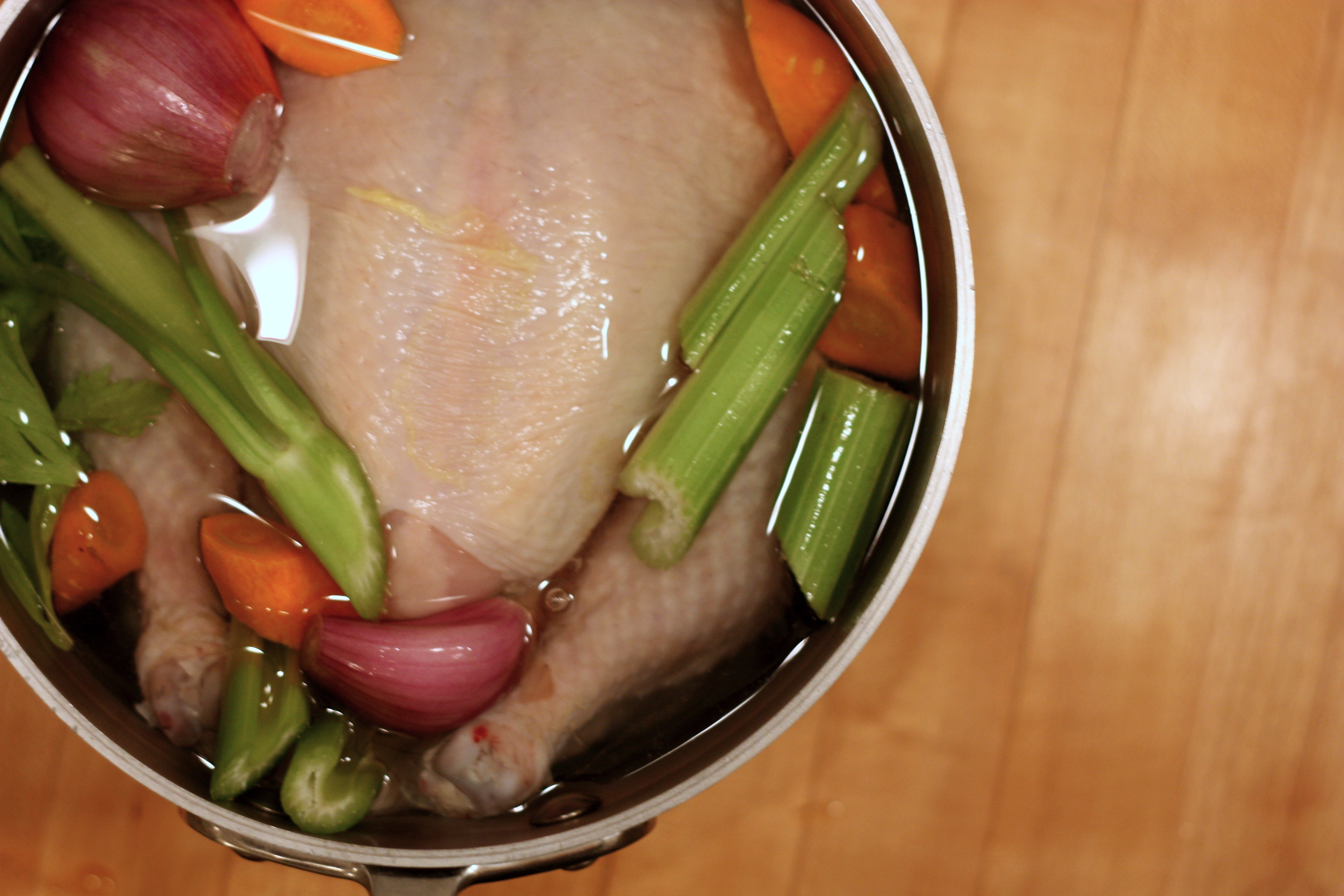
For years, I’d stumble out of bed and into the kitchen, and there it’d be: a small chicken nestled into the glass pot, its breast barely breaking the surface. There’d be a carrot and a stalk of celery and a wedge of onion. After it simmered slowly for over an hour, my grandmother would remove the chicken and its bones, set aside the vegetables, and then strain the soup—which was now a dark golden yellow—over and over until it was crystal clear. I’d go back for a nap, and by the time I was up again, the soup had been cooled and de-fatted, and was now back in the same pot, along with the vegetables, fresh dill, and usually some tiny, fideos-like noodles. If I was feeling well enough, she’d add some of the cooked chicken.

I’d wondered for the longest time why my grandmother always chose that particular pot; we had soup pots and a brown, Danish modern Dansk pot that someone had given my parents for an anniversary present one year. But she always insisted on scrubbing all manner of coffee aroma out of it, removing the percolator portion, and just using it as a sauce pot. And every once in a while, my father would drink his morning coffee and remark how chicken-like his Maxwell House was tasting.

Anyway, ten years ago, back when I was living in the city, Susan came down with a bug that only chicken soup would cure. I went out and bought the ingredients, and then shoe-horned them all into the only sizable pot I had—a 3-ish quart Creuset; the result was the densest, most flavorful chicken soup either of us had ever tasted, and a few hours later, Susan was on the mend. It occurred to me, in a DUH moment: smaller pot, denser flavor.

So this week, with Susan starting to feel better but still not quite right, and me feeling like I’d been flattened by a Mack truck, the only thing either of us wanted to eat was my grandmother’s chicken soup. The percolator has long-since disappeared, but the method still works wonders (as evidenced by my sitting upright for as long as it’s taken me to write this post).

Snug Chicken Soup

Sweet and robustly chickeny, this soup would, I’d like to think, make my grandmother proud. Combine the leftover broth with a higher proportion of noodles, vegetables, and chicken: the result is a hearty chicken noodle stew (of sorts).

Serves 2-3

1 three pound chicken

2 large shallots, peeled

1 large carrot, peeled and sliced into thick coins

2 celery stalks, sliced into thirds

4 sprigs of fresh dill

salt, to taste

egg noodles of your choice, cooked al dente, and drained

1. Place the chicken and the vegetables (but not the dill) in a 4 quart saucepan. Fill the pan with cold water so that the chicken is just submerged.

2. Set the pan over medium high heat, and bring to a boil. Skim the water as necessary (a pain, I know, especially since you have to contend with the vegetables, but an important step) for about five minutes, and reduce the heat to medium low. Continue to simmer for 90 minutes, uncovered.

3. Carefully remove the chicken and its bones (it will have fallen apart) to a platter, and the vegetables to a separate plate. Strain the soup through a fine mesh sieve, and into a large bowl. At this point, you can either chill the soup down in order to de-fat it, or you can wash out the saucepan, add the chicken soup back to the pot, bring to a slow simmer, add the vegetables, the dill, taste for salt, and continue to cook for about fifteen minutes. Add the cooked noodles, and heat through.

4. Serve hot, in shallow soup bowls.

Then get back into bed.

indiebound


©2009, ©2010, Poor Man's Feast. All rights reserved. To reprint any content herein, including recipes and photography, please contact rights@poormansfeast.com