“The days aren’t discarded or collected, they are bees that burned with sweetness or maddened the sting: the struggle continues, the journeys go and come between honey and pain. No, the net of years doesn’t unweave: there is no net.” – Pablo Neruda, Still Another Day
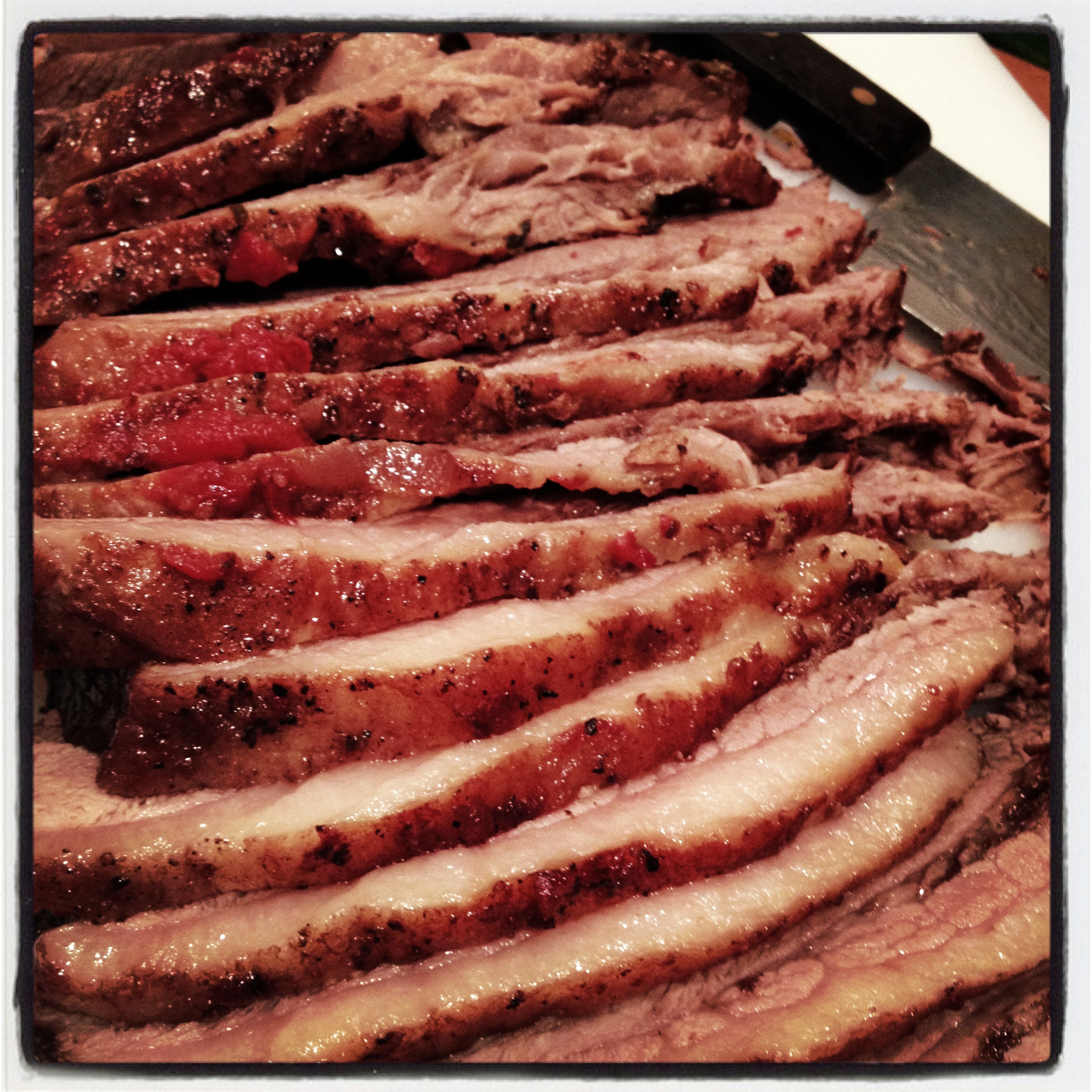
Some time ago, a friend from college told me about a brisket that her mother used to make every year for Passover; my friend visibly swooned as she talked about it — the buildup, the frantic shopping for the deckle, the preparation for cooking that involved her mother taking an old, bent Ginsu filet knife and making small, deep slits in the meat into which she would insert narrow slivers of garlic. One year, she added raisins and dill to the garlic. Another year, she included small slices of Jerusalem artichoke, which she thought was appropriate, she told everyone, on account of the holiday.
Every year, she cooked her brisket until it had the consistency of beef jerky.
This is the most exquisite brisket you’ve ever made, Mom, everyone would say in unison, sitting around the formal table and sawing at the meat in front of them. Then they’d put down the family silver and actually applaud. Mom would blush a deep crimson and insist that everybody have a second and third helping, because there was always so much left over. She’d wrap up slices for everyone to take home, and after the Seder was over and my friends’ sisters, brothers, nieces and nephews got into their cars, smiled and waved goodbye, they drove to the nearest dumpster and threw the brisket out because it was vile, inedible, and everyone hated it.
This went on for thirty-five years.
I remember it so well, my friend said, smiling sadly and growing misty. She still has the Ginsu knife.
Of course it was memorable. But how could she swoon? Was it a good memory, or a bad one? Was it the meat she was missing, or the whole event and the people involved in it, or was it just her mother? This is a universal conundrum: bad memories are inevitably married to good, the delicious is always somehow married to the stomach-turning. As Neruda says, the journeys go and come between honey and pain. You can’t have one without the other.
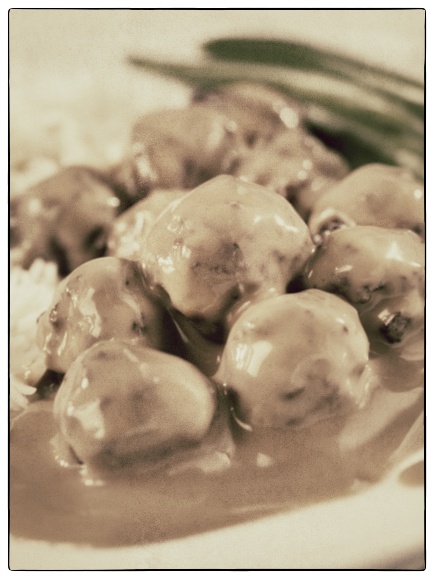
The past — memory — is everywhere we turn, right in front of us; it lives in the recesses of our brains and makes us who we are, even as our palates taste it and our brains contort it and make my experience different from yours, while the facts are identical. The past is also stuff; it masquerades as your mother’s muffin tin; the bags of photographs that you haven’t had the time or inclination to sort or frame, but that you’ve carried around with you for twenty-five years, moving from house to house and city to city. It’s people who no longer exist in your life — they’ve left the building in one way or another, like Elvis, disappearing, shrinking like a figure in a rear view mirror — but you vividly remember the density of their matzo balls, or the lightness of their gefilte fish, their sense of humor and their frightening temper, and the forty Passovers you spent together. You remember the Swedish meatballs made with ketchup and cream that your grandmother used to cook for holidays, and her leftover Easter ham salad tossed with the chopped sweet gherkins that no one but you ever really liked.
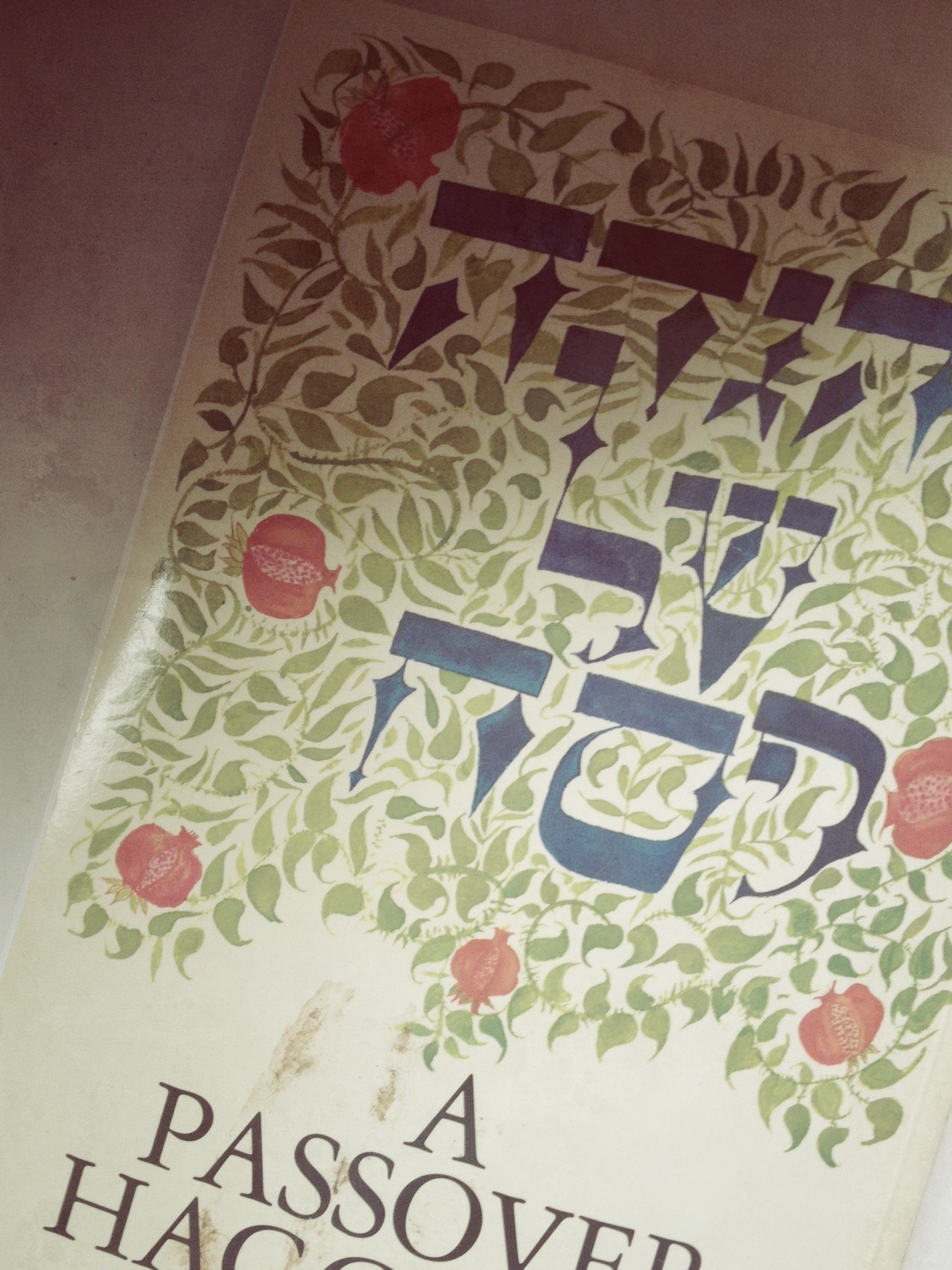
It’s the stained recipe cards written in Yiddish script that no one has been able to read for sixty years, that you cannot bring yourself to throw out even though the beloved great aunt who wrote them never tried to hide the fact that she didn’t like you, and even at five years old, you knew it. It’s the Haggadah — the one you can’t manage to part with even though it’s splattered with heavy Malaga from the time your long-dead grandmother spilled her Waterford goblet while reaching across the table for the soup nuts. It’s the gaggle of stuffed miniature teddy bears dressed in bunny outfits that your mother found charming, and the four, black and red Ukrainian Easter eggs that you meticulously hand-painted for her one Sunday afternoon in 1977 while listening to Patti Smith when, somehow, inexplicably, you managed to stay in the lines because you weren’t stoned.
This is the stuff from our past that we cling to—the good, the bad, and both. These are the memories that we grasp on to for dear life, that refuse to be flushed from our mental catacombs, that act as a tether to who we once were before we became who we are now. Memory is a two-edged sword: relinquish it, and your self goes with it. Cling to it, and you forget where you are in the present; it stands in the doorway and blocks up the hall, like the song says. It muddies the future and obscures the light.

It’s been a difficult year for me and Susan since my book came out; amidst such enormous excitement, anything that could possibly go wrong, did: there’s been illness, death, and even shunning. The upshot has been a lot of time spent trying to untangle strands of memory in order to separate the good from the bad, and to make sense of them; it’s been a challenging task — they’re so tightly plaited that where one goes, so goes the other. Lately, I’ve been clinging to memories of the way things used to be — the stained Haggadah and the soup nuts; the photographs and the gefilte fish. We’re getting into holiday season, and so I suppose this happens. During this time — with all of my focus on the past instead of the present, the here and now — food has somehow tasted blander, it’s been grayer outside, the garden hasn’t beckoned. The memory strands have been so many and have gotten so jumbled up like old jewelry clogging my dresser drawer that it’s taken me this long to finally realize that some strands simply don’t want to be unraveled; in those cases, where the bad outweighs the good, you just need to let them go, to plop them on a small inflatable raft with a box of glazed donuts and push them out into the water with a wish for peace and luck, and then, as the late Jesse Winchester sang, wave bye bye.
After a way-too-long, icy, snowy season in Connecticut, I’m finally able to throw open the windows and pull back the curtains to let in light and air; these days, I need light like a drowning man needs a life preserver. I’m desperate for it. I want to purge a lot of what I’ve hauled around with me — the bad memories, the unnecessary stuff, the monkey on my back — that’s blackened the winter windows with knotted veils of worry, and prevented me from breathing deeply, cooking and tasting with purpose and intensity, and moving forward the way I want and need to: with Susan, and with an eye on the past but also very certainly in the here and now, and looking to our future with the wonderful circle of family and friends who love and surround us. This is not memory; this is what life is. This is the stuff that’s real.
For every disgusting brisket, it’s the happiness, kindness, and love swirling around it that stays.

Not My Grandmother’s Brisket
(Recipe Redux)
Those of you who are regular readers of Poor Man’s Feast will recognize this recipe as one that appeared a bit less than a year ago, on the occasion of another Jewish holiday. It’s a keeper, which is why I decided to run it again; I also thought it was appropriate because it is very much NOT the way my paternal grandmother made it, although it does include her drill-holes-for-garlic method. While her version was mouthwateringly delicious and tender — nary a Jerusalem artichoke or raisin in sight — I still prefer brisket when it’s braised with tomatoes, wine and herbs. The leftovers are stellar.
Serves 4, with leftovers
1 4-pound first cut brisket, trimmed of some excess fat but not all
1 garlic clove, peeled and slivered
salt and pepper to taste
1 tablespoon grapeseed oil
3 medium onions, peeled and thinly sliced
1 cup dry red wine
1 16 ounce can plum tomatoes, smashed in their own juice
3 medium carrots, peeled and sliced on the bias
2 celery stalks, sliced on the bias
1 bay leaf
2 sprigs each rosemary and thyme
Bring the brisket to room temperature, place it on a cutting board fat-side down, and using a sharp, thin knife — I use a filleting knife — make small slits (no more than 1/4 inch long) all over the meat, and insert 1-2 slivers of garlic deeply into each slit. Salt and pepper the meat on both sides and massage it with the grapeseed oil.
Preheat oven to 300 degrees F.
In a large, heavy, straight-sided, non-reactive saute pan with a lid (you can use a shallow, fire-proof roasting pan too) set over medium-high heat, brown the meat fat-side down, about 5-8 minutes. Turn the meat over and repeat; you should wind up with a good, strong golden brown crust as in the image above. Remove, set aside, and add the onions to the pan. Toss well until they’re coated with the fat, and return the meat to the pan, setting it on top of the onions along with its accumulated juices, skin-side down.
Add the wine and tomatoes to the pan, cover tightly — if the pan doesn’t have a cover, tightly wrap it in heavy duty foil — and place in the oven for 3 hours. Baste the meat with its juices frequently. After 2 hours, add the carrot, celery, bay leaf, rosemary, and thyme, and continue to braise for another hour, basting frequently.
Remove the pan and allow to come to room temperature; place in refrigerator, covered, overnight.
The next day, skim all of the accumulated fat from the pan; remove the meat from the pan and slice it carefully across the grain. Return it to the pan, and reheat, covered, at 300 degrees F until tender. Serve hot, or at room temperature.



Tis the season for brisket after this long, harsh winter though I was expecting from your swooning friend’s build up to read about the most melt-in-your-mouth recipe, not shoe leather.
Thanks for the rerun of your brisket recipe it sounds 1000% tastier (and safer on the dental work).
Definitely tastier, definitely safer on the crowns!
Beautiful. Yes, wave good -bye to the difficulties. Open the windows and breat the glorious New England air. D
Ya know, Passover is the one holiday that makes me miss home. I don’t know why. It was always kinda frenetic and the room was always too warm. I would run to open the door for Elijah but in reality it was for a bit of fresh air. The food? Ack! I rather eat the singed lamb shank than the rubbery, fruity, chicken. I miss It all. I also miss a less complicated time when the most important thing was dodging getting my cheeks pinched by the elders and finding the Afikoman and not getting an IOU but a real 50 cent piece.
Happy Passover :–)
So full of truth and ache. May spring soon come.
The words echo in my heart as the imagined taste of brisket and history evoke a sensation in my mouth – a little yumminess and something else – tears? Must be. Evocative and beautiful as always Lissie – here’s to the spring. xo
Mental Catacomb. I can so relate, another beautiful piece of writing.
Wow — what an amazing and poignant coincidence that, on the day we waved bye bye to Jesse Winchester, you posted this stunningly beautiful piece. Thank you!
Thank you Elizabeth-
Thanks so much Wendy- E
Amen sistah Miimijk. x
And to you, Janis-
Love this:
“Memory is a two-edged sword: relinquish it, and your self goes with it. Cling to it, and you forget where you are in the present”
Another beautiful piece. This is the first Passover that I will spend with no family other than my husband. We will join friends and make a new tradition for this year. And, I will cook, not at home but at the home of my hosting friend, helping her because her family is either now too old or too busy. I am hopeful that this joining together will keep me from the weepies, because although memories, as you so eloquently describe, are bittersweet and sometimes downright unpleasant, the transition to a “net-less” reality is so hard.
we do the therapy, we know we need to let go, to let new memories in,etc etc and yet there are the times when we drop our guard and they have snuck back in.a therapist many years ago told me- you know in your head and still you feel in your heart. it’s the longest journey you will ever have to make to reconcile the two.i wish you the best this spring, the new beginnings.
Indeed Heidi. Indeed.
I loved this because it resonated with the feelings I’ve been dealing with this past month. While making the gefilte fish I remembered Mom taking the premade ovals out of the jar and “recooking” them with some onions and carrots in a vain hope of making them taste home made. It never worked and yet I’d give anything to have her here to celebrate with us. I missed the sense of family that only the blending of generations can provide. But this year we have a grandson to grace our table and I’m hoping that the holiday will create new memories. Not to say bye-bye to the old ones, but to ease the pain and help me move on. Thank you for a wonderful column today. A Zissen Pesach!
Shunning ?? No !! That’s so wrong.
Your book, your blog, your life that you so generously share … brings me joy.
Thank you.
Aloha from Hawaii,
Lorna
Shunning indeed. But it’s notes like yours that make me happy. Thank you–
So lovely. I especially relate to the visceral craving for sunlight. We’ve been bathing in it lately. It seems to make a difference.
It does, I think, Meg. Thank you –
Love your writing!
What a wonderful post. This is something we talk about often, memory and nostalgia. It infuses everything. Half of everything I make goes back to home. We ate this as children or we never. Mom made such and such and I can never replicate it. Even appliances. Would my great aunts embrace them or continue to knead and bake by hand? Thank you again for the post and recipe.
Thank you!