The Hardest Work Ever

August 24, 2011 · 15 comments


We had an earthquake yesterday.

I was sitting at my computer, staring at the screen, trying to force this brilliant breakthrough moment in my book — you know, the AHA moment, like when the doorbell rings at Meryl Streep’s townhouse in The Hours and in walks the aged mother of the Ed Harris poet character, and the entire audience gasps — and suddenly, my desk started acting like it was on acid.

Then my chair felt like it was mounted on the end of a pogo stick; I was sure that it was Addie, my hundred pound Yellow Lab, sleeping behind me and having some sort of violent, gastro-intestinal, squirrel-related dream, which always results in her thrashing around and kicking me. I turned around and she was ten feet away, doing the thing that older Labs do best: snoring. Then I thought that maybe it was that brain tumor that’s been going around lately. And then I remembered what it felt like the only other time I was in an earthquake, up in Maine in 1983, when I was staying in a small house with a friend from college and her mother’s entire Herend tea service fell out of her china cabinet: it felt unreal, and out of control. It felt a lot bigger than us.

Yesterday, I didn’t know what to do: I thought about my mother in Manhattan, living on the twenty-first floor of an apartment building on the Hudson River. Then I tried calling Susan, who works on the twenty-third floor of a glass office building on Broadway, and there was no answer. And I had this tiny OH SHIT moment of panic, when everything else in my brain came screeching to a halt, and all I could think about was the fact that here I was, working my head off and the world was surely going to come to an end just at the precise moment when I finally figured out why, exactly, this one very important person in my book spent their life at the table, and wound up eating simple food after years and years of haute cuisine. Which reminds me of the old Yiddish proverb that someone said after my father’s accident. One of my cousins had found a dry cleaning slip attached with a magnet to his refrigerator. “How could he just die, when he still has clothes to pick up?” she railed. This other person had a simple answer:

“Mentsch tracht, Gott lacht.”

Man plans, God laughs. 

I’ve been spending every day here at my desk, writing my book, which is why I haven’t posted since early August; I’m living constantly with this story. The dogs bark and need walking, the UPS guy shows up, I need to have the oil changed in my car, I really need to get to the gym, and to have a haircut, and to balance my checkbook, and from the time my alarm clock goes off in the morning, I’m sitting at my desk, at work. And here’s a newsflash for all you folks who think that this is all lovely and romantic: this book writing thing is the hardest work ever. It’s a job, and I love it, and it’s absolutely the most challenging thing I’ve ever done.

It’s altered my life in ways that I haven’t expected: there have been days when I never quite make it out of my pajamas. There have been days when I sit down at nine, and when I looked out the window again, the afternoon is turning into early evening, and dappling the maple tree in my yard with softer, duskier sun. There have been a few occasions where I’ve forgotten to make dinner for Susan; she’s been kind, and mostly fine about it, and the other night when I threw together a bucket of grainy whole wheat fusilli with a blandish, elemental broccoli rabe/heirloom tomato sauce and acted like that was the dish I was planning on making all along, she was still okay with it.

I’m not sure why, but the result of my spending hours writing every day has also been just the slightest amount of weird, dietary grandiosity; I’ve been reading this ancient book on Zen Macrobiotics a lot. There’s been another book sitting on my desk about particularly bland, grain cooking. The first time I forgot to make dinner, I realized it while laying on the couch reading a book about this crazy heart-healthy diet that is not only strictly vegan, but vegan without the use of any oil or fat at all. Nothing. Nada. It calls for doing things like “sauteing” stuff in a mostly dry, stick-proof pan with maybe a small splash of water and a spoonful of nutritional yeast. The upside to all this is that people who go on this diet actually reverse their advanced heart disease.

It’s astonishing.

“I think that maybe we should try this–” I said to Susan brightly.

Unh huh–” she said, not even looking up from her book.

“I mean, don’t you think it’s incredible–?” I asked, enthusiastically.

“Sure,” she said. “Almost as incredible as the pork roast that’s sitting in the freezer.”

“I think that we could do this, though–don’t you? All of this guy’s patients—they all look so happy!”

“They’re all just stoned from a lack of protein—”

“Come on, Susan,” I said. “I’m serious. Don’t you want us to be healthy?”

“Honey,” she said, taking my hand. “I’m not sure that radical dietary life change is something you really want to undertake until your book is done—First things first, okay?”

And then we started to think about dinner. We went into the kitchen, rigged up a sort of mock double-boiler, and made the kind of scrambled eggs that take twenty minutes or so just to get to the curd-forming point. We had fresh pullet eggs from our neighbor’s chickens, and a bit of local milk, so we added that. And that’s what we ate, on little white Bennington plates, with toasted challah that a friend of ours had brought up from the city.

I moped a little bit, but Susan was right. I was just looking for tight control — a firm grip —over some part of my life so that every morning, when I sit down at my computer and write this book, nothing comes clattering out of my own metaphysical china cabinet, like that old Herend tea set up in Maine.

And then yesterday, there was an earthquake.

Mentsch tracht, Gott lacht.

Earthquake Eggs 

Admittedly, we did not make these eggs yesterday, on the day of the earthquake. But we might as well have: the last time we made them was a few years ago, when our Lab, Addie, wound up in the doggie emergency room, having gone into shock after a bee sting. So it seems that whenever we’re in need of comfort and we have no other culinary plans, this is what we make, and the result is like the gentle hands of a beloved English grandmother tucking you under a heap of blankets as you hear bombs falling in the distance. You just know that everything is going to be okay.

Serves 2

1 tablespoon unsalted butter

6 pullet eggs, the freshest you can find, beaten

1 tablespoon fresh milk

salt, to taste

2 slices toast

Set a medium saucepan over another, smaller saucepan filled halfway with water and bring to a slow simmer over very low heat. (Use a flame tamer or heat diffuser if you have to.)

Melt the butter slowly in the top pan, swirling it around so that it coats the surface completely. Pour in the beaten eggs and the milk, and using a wooden spoon, stir the combination as gently as you can, from the edges of the pan in toward the middle. Continue doing this, until pillowy curds just begin to form — this should take around twenty minutes. Add a pinch of salt, if you like.

Serve on warm toast of your choosing.
My people — we are not gardening folk. My father used to say that my great grandparents were so bad at farming that back on that fateful day in 1939, even the Nazis looked at their pathetic potatoes and cabbage and said feh; you can keep it.

I did find out a few years ago that my mother helped plant her uncle’s victory garden in Brooklyn back when she was a very young girl; she told me that she dug and dug and planted and planted, and when I asked her what it was she grew, she couldn’t tell me.

“No idea,” she said, shrugging.

“Did you eat any of it?” I asked.

“No idea,” she said, shrugging.

Which kind of makes sense because to this very day, not a single vegetable passes my mother’s lips on even a bi-annual basis.  It’s not like Susan’s mother, who grew up on a small subsistence farm and ate absolutely everything that her mother grew, absolutely all the time, and who can give me five recipes for What to Do With Rutabagas off the top of her hat, at 93. So why did my mother grow something if she didn’t actually eat it? She was from Brooklyn. She was a city girl. For her, it was the childlike act of planting and getting dirty; and it was the joyous thrill of seeing something she had stuck in the ground turn into something edible. Even if she didn’t eat it.

I remember those days myself, back when Susan and I were first together. We built gigantic garden boxes in her sun-drenched backyard; I’d sit in the dirt out there, in a moronic, city girl outfit I cobbled together for myself — Banana Republic overall shorts and red rubber clogs — digging around, pulling weeds, staking up tomato plants. The first summer we were together, after my dot com went belly up and I was living up there almost full time, we planted everything we could think of: summer squash, winter squash, cucumbers, radishes, kale, four different kinds of lettuce, wax beans, sugar snap peas, two different kinds of gorgeous, ruby red beets. Even though I hated —I loathed —beets.

One morning, we went down to the garden to discover that something or someone — birds, chipmunks, deer, woodchucks — had eaten all of our beets, and our beet greens. Little chewed-on spindly nubs sat in the boxes where the lush vegetables had once lived and grown nearly to full vegetablehood. I went into a rage. How could this happen? I was like Ripley in Alien, only with a rake, even though I couldn’t actually stomach the things that were eaten.

Sometimes, Susan said, stuff just dies. It gets gorgeous, it looks perfect, everything is fine and great, and then other things decide that it’s just as gorgeous as you think it is, and they get there first, usually the morning you’re planning on going out with your little basket. It is what it is.

And then she went back to weeding.

I realized, when she said that, why my people had never been fond of gardening: it was a huge amount of work under a constant, relentless threat of disappointment, of losing something you worked so hard to create, of trotting down the stairs in the morning, tra la, and seeing it ravaged. And there not being a damned thing you can do about it. Once I realized that, things seemed to get a little bit easier for me, for some reason.

The following year, when Susan and I were living together full time, I had become a full-fledged, dyed-in-the-wool vegetable gardener. I’d tossed the idiot overalls and the clogs and the fancy leather gloves and instead worked in an old pair of khakis that I picked up at Goodwill, and rubberized gloves that Susan’s mother had found somewhere for $2. I had even become adept at composting, the definition of which is pretty much taking dreck and turning it into more dreck. Because vegetables, I discovered that summer, really love dreck. Waste not, want not.

“Look at you, Miss Gardener,” my father said when he and my stepmother came up to visit on my birthday, arriving while I was in the front yard, deadheading the roses in a straw hat. I looked like Lillian Gish in The Whales of August.  He gave me a check for my birthday, which I promptly spent on a rototiller.

“What’s next for you—a John Deere?” he asked, laughing. It was; a few months later, I was driving around the backyard on a green and yellow lawn tractor instead of pushing the mower around haphazardly, and carving out crop circles that probably could have been seen from outer space.

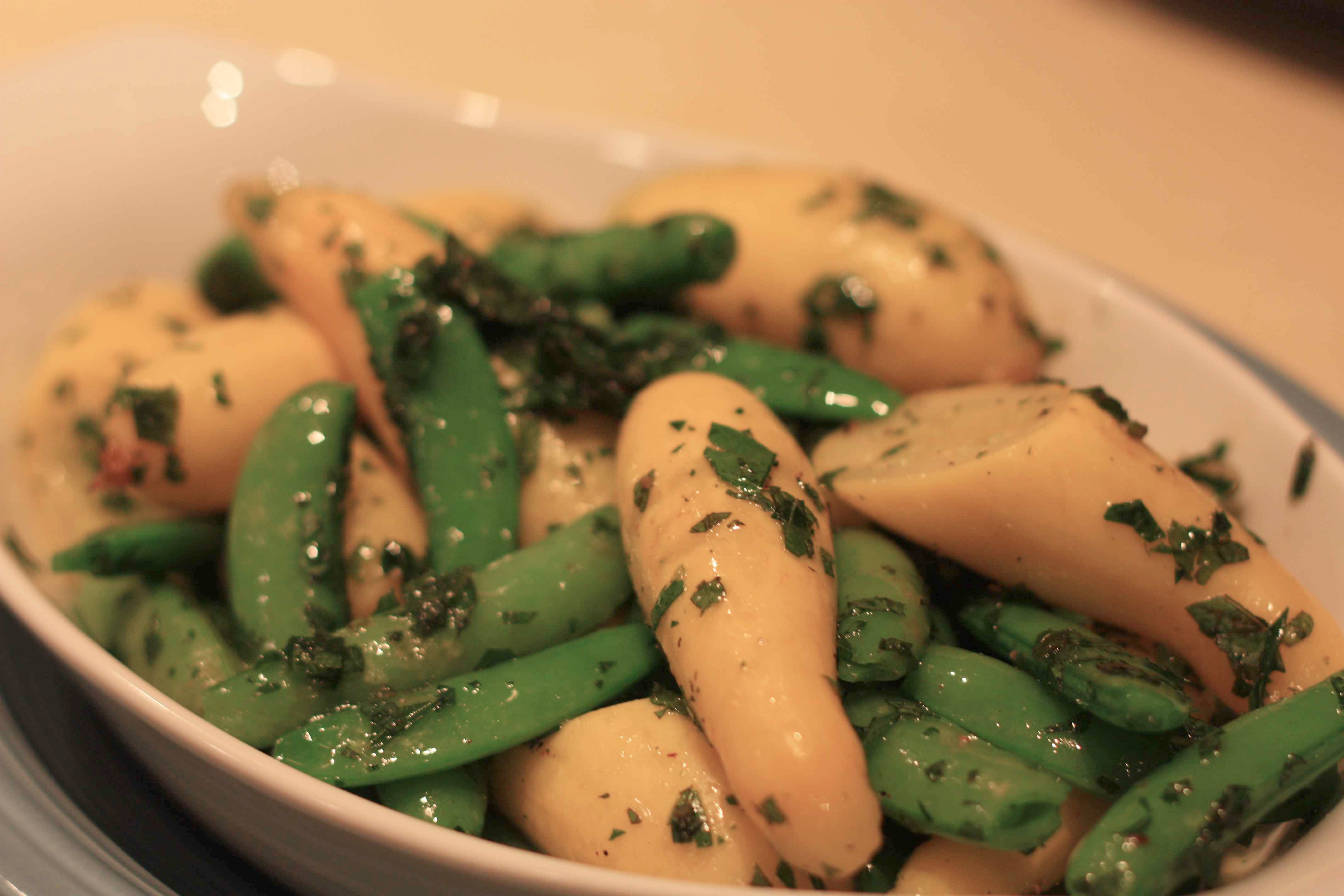
The night that my father and stepmother visited, our dinner was simple: we pulled masses of tiny yellow summer squash and snap peas from their vines, and ate them gently boiled for a few seconds, Pugliese-style, showered with rich green olive oil, and handfuls of fresh herbs and sea salt. We made a pot of bouillabaisse and opened a cold bottle of Domaine Tempier Bandol Rose, and it was one of the best birthday dinners I’d ever had.

One Saturday morning a month or so later, on August 3rd, Susan and I were out in the garden, up to our knees in dirt; it was a hot, sweaty morning — the kind where everything sticks to you, and you look down at your filthy, disgusting legs and they look like the filthy, disgusting legs of you as a child after a day of running around outside — and we were both soaked to the skin in damp, compost-covered tee shirts and shorts. We went into the house to get a glass of water when the phone rang.

“Please come now,” my stepbrother said, frantically. “There’s been an accident.”

I don’t even remember hanging the phone up; maybe I didn’t. We left the tools in the garden and grabbed the car keys, and not bothering to change, raced to New York, where my father and stepmother had been in a car accident which, for him, ultimately was fatal: he died a week later. When we got to the hospital that day and I sat with him for an eternity in the emergency room, I looked down at my hands, my nails, my legs, my feet, my shirt, caked with mud and the lifeblood of the sweet and earthy food we’d shared with him a few weeks before, for my birthday dinner.

I was a gardener, at last, and though I knew that he found the idea ironic — me being a city girl and all — it heartened me to know that the last time I’d seen him, he’d enjoyed the fruits of my labor.

 Boiled Baby Summer Squash and Snap Peas

I know it sounds completely ridiculous, this idea of boiling vegetables when you stopped going down that road years ago, after leaving your mother’s home. Because, if you grew up in the 60s and 70s the way I did, odds are you ate vegetables that were boiled beyond all recognition. But you’ll have to trust me on this: the act of boiling very fresh vegetables quickly and carefully works beautifully for two reasons. On the one hand, giving them a warm cozy bath seems to cook them just so, and then when you plunge them into ice water to shock them, they seem, peculiarly, to seize up, to hang onto their gorgeous flavor, and to retain their crispness. On the other hand, water boils at 212 degrees, while steam — and many of us favor steaming for purely psychological reasons; we think it’s a gentler method, which, in fact, it’s not — can reach temperatures far higher than that, which results, if you steam your vegetables, in mushy, slimy, floppiness. (Ick.) This recipe, which was inspired by nothing else than what was growing in our garden at the time I made it, is simplicity at its most delicious. Feel free to increase the amount of vegetables as desired; just increase the amount of herbs and oil proportionally.

Serves 3-4 small portions

5-6 small yellow summer squash

1/2 pound sugar snap peas, tipped and tailed

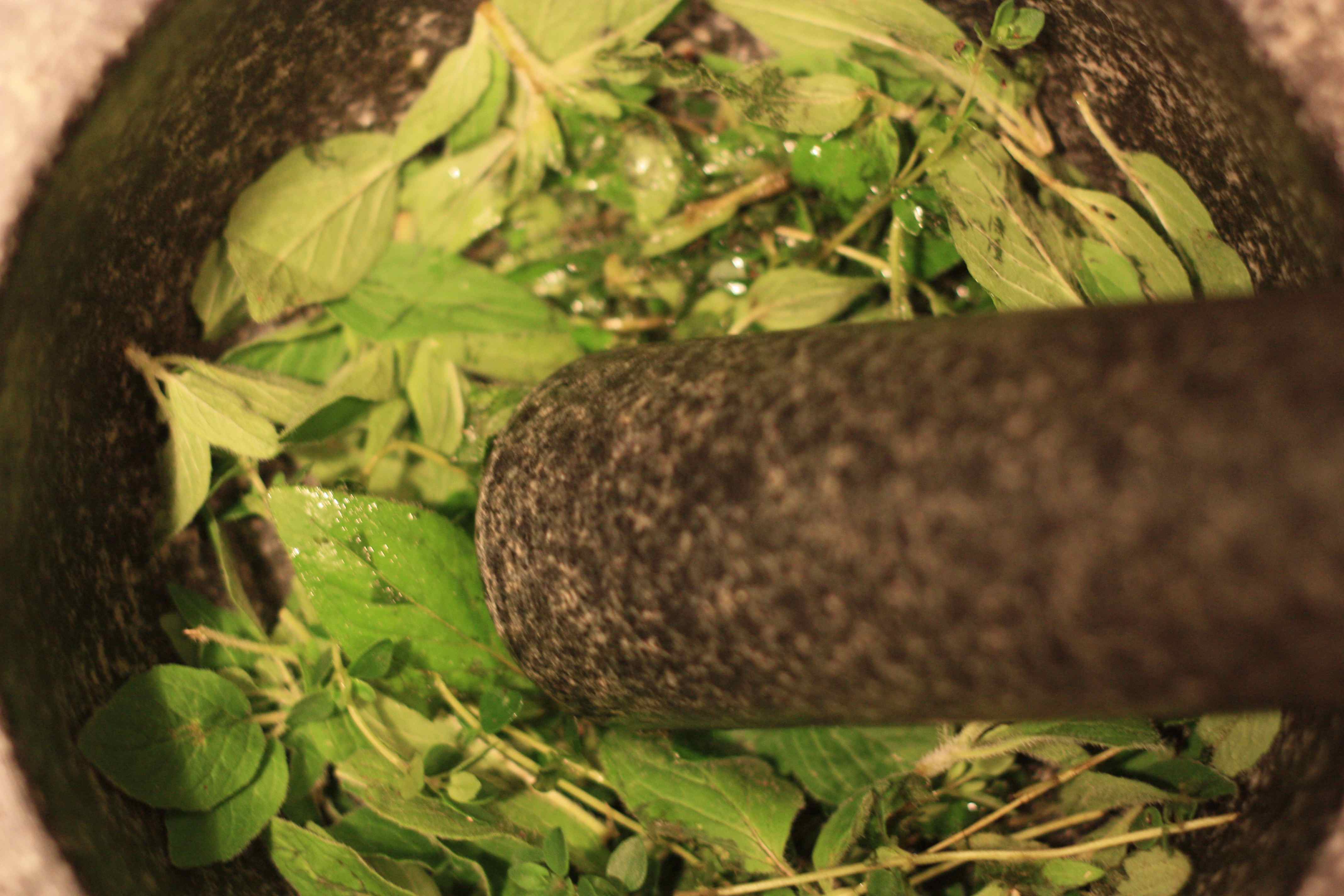
3/4 cup of chopped or lightly pounded herbs (I prefer parsley and thyme here)

excellent quality extra virgin olive oil

sea salt, to taste

Place a large bowl filled with ice cubes in your sink; fill it with water, and set it close to your stove.

Bring a large pot of water to a boil over high heat. Add the summer squash and cook for three minutes. Add the sugar snap peas and continue to cook for another two minutes. Using a spider or a long-handled sieve, lift out the vegetables and plunge them into the ice water for a minute.

Remove the vegetables to a serving platter and shower them with the herbs, tossing well to distribute them. Drizzle with as much or as little good peppery olive oil as you like (I vote for more rather than less), sprinkle with salt, and serve at room temperature.

Other options:

• Using a vegetable peeler, shave long, wide strips of Parmigiana Reggiano, or better yet, an older sheep’s milk cheese, over the plate

• Toss the vegetables with pitted, black, oil-cured olives

• Toss leftovers with excellent quality Ventresca tuna and a handful of soaked and drained capers

• Coarsely chop leftovers and toss them with al dente pappardelle, or any wide, ribbony pasta, fresh lemon juice, and feta, and serve at room temperature

• Sweat the leftovers in a large cast iron pan, toss with a few beaten eggs and a grating of Parmigiana Reggiano, and bake at 350 degrees F until golden. Serve in wedges.


indiebound


©2009, ©2010, Poor Man's Feast. All rights reserved. To reprint any content herein, including recipes and photography, please contact rights@poormansfeast.com