James Aarons

I met James Aarons in 1987, when he was an accomplished dancer with the Nikolais Dance Theater, and I was living with a friend of his. What I didn’t know at the time was that James was also a remarkable potter with a profound gift for form and shape, and that he really liked caffeine.

Right before he left New York for San Francisco in 1989, James presented me with two things: a pitcher he had made for me (I love pitchers), and a beautifully-wrapped gift of a coffee grinder and a pound of Kona beans from the Porto Rico Coffee Company down on Bleecker Street. James left town a little while later, and landed in San Francisco right on time for the Loma Prieta earthquake.

Twenty-one years later, I still have the pitcher and the grinder, and James and I are back in touch. He is a master ceramic artist now, a master pizza maker, and has a particular granola fixation—at least that’s what I discovered when I asked him for his thoughts on breakfast.
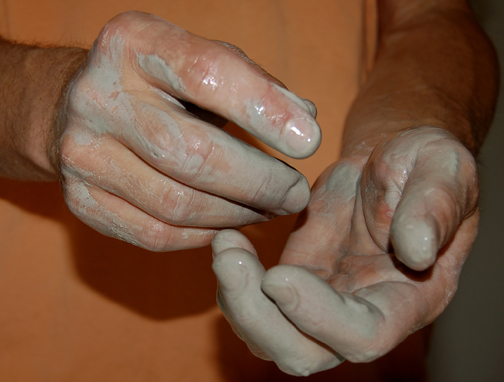
The hands of a master potter and granola maker.

It’s such an odd thing to be asked to write something about Breakfast.  While my relationship with food is long, I’ll admit it’s mostly pedestrian.  In short, I eat.  Once, long ago, I was a semi-professional dishwasher and occasional garde manger.  Accent on long ago.  Today, with delight, I put good things in, chew and enjoy.

Since my slave days of clanging greasy plates and attempts at keeping steaming dish water off my shirt and shoes, I’ve learned a few things about food.  Most importantly, with regard to breakfast, I’ve discovered the Four Perfect Foods.  Out with salmon and flax seed, etc.  In with Toast.  Caffeine.  Granola.  Peach Pie.

I’m a lucky man.  I live in the Sierra Foothills in a tiny gold rush town.  It’s beautiful here.  We grow citrus while all the surrounding towns freeze over.  We delight in the summertime breezes that keep us coolish, and relish in the rich history of the area; we partake of a town-wide pancake breakfast each Fourth of July, an annual Enchilada feast to raise money for our historic Town Hall, and Turkey in a Barrel one week before there’s turkey in every oven across the land.  You get the picture.  Americana.  Still, culinarily speaking, there’s nothing much doing.  It’s so bleak that the top shelf at our local watering hole is covered in dust.  If it’s Old Raj you hanker for, drive west to San Francisco – two hours plus the bridge.

Favorite breakfast.  Nostalgic day starter.  Importance.  What is this thing called Breakfast, anyway?  It’s food, pure and simple.  Breakfast should ignite the spirit, fuel the brain and charge up the body for a long, productive day.  A meal that, for me, once contained Cheerios and milk, no talking – not a peep, and a dash toward the door at least six days a week has become a daily ritual of nourishment-gathering and a stabilizing force for what is to come.

Ideally, breakfast should be quick and easy so I head for the toaster.  I love the hypnotic (fall and) rise of toast made from a delightful loaf of Andrae’s whole wheat bread, slightly salty butter and a wedge of excellent cheese, jam optional.  There’s something about the counting down tick tick of my trusty Dualit 3 slicer, the crisp, aromatic fragrance of bread gradually caramelizing and the anticipation of tempered butter sheening over the surface of this delicious meal about to begin that holds my culinary interest year after year.  When the crackling hot toast and its attendant toppings are right, little else comes close to instant taste and texture sensation gratification.  To this I add a cup of caffeine and head for some intellectual stimulation that doesn’t include all the bad news that’s fit to print.  If I’m lucky, it’s Wednesday, Mark Bittman/Minimalist video day in the New York Times.  Thank you, internet!  He entertains me with a 5 minute how-to journey of quick cooking and reminds me that the end-cap meal of today could be just as tantalizing and easy as the one I’m now savoring.  Two or so slices later, my day begins in earnest and I’m on my way.  But by ten, I invariably crave more carbs, more protein, more food.  Toast, the mighty food group of russet crunch and convenience, isn’t living up to its reputation.

Enter granola.  There is a plethora of pre-packaged nonsense out there masquerading as granola.  Mulberry/Golden Raisin/Coconut, Toasted Almond/Cinnamon, Fat Free (?) Chocolate Chip with Pecans, Nutty Munchy Pithy Blah Blah Blah.  I’m telling you, make it yourself.  That fancy, warp resistant half sheet from Williams-Sonoma you have in the cupboard ought to be used more than once a year at holiday time.  Granola is fuel for humans – the ultimate cornucopia of grains and nuts that fills us up and sets the most topsy-turvy of an early morning world on its axis and keeps us nourished well into lunch hour.

I began making my own granola a few years ago after receiving a wonderful cookbook written by the Metropolitan Bakery people in Philadelphia accompanied by a bag of their own granola.  For me, theirs was delicious, but perhaps a tad too sweet and in need of added complexity.  Through trial and error I improvised and fussed until the rhythm of my own recipe began to take shape.  Essentially I load up on an assortment of nuts and seeds, always reserving the right to wing it depending on what I have on hand. Now, every few weeks or so a big jar of granola is born and guaranteed to last many a hearty half a day.

I remain true to toast.  Its gloriousness really is a perfect food.  But to rev my engine and get going, I pour a short bowl of granola, top it with milk or yogurt, sip my coffee, google The Minimalist, then dream of the peach pie hopefully awaiting me when I return from a long day at work.  Granola may be the humblest of the Four Perfect Foods, but it’s serious food.  It’s not messing around.
James' breakfast

Breakfast

(also known as Granola – adapted from The Metropolitan Bakery Cookbook)

This recipe is loose.  Feel free to improvise. Makes enough for a while or to share with friends.

3/4 cup canola oil

3/4 cup honey

3/4 cup maple syrup

Slowly heat to simmering in a medium saucepan. Remove from heat.

Then add

1 1/2 tsp vanilla extract

While the liquids are slowly heating, mix together

1 1/2 cups wheat germ

9ish cups oats

1 3/4 cups raw almonds or pecans, coarsely chopped

1/2 cup raw sunflower seeds

1/2 cup raw sesame seeds

1 cup raw pepitas

3/4 cup dry milk powder

1 Tbsp cinnamon

1/4 tsp ground clove

Stir the liquids and pour into the dry.

Mix well.

Spread out on 2 half sheets and bake at 275 degrees F for 25 minutes

Stir.

Rotate pans in oven.

Bake about 20 minutes more or until lightly browned.  It gets crisp as it cools.  Sometimes I stir and bake 10 minutes more because I like crunch.

Loosen and cool in the pans.

When cool, store in airtight jars.

Top with fresh or dried fruit and milk or yogurt.

Note:  I usually keep dried fruit out of my jar since it tends to go all tough and leathery when mixed in with the granola.

Thanks James….

James Aarons is a ceramic artist living in the Sierra Foothills in California.  Visit him at jamesaarons.com
The reason why I fight the woodchuck.

I should say, right off the bat, that I am not, in any way, a violent person. Sure, the wasps and bees that invade our home every summer fall into the them versus me category (the dog and I are severely allergic, and we have Epi-pens for both of us), but I make Susan dispatch those lest I get stung. She hates doing it not because it gives her the willies, but she’s got this thing about sentient beings, and that includes angry, flying, stinging, deadly bugs. Not everything can be warm and fuzzy.

Although my mother’s line of work was furrier and I was brought up on visits to the extraordinarily icky and odorous Hudson’s Bay Company in Manhattan where my stepfather would buy skins to fashion into fur coats, there is no way in hell that I could harm a furry being that was just trying to eat.

Or so I thought.

Last year, we were lucky enough to be given some heirloom broad (correction courtesy of Katherine Whiteside, below!) pole bean seeds by our lovely neighbor, Sherry. Sherry’s grandfather (I could be getting that wrong–maybe it was her great-grandfather) carried them over from Italy, and now, they’re grown everywhere from my neighborhood to Katherine Whiteside‘s. I even shipped a batch off to Deborah Madison, so pretty soon they’ll be growing in Galisteo, New Mexico, too.

Anyway, they’re extraordinary beans: mottled green and purple, meaty, earthy, and totally delicious. And they loved my soil. One day, though, I stepped out of the shower and looked out the bathroom window, which faces my garden. I didn’t have my lenses in, so I was sure that I was wasn’t seeing things clearly. Only, I was: in the time that it took me to take a short shower, something had eaten every single last bean in my garden, and most of the bush they were growing on. I was angry, but relatively philosophical. I reached for my glasses, got dressed, and looked back out the window. This time, staring back at me from inside my garden fence was a large—and I mean seriously corpulent—woodchuck.

It did everything but wave and flip me the bird, and when I ran out to the garden, it waddled out through a hole in the fence, and took a swan dive into a hideous, neighboring, overgrown, half-dead juniper bush. I swear, it was in there, saying “yeah, come on, come and get me….there’s a whole nest of wasps in here who would just love to have at you….” So that night, Susan and I decided that the juniper bush, and the woodchuck, had to go. We were very serious and grave.

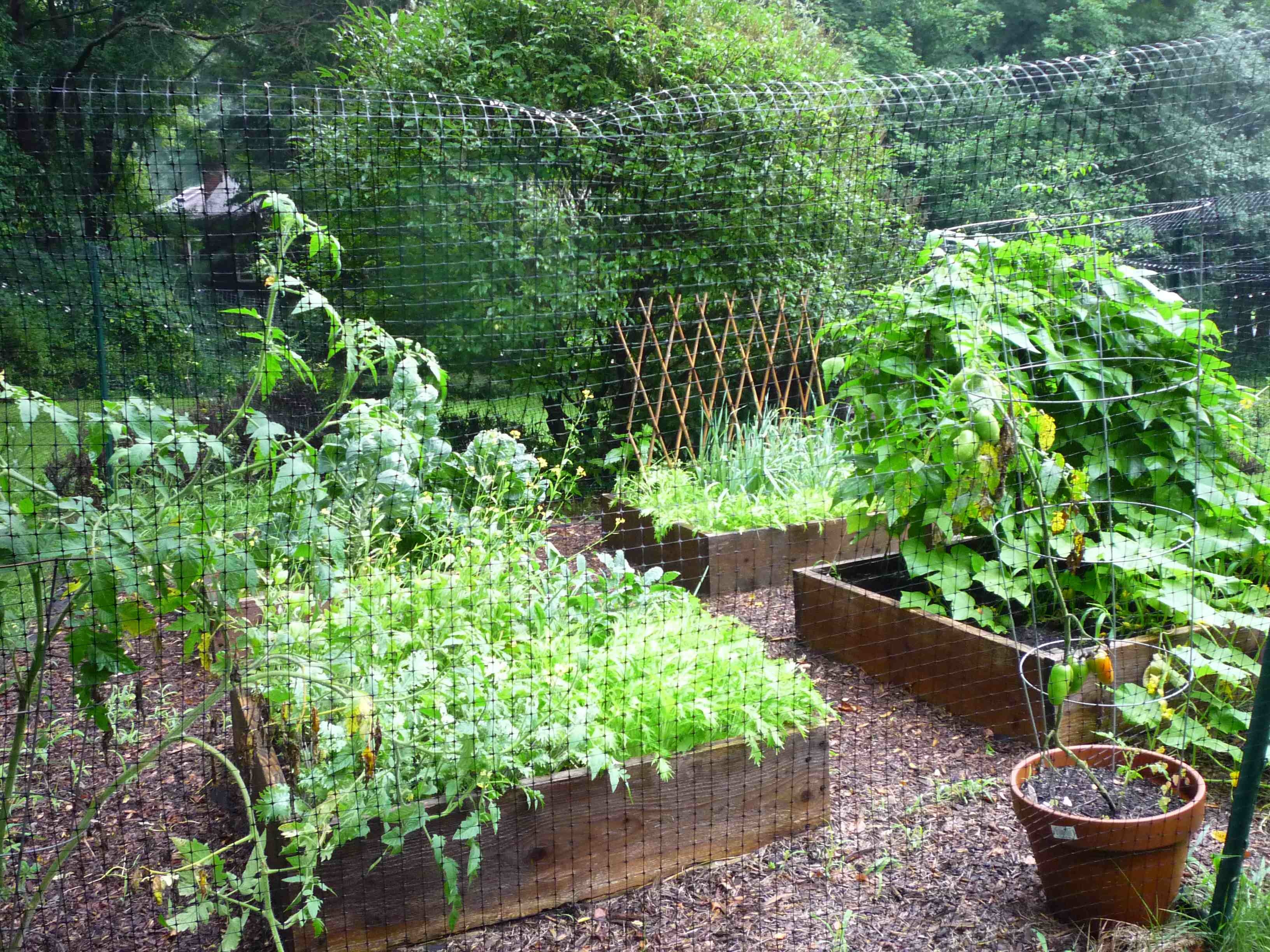
August garden, with Sherry's beans on the near right.

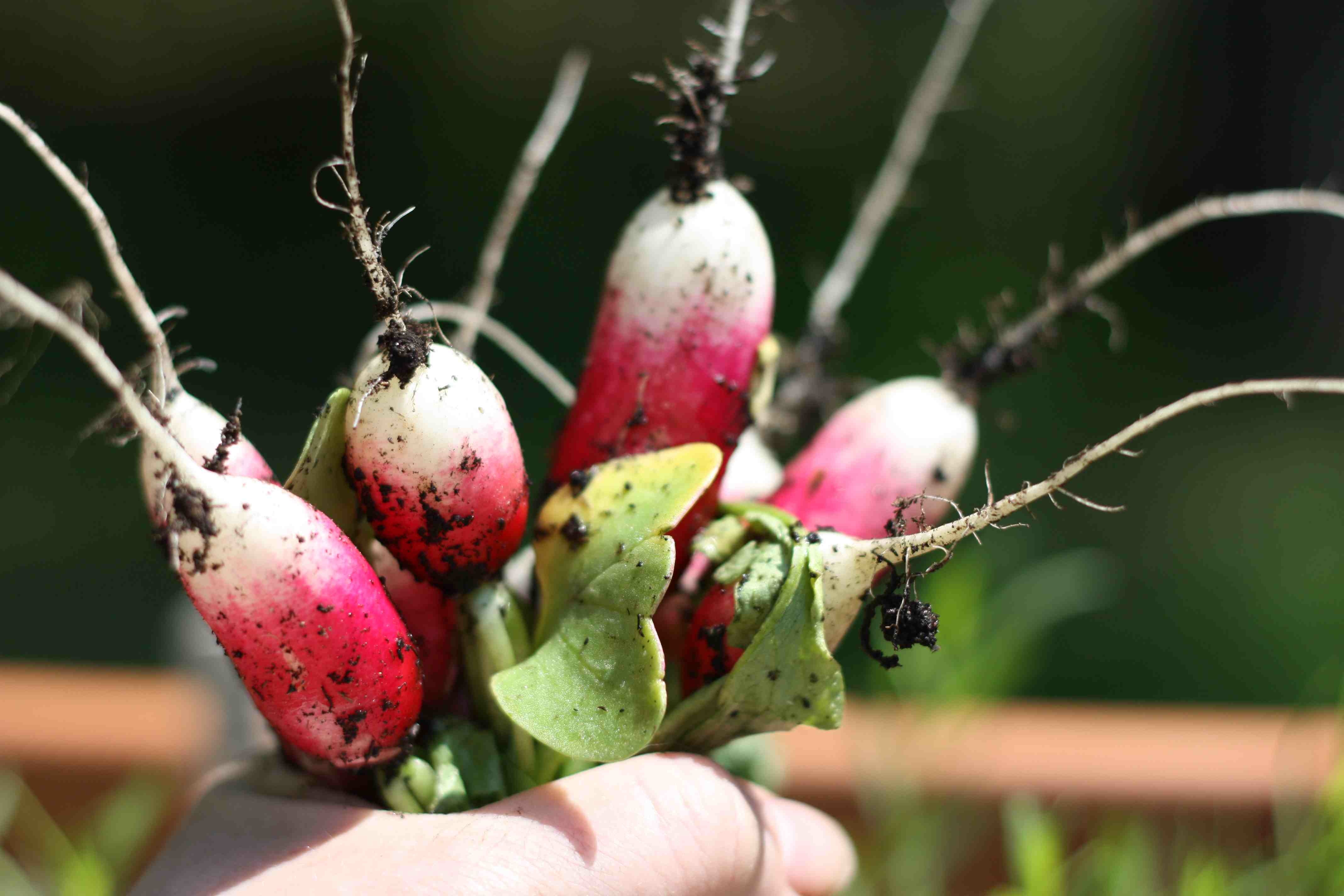
Naturally, our growing season was over a short time later, and so we stopped thinking about the woodchuck for about six months, and instead planned all of the delicious things we’d grow in the garden this year: Hakurei turnips, French breakfast radishes, Bright Lights chard, Mizuna, and kohlrabi, my new favorite vegetable.

“You’re going to have to do something about the woodchuck,” one of my friends said to me. She used to be a Buddhist monk, so when even she implied that it probably had to meet its maker, I knew I was in deep compost. But with snow on the ground, I still had a few months to happily dream and plan and order my seeds. I was like gardening’s version of The Village Idiot.

When it came time to plant a little while ago, we reinforced the fence (which is eight feet tall, because we have deer, too), stapled down its bottom, and hoped for the best. Weeks later, we had magnificent radishes, gorgeous turnip greens, two kinds of beets, the beginnings of our chard, and—wonder of wonders—my precious, beloved kohlrabi. Needless to say, I was not pleased when Susan came back from the garden one early morning before work and said “you’re not gonna like this.”

No kohlrabi.

I cursed like a longshoreman.

This past Saturday, we spent most of the day weeding in the front yard; I went to check the vegetable garden at around one o’clock, and all was well. I went back at around four, and the chard was nibbled on, the beet greens were missing, and even the carrot tops had been chewed. Over in the herb garden, there were the tell-tale signs of small, fat woodchuck feet. I jumped into the car and sped off for Agway, where I marched in like Rambo. I was given a choice:

1. Gas pellets to drop into their burrows. (No way.)

2. Borrowing the neighbor’s Jack Russell. (Possibly.)

3. A large, plastic, battery-operated hooting owl with a revolving head. (Too reminiscent of Linda Blair in The Exorcist.)

4. A gun. (Forget it. Old Yeller nightmares.)

“Can’t I just reinforce the fence some more?” I asked the Agway guy.

“Of course you can. And then the woodchuck will climb it, like a ladder.”

“How about putting a top on the fence. Like a little room—”

“He’ll burrow underneath it.”

I nearly wept. And I remembered that scene in Caddyshack, when Bill Murray basically blows up the whole golf course just to rid it of his nemesis. Was I going to destroy my garden just to rid it of a (big) pest? If I managed to get the woodchuck to leave, I’d still have to face chipmunks, birds, deer, and, probably, other woodchucks.

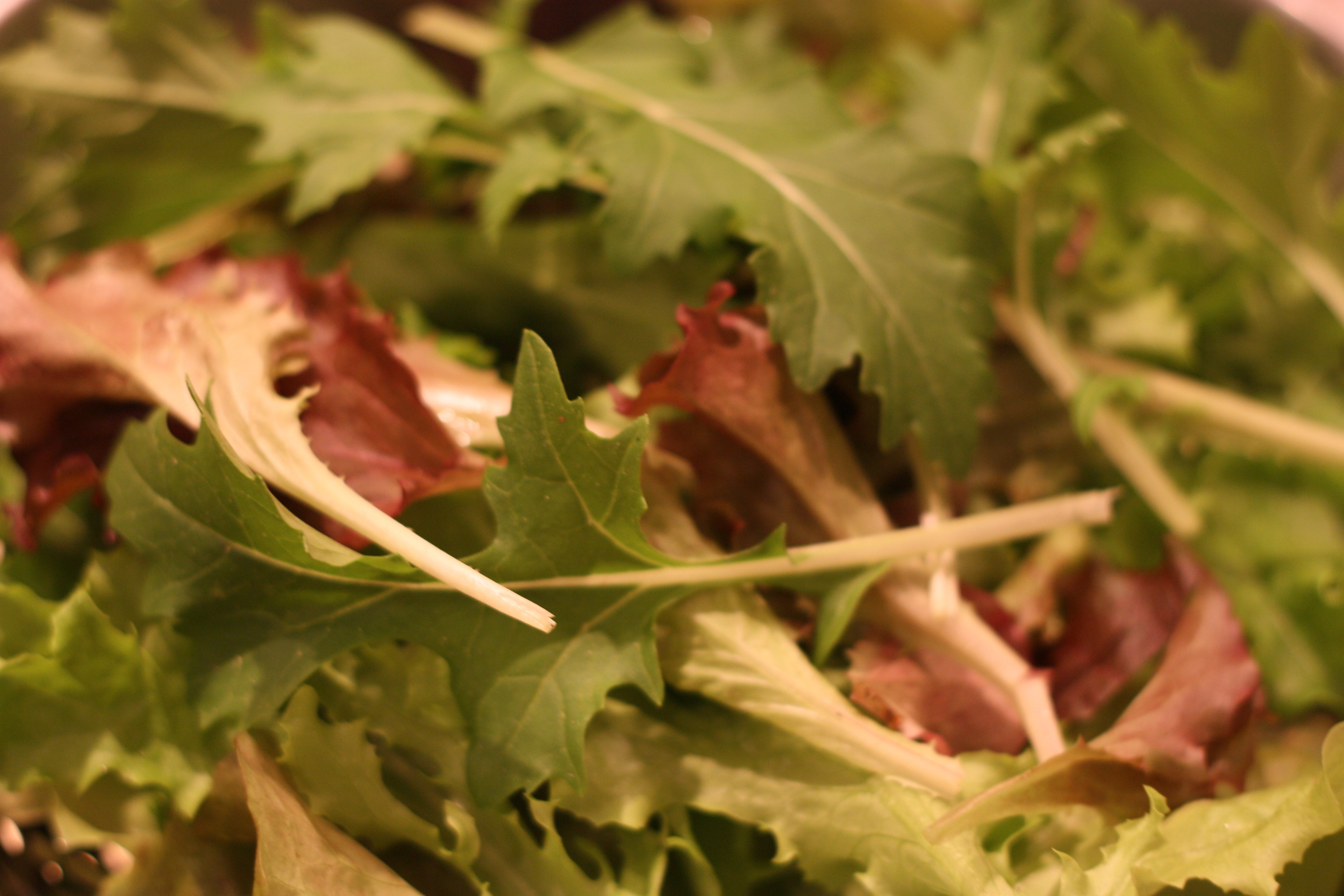
Fresh tender lettuce is grown on the deck, away from the woodchuck.

There’s a lesson in here, somewhere. And although I’ve received dozens of suggestions ranging from having a few different men relieve themselves on the periphery of the space, to dropping Wrigley’s Spearmint Gum down the woodchuck burrows, I’m pretty much resigned to this being an on-going battle. Because in the northeast, where I live, if you grow it, they will come.

Is it worth the hassle?

You bet. My radishes were the sweetest I’ve ever tasted.

The battle rages on.

Braised French Breakfast Radishes

Everywhere you look in late spring, vegetable lovers extol the virtues of serving these slender, tender morsels with little more than a few spoonfuls of sweet butter, a small bowl of coarse salt, and maybe some dense, black bread. And that’s fine. But where they’re truly miraculous is in a light, short braise. If the leaves are in good condition, chop them up and add them to the braise at the last minute. I eat these with nothing more than a fork and a glass of white wine.

Serves 2-3

1 tablespoon unsalted butter

1 shallot, peeled and minced

1 bunch of small French breakfast radishes (about eight) and their greens, separated and cleaned

1/4 cup dry white wine

1/2 cup water

salt and pepper, to taste

1. In a heavyweight saute pan set over medium heat, warm the butter until it just begins to foam, and add the minced shallot. Cook until tender and translucent, about 4 minutes.

2. Add the radishes to the pan and toss well to coat with the butter; pour in the white wine and water, raise heat to medium high, set cover on the pan askew, and simmer for about 10 minutes, shaking the pan every few minutes. If it begins to dry out, dribble a few tablespoons of water over the radishes.

3. If using, add the greens to the braise about 3 minutes before the radishes are done, and cook, covered, until they’re wilted.

4. Spoon the radishes and their greens out onto toasted black bread, and drizzle with sauce.

indiebound


©2009, ©2010, Poor Man's Feast. All rights reserved. To reprint any content herein, including recipes and photography, please contact rights@poormansfeast.com