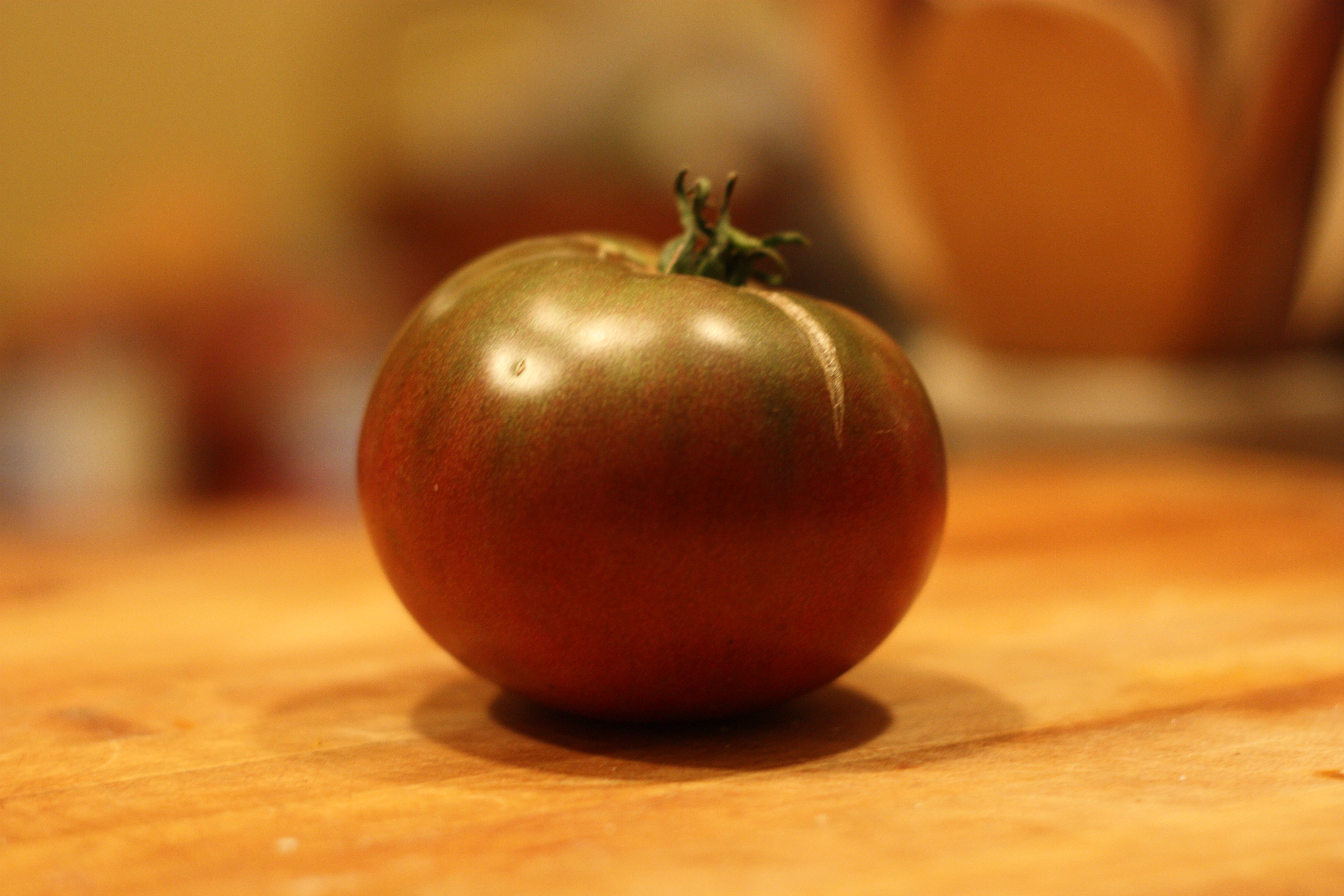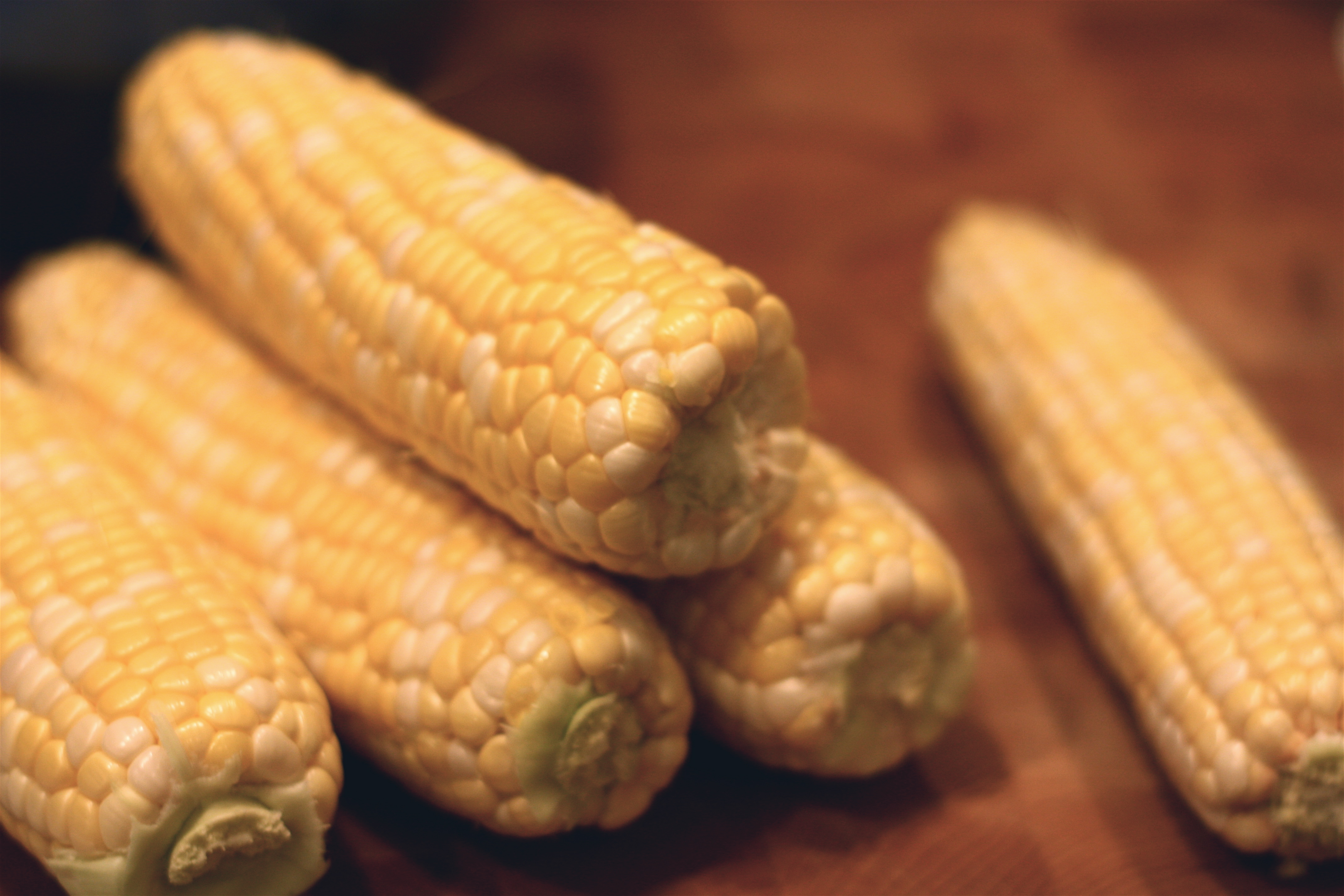
Straight from the local farm.
Over the last few months, the summer issues of well-known food magazines have landed in my mailbox, all of them clearly operating on the same editorial schedule. You know the drill: the October issue is always the wine issue. November always has a turkey on the cover. December is packed with cookie recipes. February is geared to romance (there’s nothing else to do in February), and so on. When the July/August issues start to land, there’s at least one or two articles involving barbecue and picnics, and recipes for pulled pork sandwiches, ribs, potato salad, and “Burgers Your Way” abound. (Really, why would I want need a recipe for Burgers My Way? If it’s my way, don’t I already know how to do it? ) And then, there are the corn on the cob recipes, which drive me insane.
One trend I’ve noticed is the obvious inclination to gild the lily: there are recipes for corn that involve making a lime-infused chipotle sweet butter with minced, applewood-smoked jalapenos, slathering the corn with the butter, wrapping it up in its own water-soaked husks, and grilling it for an hour over indirect heat. There are recipes for corn that involve a bouquet of French herbs and pulverized garlic and shallots; there’s another that require you to make a mignonette sauce. There are recipes for corn that involve a sweetened version of Nuoc Cham–Vietnamese dipping sauce, which I love–wherein you let the uncooked corn sit in a vat of the stuff, before dry roasting it over high heat.
There’s something mildly inferiority complexish about all this; it’s like we collectively decided that one of our uniquely American summer produce treats—real, live food-on-a-stick that’s actually good for us—is not good enough on its own, and it needs to be rendered overwrought instead; it needs to be made fancy, it needs to imply that the cooker has had to have worked really, really hard to make it tasty. And that seems to me to be a crime.
Corn is like sex: even when it’s bad, it’s still pretty good. It may be starchy and pasty and maybe even a little bit odd, but there it is, and with a dousing of sweet butter, salt, and pepper, it’s mostly okay and still makes you smile. When it’s good, however, it’s cataclysmically mind-blowing; if it’s fresh, it needs nothing more than a quick boil in lightly salted water. If it’s a few days old (or even less than that), it benefits from a combination of heady spice (the low note which punctuates its natural sweetness—this is the butter replacement), and a hit of pungency (the high note—this is the salt replacement).
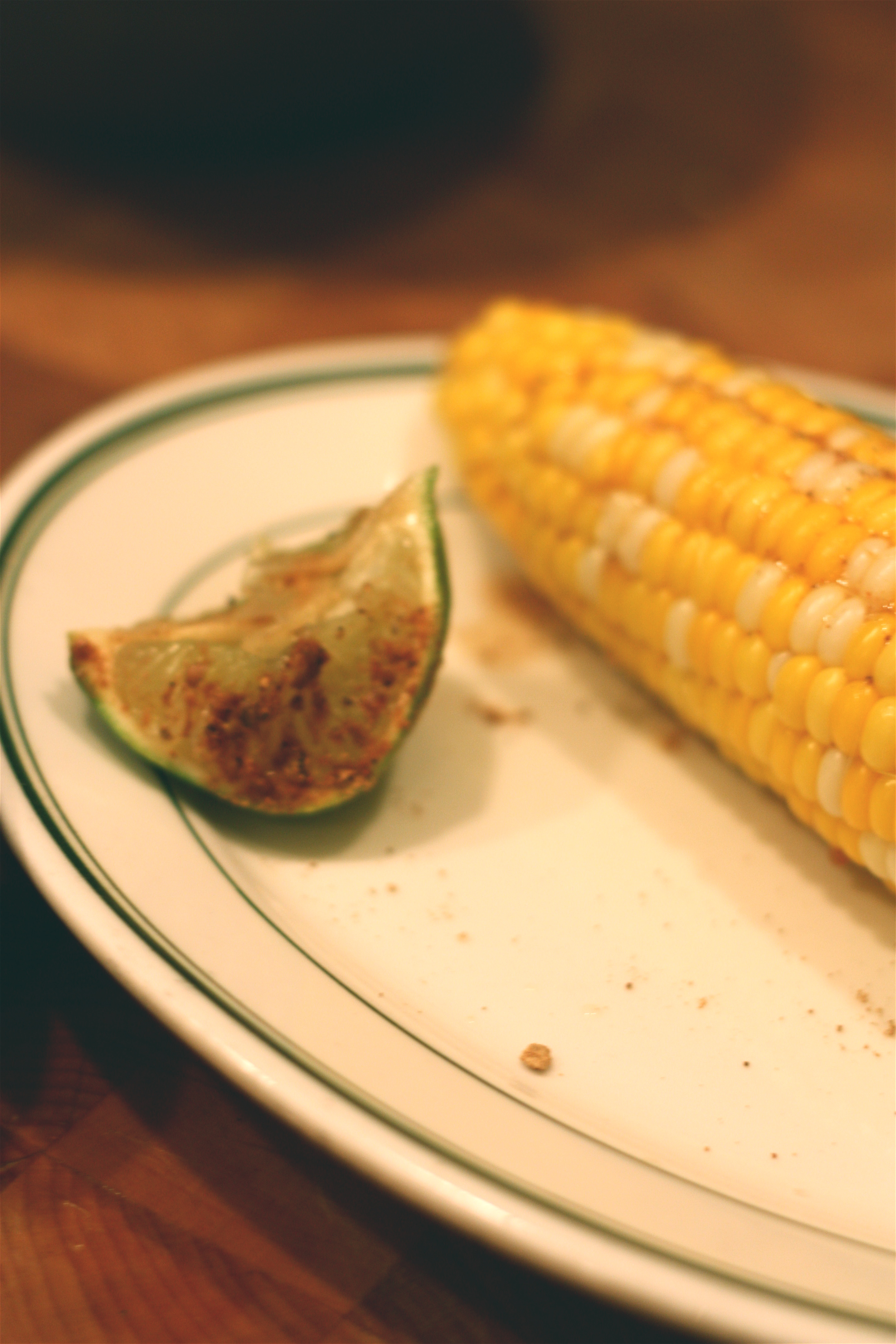
In my house, we’re partial to a recipe we tripped over in Suvir Saran‘s wonderful book, American Masala; basically, you boil the corn, slice a lime into wedges, dip the lime into a small bowl of chaat masala, remove the corn from the water, and use the spice-crusted lime to squeeze the flavor all over the cob. Remarkable. No butter, no salt.
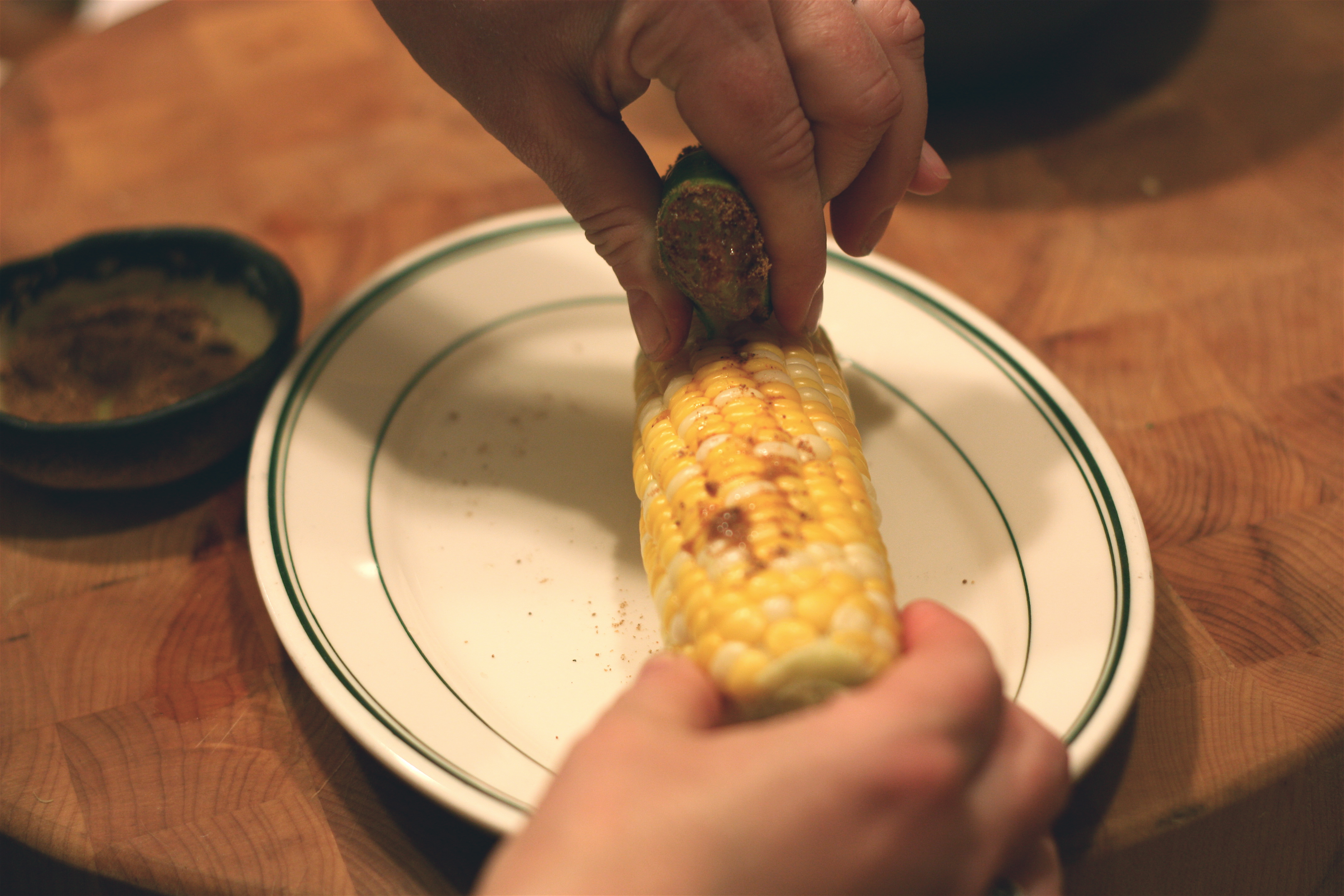
Dip the lime into the chaat masala, then squeeze it along the corn.
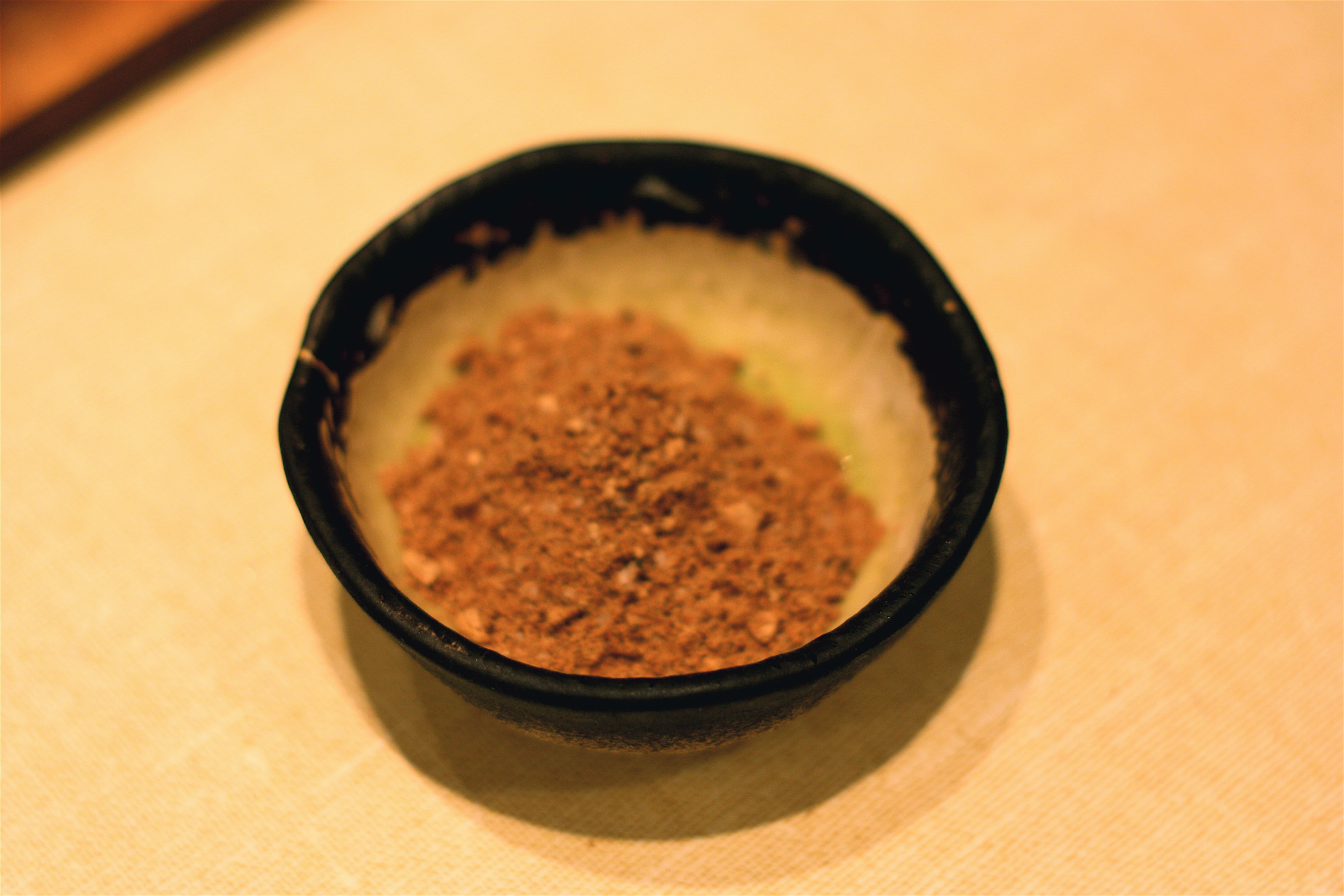
Madhur Jaffrey's chaat masala.
Of course, it assumes that you have chaat masala at the ready, and if you have a decent Indian market near you, you should buy some (because it’s amazing on pretty much anything, from shrimp and other shellfish, to potatoes or roasted butternut squash). Or, you can just make it yourself, which is what we do, from a great recipe by Madhur Jaffrey.
The possibilities for this preparation of corn are endless: if you have a nice (real) chile powder hanging around, you can use it the same way. If you have Herbes de Provence, you can use that (them?), if you just swap out the lime for a lemon and add a pinch of salt to the herbs. But whatever you decide to use, it will not require the grill, or a soak, or repeated brushings with sauce or butter, or even any butter, for that matter.
The best possible thing you could do for corn, beyond keeping it simple, is cook it for three to four minutes, tops. Any more and its natural sugars will turn to starch, and it’ll feel like you’re chewing on a cotton ball. If you have any leftover cooked cobs, you can slice the kernels off into a bowl, saute a little onion, garlic, and minced hot pepper in a combination of olive oil and a drop of butter, add the kernels, and cook until it’s all warmed through. I just did this the other night, and wound up adding the leftover corn kernels to a leftover Deborah Madison kichuri recipe (involving mung beans and rice) that we’ve been eating a lot of lately. The day after that, we had more leftovers of the same for lunch, all browned together in a pan, and topped with a poached egg.
Anyway, it’s the long way of saying that when it’s mid-summer and sweet, fresh corn is abundant, try to keep your preparation angst to a minimum. It may not be fancy or particularly impressive, but who needs fancy and impressive when you’ve got something so naturally delicious?
 Chaat Masala
Chaat Masala is one of those things that has changed my life both in the kitchen, and at the table. A little sweet, a little sour, a little spicy, it is nothing short of remarkable sprinkled on fruit salad, vegetables, shellfish, and, of course, corn. One of its basic ingredients is Amchoor, or dried mango powder. Look for this staple in your local Indian market, and keep it in an airtight container for up to a year.
(Adapted from Madhur Jaffrey’s From Curries to Kebabs: Recipes from the Indian Spice Trail)
4 teaspoons roasted and ground cumin seeds
1-1/2 tablespoons ground amchoor (dried mango powder)
2 teaspoons cayenne pepper
1 teaspoon finely ground black pepper
1 teaspoon salt
Mix together all the ingredients, and store in a tightly lidded jar, away from heat and sunlight.